
During a log review at an energy firm, an analyst observes an intruder running built-in network discovery utilities, querying local administrator group memberships, and enumerating file shares without modifying any data. How should the analyst interpret these TTPs?
Select an answer to reveal the explanation.
Short Explanation
When an intruder maps out shares and admin groups without touching files, you are watching them read the floor plan before making a move. The trap is mistaking quiet reconnaissance for late-stage impact or external scanning.
Full Explanation
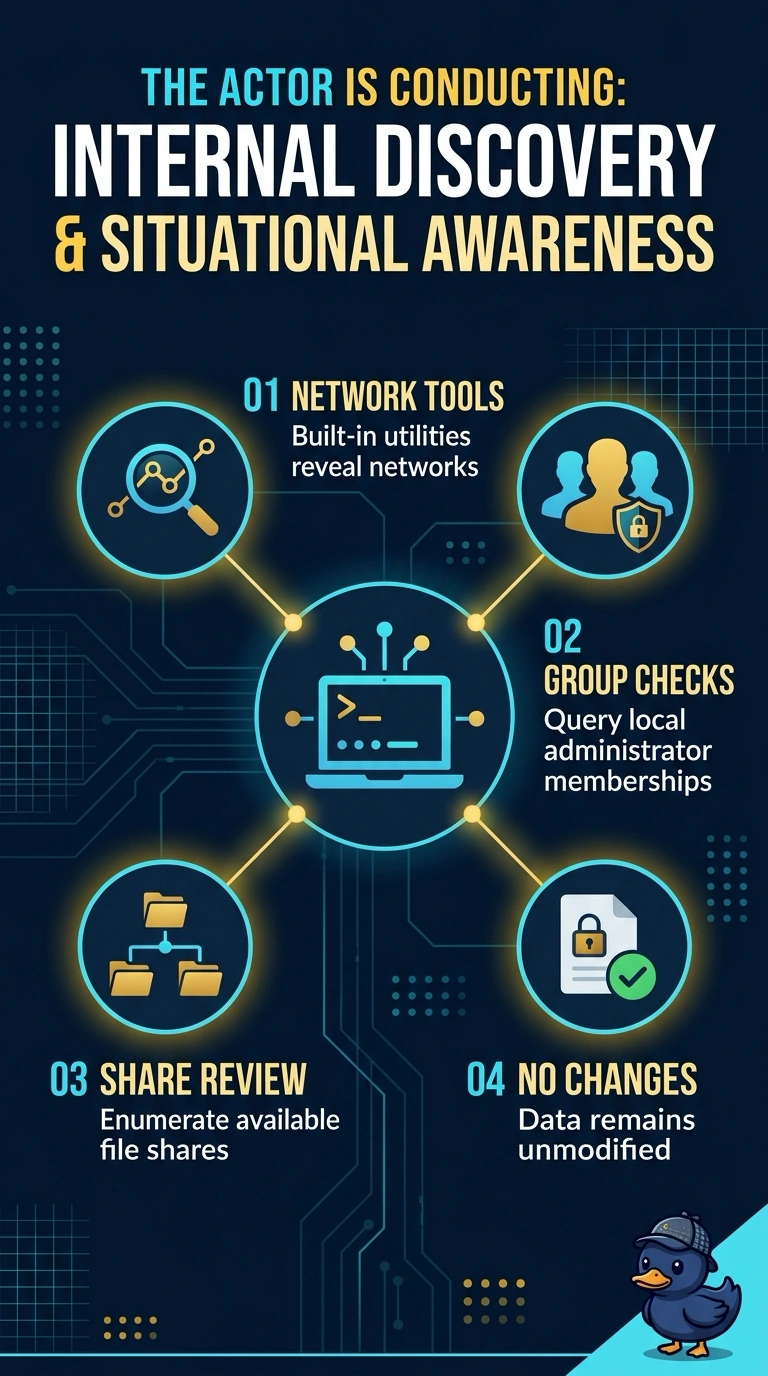
Recognizing that The actor is conducting internal discovery and situational awareness accurately maps native enumeration commands to the post-compromise reconnaissance phase. Adversaries run built-in network utilities, group queries, and share listings to identify high-value targets, privilege paths, and lateral movement opportunities before committing noisier actions. Concluding that The actor is deploying ransomware payloads across the subnet misinterprets read-only enumeration as destructive encryption impact, which would show mass file modifications rather than passive queries. Likewise, assuming that The actor has completed data exfiltration and is erasing logs contradicts the observed evidence, since no outbound bulk transfers or audit-clearing commands appear in the sequence. Claiming that The actor is performing automated perimeter port scanning confuses external boundary probing with authenticated, host-local enumeration inside the environment. As a caveat, authorized administrators occasionally run similar discovery commands during troubleshooting, so context matters. Run an operational check by correlating the originating user account and host against approved change tickets and isolating the endpoint if the activity is unauthorized.