
While analyzing a recovered binary, a junior analyst notices non-English error strings and a specific keyboard layout reference, and proposes attributing the attack to a nation-state from that region. Why should the lead hunter caution against this conclusion?
Select an answer to reveal the explanation.
Short Explanation
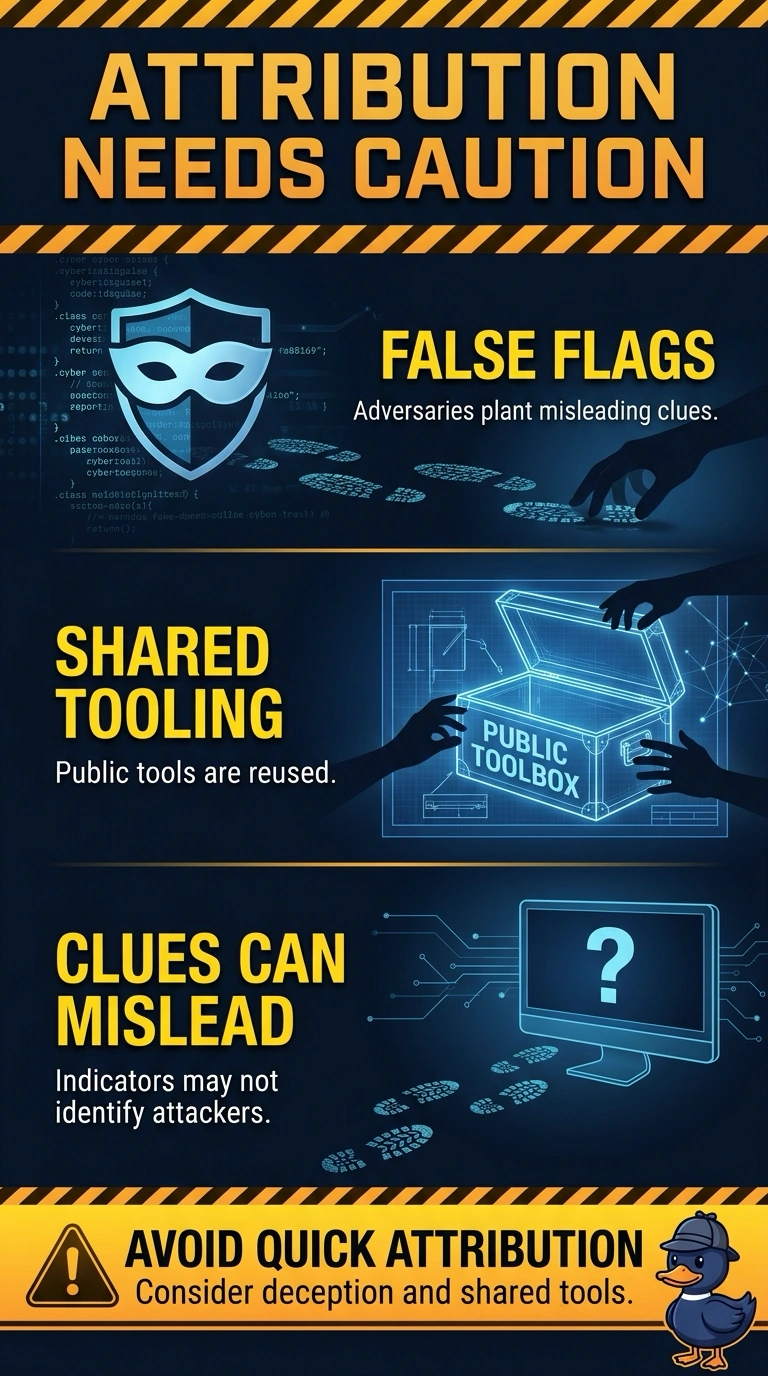
Treating a language string in malware like a passport is an easy way to get fooled by a disguise. You should stay cautious because adversaries frequently plant false flags or reuse shared public tooling. The trap is assuming binary metadata is unalterable proof of an operator's identity.
Full Explanation
Strong attribution requires skepticism because adversaries frequently plant false flags or reuse shared public tooling to mislead investigators. Language strings, compiler locales, and embedded comments are trivial to forge or inherit from leaked frameworks, making them unreliable indicators on their own. Believing that compiler language settings permanently identify an operator's nationality ignores both intentional deception and developers using borrowed build environments. Believing that threat actors never modify metadata strings inside open-source utilities overlooks how routinely operators customize, strip, or alter strings before deployment. Believing that single binary artifacts provide higher confidence than multi-stage behaviors inverts sound intelligence practice, where consistent operational tradecraft and infrastructure carry greater weight than isolated strings. As a caveat, linguistic artifacts can still serve as supporting context when corroborated by independent infrastructure, victimology, and behavioral evidence. As an operational check, document metadata observations as low-confidence clues and test alternative hypotheses before assigning actor attribution.