
A retail case turned up a commodity remote-access tool, and a teammate wants the report to name a specific government sponsor. What evidence is still missing before that claim is justified?
Select an answer to reveal the explanation.
Short Explanation
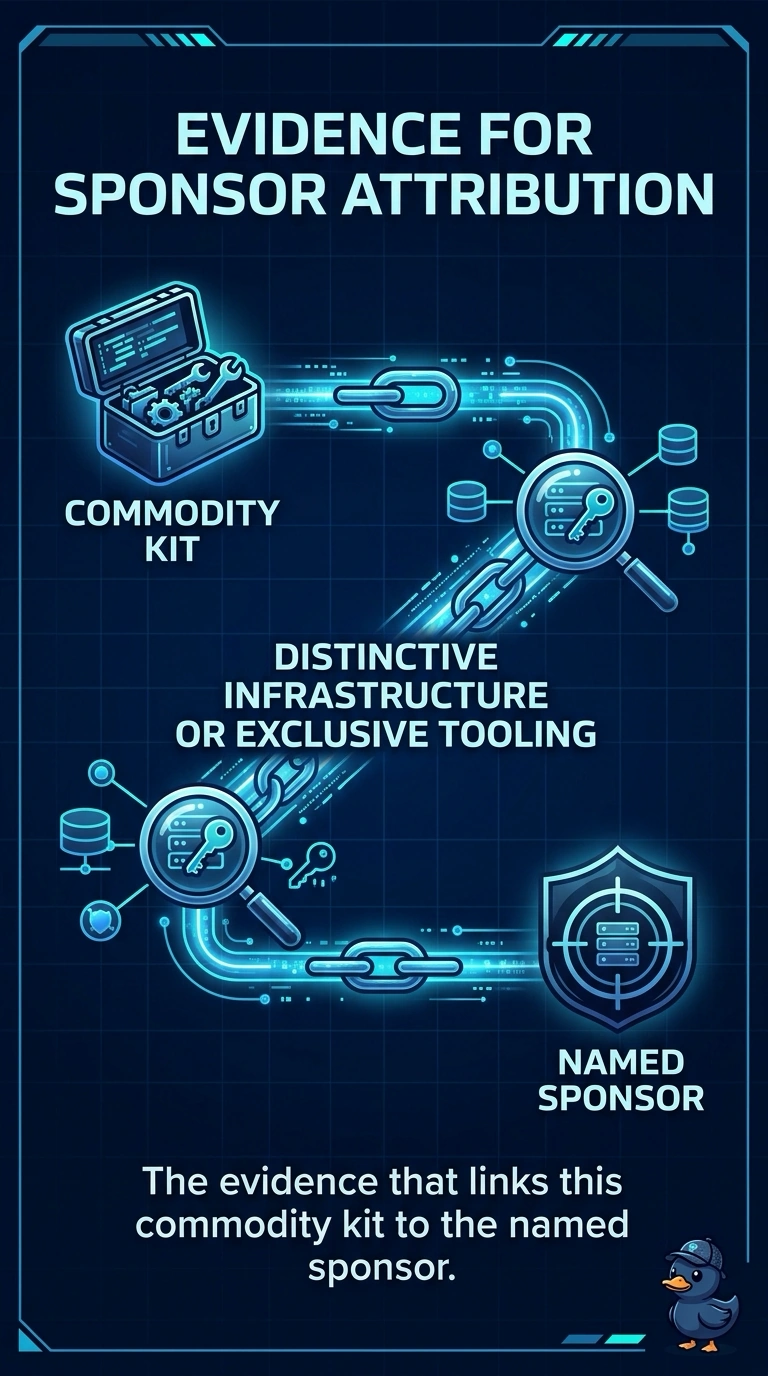
Finding a common brand of ladder in the alley does not tell you which government bought it. You still need distinctive infrastructure or exclusive tooling before a commodity remote-access tool can support a named sponsor. The trap is treating a second copy, a comment language, or a daytime compile stamp as that missing link.
Full Explanation
A commodity remote-access tool is publicly available, so finding it shows a capability the attacker used, not who sponsored the intrusion. What is missing is distinctive infrastructure or exclusive tooling that links this commodity kit to the named sponsor. Without that tie, or something equally specific, the report should not name a government. A second internal host on the same subnet that also has this public remote-access tool installed and active only shows the same public tool spread further. It does not identify a sponsor. Script comments written in a language widely spoken in the suspected sponsor country of origin are easy to copy or plant, and a language is not a government. A compile timestamp that falls during daytime hours in the suspected sponsor country capital is a soft clock clue. Build servers, copied projects, and altered clocks all produce that shape. Exam caveat: a state crew can use a public tool, so the gap is not a rule against public tools; the gap is evidence that distinguishes the sponsor. Operational check: label the tool as commodity in the report, leave the sponsor blank, and list the infrastructure and tooling that would be required before that blank is filled.