
A hospital security team learns that a document macro Cisco Secure Endpoint called unknown yesterday is malicious today. Analysts need every computer that previously observed that file. Which product capability returns that list?
Select an answer to reveal the explanation.
Short Explanation
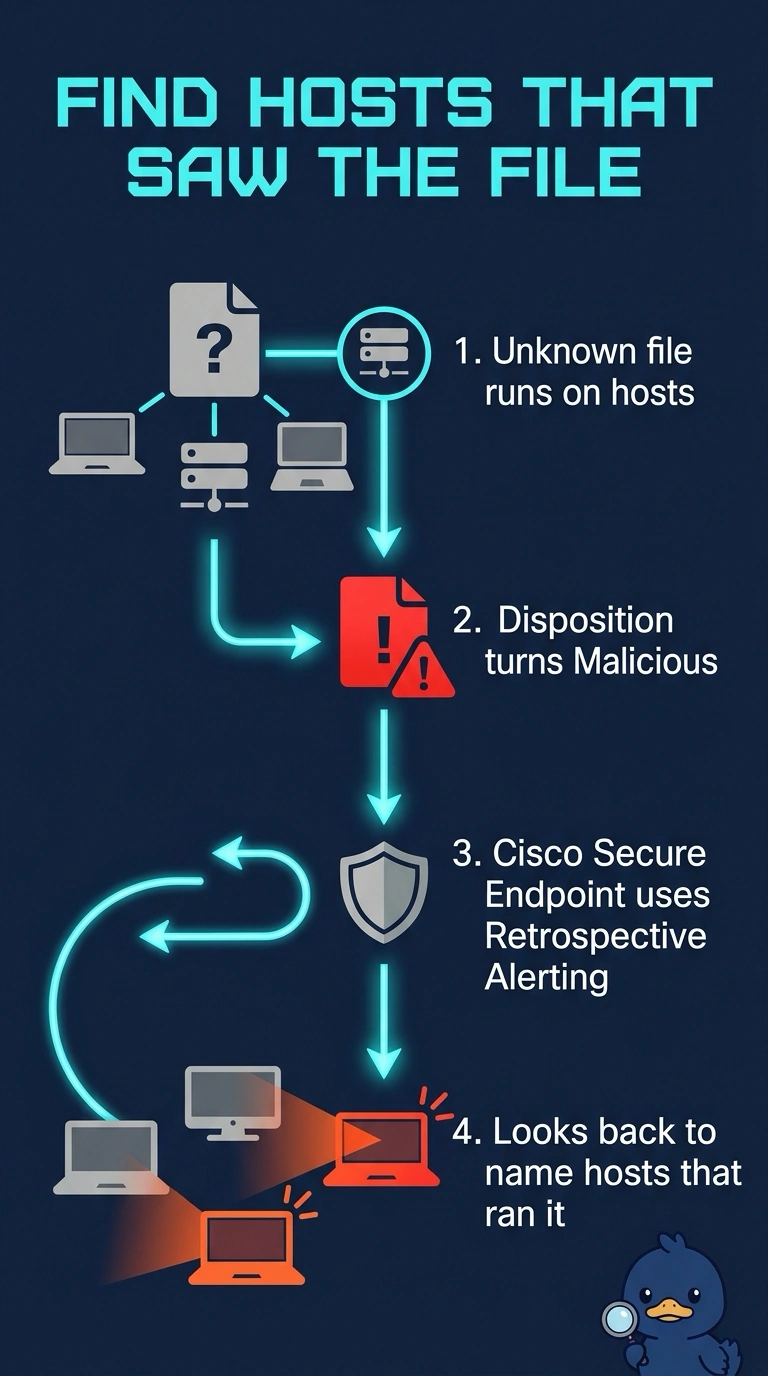
A disposition change is like a wanted poster that goes up after the visitor already walked the halls. You use retrospective alerting to name hosts which already saw the file once the disposition turns malicious. Device trajectory on the reporting workstation only shows that one computer.
Full Explanation
Retrospective alerting names hosts which already saw the file after the disposition turns malicious. The macro was unknown yesterday, so computers may have already observed the file before any malicious verdict existed. When that verdict flips, retrospective records list those earlier sightings, including hosts that may no longer hold the file on disk, which is the inventory the hospital team asked for. Device trajectory is limited to process activity on the single reporting workstation, so it cannot enumerate the rest of the clinical fleet. Endpoint isolation for every laptop that received mail during that morning contains a host and does not search history for prior sightings of the file. Quarantine normally retains the sample in the endpoint’s managed quarantine store; do not assume the management console contains the original bytes. That stored sample is not a roster of hosts. Exam caveat: retrospective alerting reports earlier sightings of the file, and a host can appear even after the file is no longer on disk. Operational check: filter Secure Endpoint events on the macro hash and confirm retrospective records name the computers that saw the file before the disposition changed.