
Cisco Secure Endpoint has recorded the same file hash on three branch servers, and an external feed lists that hash too. How should those internal sightings change the analyst's confidence?
Select an answer to reveal the explanation.
Short Explanation
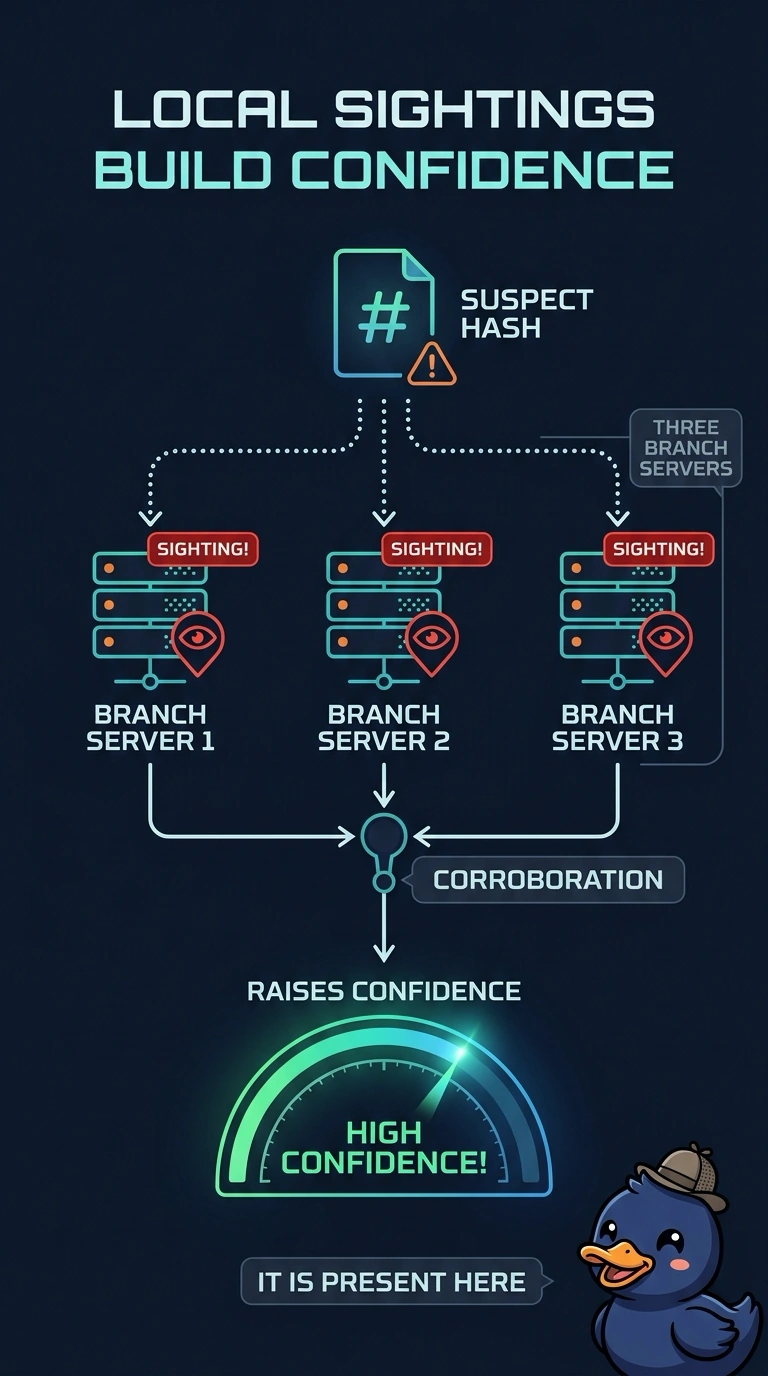
An external feed is a rumor until your own cameras see the same face. You treat the three local sightings as corroboration that raises confidence the hash is present here. Do not ignore those servers just to let the feed outrank your endpoint record.
Full Explanation
The external feed claims the hash is malicious, but the three Secure Endpoint sightings are primary evidence from this network. Treat the local sightings as corroboration that raises confidence the hash is present here, because your own telemetry has already observed the artifact the feed describes. Ignore the three servers on the theory that an external feed outranks any local endpoint record and you throw away the strongest proof of local relevance. Lower confidence on the theory that three internal hits mean the external feed is stale gets the direction backward: local hits support the feed instead of aging it out. Mark the hash benign on the theory that a server sighting means an approved installer confuses location with trust; a server can run an unapproved file. Exam caveat: corroboration raises confidence that the indicator is in this environment, and it does not by itself measure impact on those servers. Operational check: open the file trajectory for the hash, confirm the three branch servers, and note the first-seen time next to the feed record in the case notes.