
Intel says a service account is using an archive tool toward a cloud destination the company rarely uses, and the report names no file hash. What response fits that report?
Select an answer to reveal the explanation.
Short Explanation
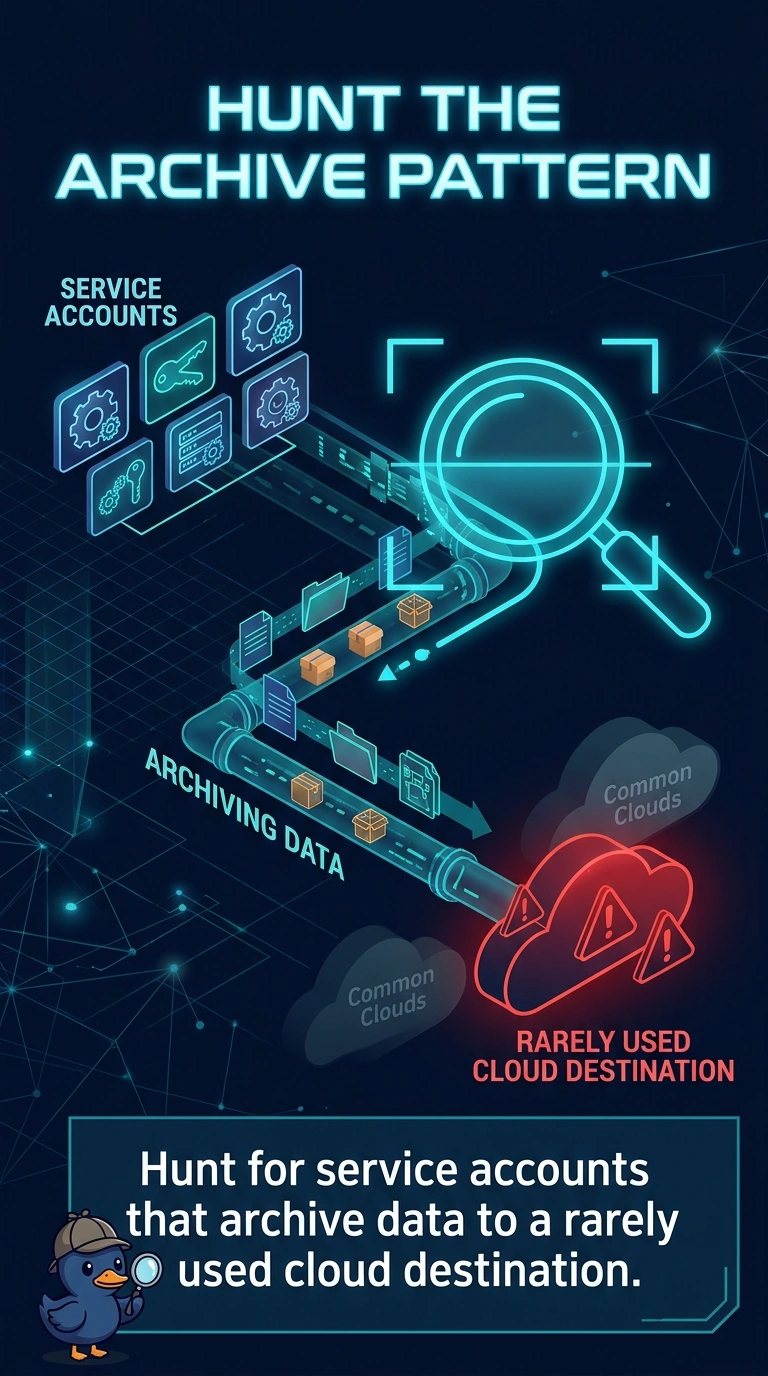
You were handed a behavior, not a fingerprint, so a single hash block has nothing solid to grab. Hunt for service accounts that archive data toward a cloud destination the company rarely uses. Sinkholing a sentence in DNS, or rebuilding every server that has an archive tool, swings at the wrong target.
Full Explanation
The report describes a tactic: service accounts, an archive step, and a cloud destination rarely used here. No hash was named, so the fitting response is to hunt for those accounts and that destination rather than to block a file you cannot name. To block one file hash even though the report supplied no hash value to place on a deny list invents an indicator the intel did not provide. To sinkhole the written tactic in DNS as though the sentence were a malicious domain name confuses a paragraph of behavior with a hostname. To reimage every server that still has an archive utility installed on its local disk would rebuild machines for a tool administrators run on purpose. The useful hunt is a service account launching an archive process toward that rare cloud, then a check of whether the job was authorized. Exam caveat: legitimate archive jobs exist, and the rare destination plus the service account is what makes this pattern worth a ticket. Operational check: search process and network logs for service accounts archiving data toward that cloud destination and separate them from ordinary backup jobs.