
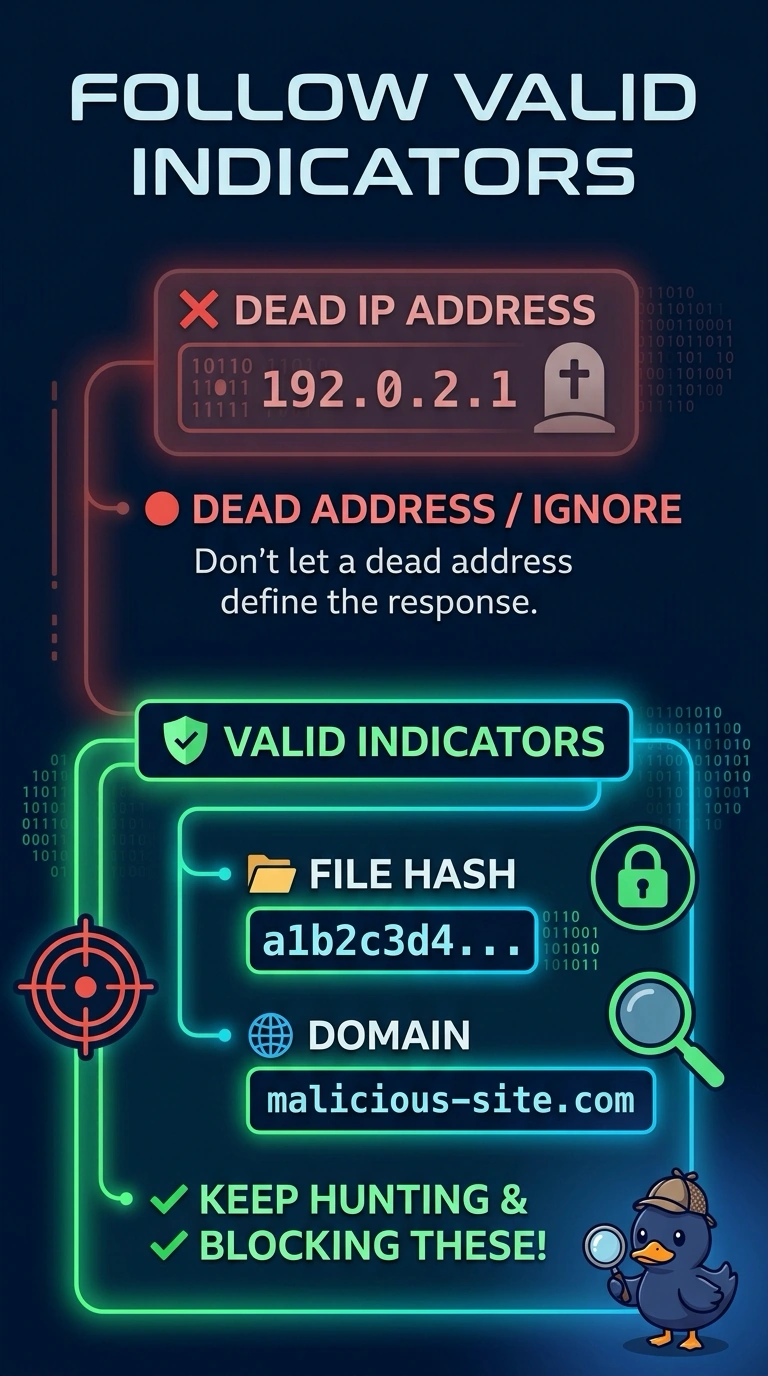
A campaign list for a logistics company includes one IP address that no longer routes, plus a file hash and a domain that remain valid. Why should the response not be defined by that dead address alone?
Select an answer to reveal the explanation.
Short Explanation
A closed shop does not mean the crew retired while their van and their hideout are still in use. Keep hunting and blocking the hash and domain that remain valid, and do not let the dead address define your response. Closing the case, blocking only that address, or rewriting the notes around it leaves the live indicators untouched.
Full Explanation
Indicators age at different speeds. An address can stop routing while a file hash and a domain stay useful, so keep hunting and blocking the hash and domain that remain valid, instead of letting the dead address define the response. Do not close the investigation on the grounds that the address no longer routes and the campaign has ended; the other indicators can still match. Do not block only that dead address and remove the hash and domain from the response steps; that spends the plan on the artifact least likely to be seen again. Do not rewrite the case notes so the dead address replaces the hash and domain as the sole indicator; that drops the better pivots from the record. Addresses are often rotated or reclaimed, while a hash still identifies the file and a domain may still resolve. Exam caveat: a dead address can stay in the list as history, and it should not be the only control you deploy. Operational check: confirm a hunt or a block exists for the hash and for the domain, and that the case is not closed only because the address no longer routes.