
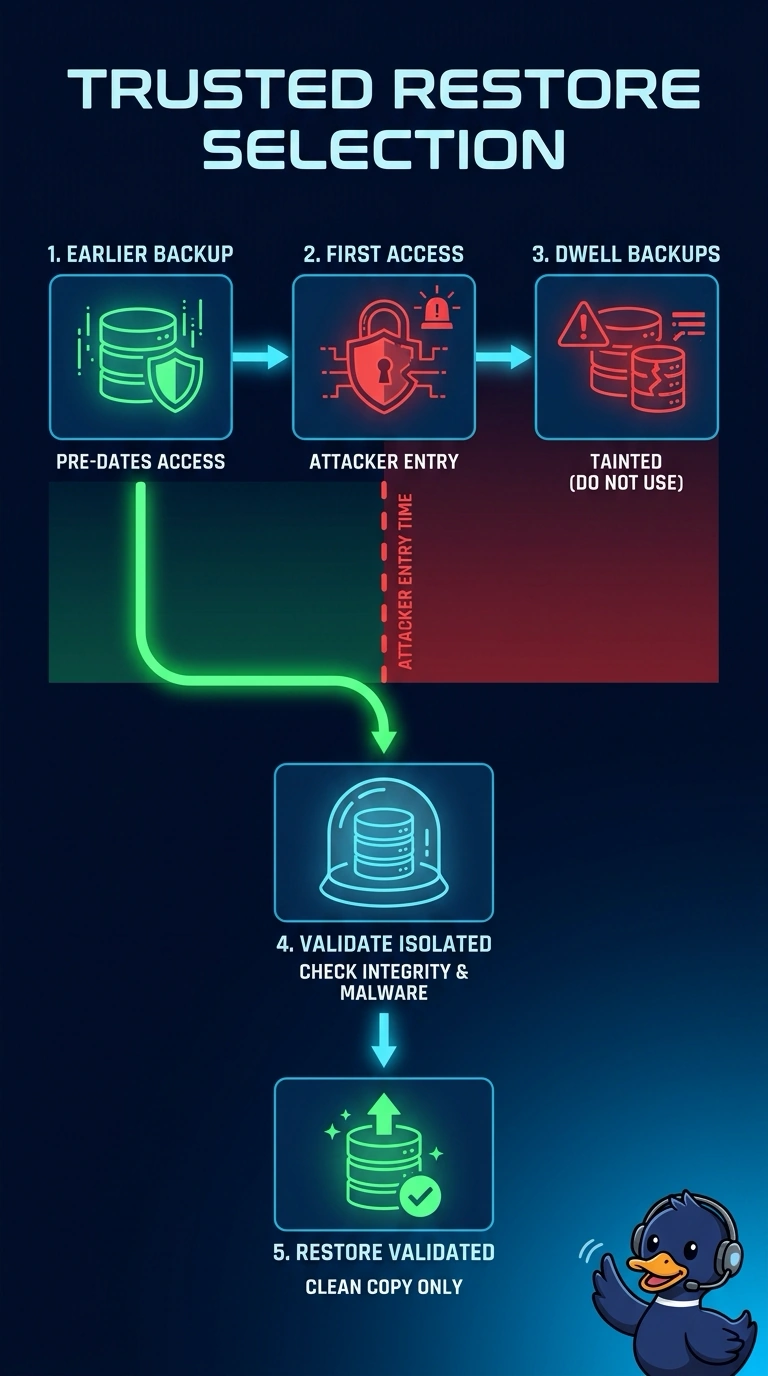
Investigation establishes the first attacker access to a library file server. One backup is from the attacker dwell window; an earlier backup predates that access and has passed integrity and malware checks in an isolated recovery environment. Which restore point should be used?
Select an answer to reveal the explanation.
Short Explanation
Restoring a backup made while the intruder was still inside can bring their changes back with it. Choose the validated copy from before the established first attacker access: trust matters more than having newer or larger files.
Full Explanation
A trusted restore must come from before the attacker could change the server. The validated backup taken before the established first attacker access is the appropriate restore point because it predates that access and has passed integrity and malware checks in an isolated recovery environment. The largest backup taken during the dwell window may hold the most files, but it can also contain altered documents, attacker tools, or startup changes; size does not establish trust. The backup created in the hour the ransom note appeared is too late: restoring it can bring back the encrypted or altered state. The backup from the morning of the first alert is also unsuitable if that morning falls inside the dwell window, since the attacker may have made changes before the alert; alerts often occur after the first logon. The exam caveat is that a timestamp before the earliest known malicious logon is not, by itself, proof that a backup is clean. As a practical check, validate the backup’s integrity and absence of compromise in an isolated recovery environment before returning it to production.