
A threat indicator includes a confidence value and a valid time window, and a playbook could block from it automatically. Why should those fields gate the block?
Select an answer to reveal the explanation.
Short Explanation
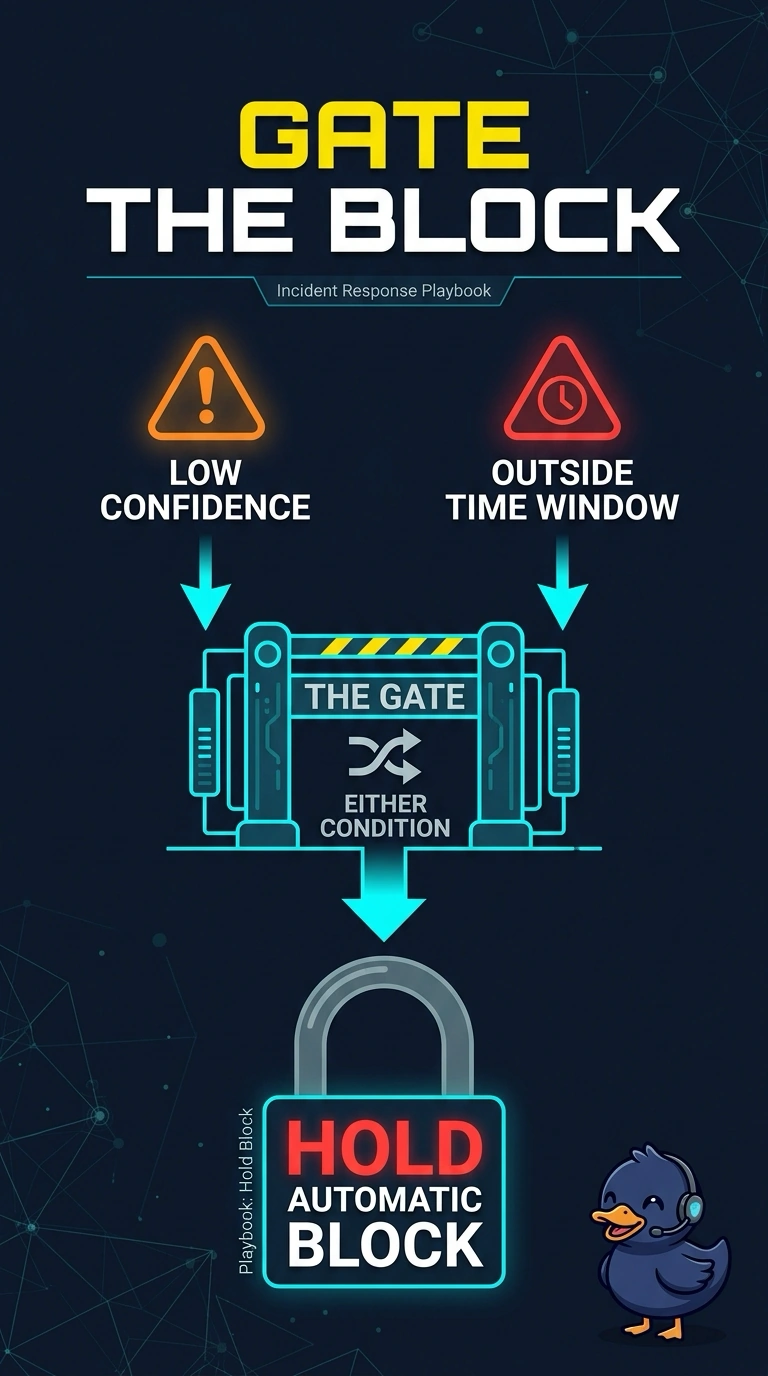
You should hold an automatic block for review when confidence is low or the indicator is outside its valid window. You avoid bypassing that gate by ignoring the fields, blocking merely because they are present, or keeping the block in place indefinitely.
Full Explanation
An automatic block is a blunt control, so you should hold it when confidence is low or the time is outside the valid window. Those fields tell you how much to trust the indicator and when its producer says it is in force. Treating confidence and the valid window as labels that enforcement may ignore discards the two facts that limit the block’s blast radius. Pushing any indicator that carries those fields straight onto a global block list treats their mere presence as permission, even when confidence is poor. Leaving an automatic block in place indefinitely after the first match ignores the end of the validity period stated by the producer. Review is preferable to a wide block when the producer has marked the indicator as weak or stale. Exam caveat: do not invent a numeric confidence cutoff that the feed did not publish; use the confidence value and time window supplied with the indicator, and send it for review when they do not support a block. Practical check: read the playbook step and confirm that low confidence or a time outside the valid window sends the indicator to review rather than to the block action.