
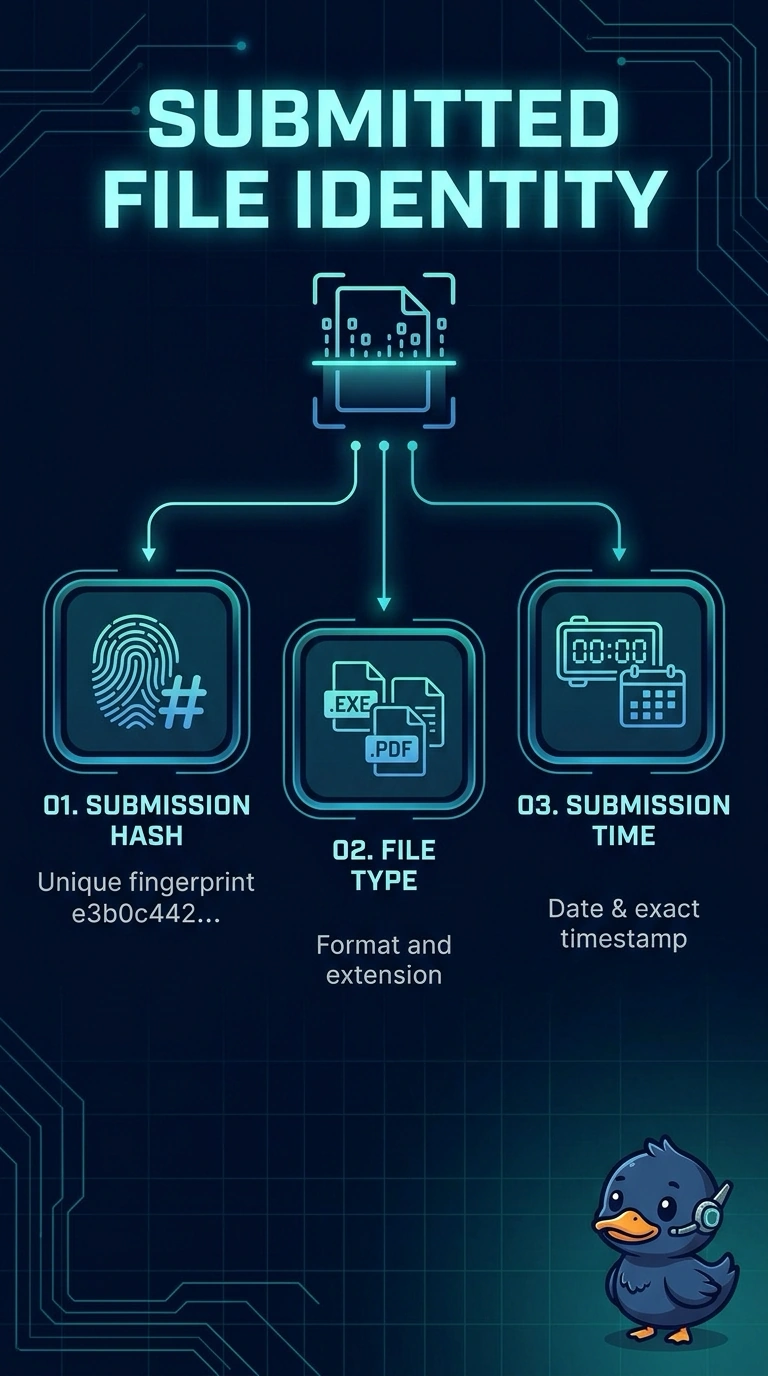
A Secure Malware Analytics report leads with metadata listing the submission hash, the file type, and the submission time. What identification question does that section answer?
Select an answer to reveal the explanation.
Short Explanation
The cover sheet of a lab report tells you which sample arrived, not what it did. You use metadata for the submission hash, the file type, and the time it was submitted. Behavior, network activity, and any branch-office sighting live in other parts of the report.
Full Explanation
Metadata on a Secure Malware Analytics submission identifies the object that entered analysis. It answers the identity of the submitted file, including its hash, type, and submission time, so later notes point at a specific sample. Whether the threat score is high enough that behavioral indicators can be skipped is not an identification question, and a score does not license skipping indicators. The branch office that already executed the submitted file on a production host is an enterprise sighting question; submission metadata does not name a branch office or prove production execution. The plaintext commands the sample sent after the sandbox decrypted its traffic, if they exist at all, would come from behavioral or network sections, not from the hash, type, and time header, and the sandbox does not decrypt the customer's traffic. Exam caveat: the hash in metadata identifies the submitted bytes, not every host in the company that might have them. Operational check: read the hash, file type, and submission time from the metadata block before you open indicators, and keep that triple in the case notes.