
The dropped-artifacts section of a Threat Grid report lists an executable and its hash. How should that hash be used against the software company's endpoints?
Select an answer to reveal the explanation.
Short Explanation
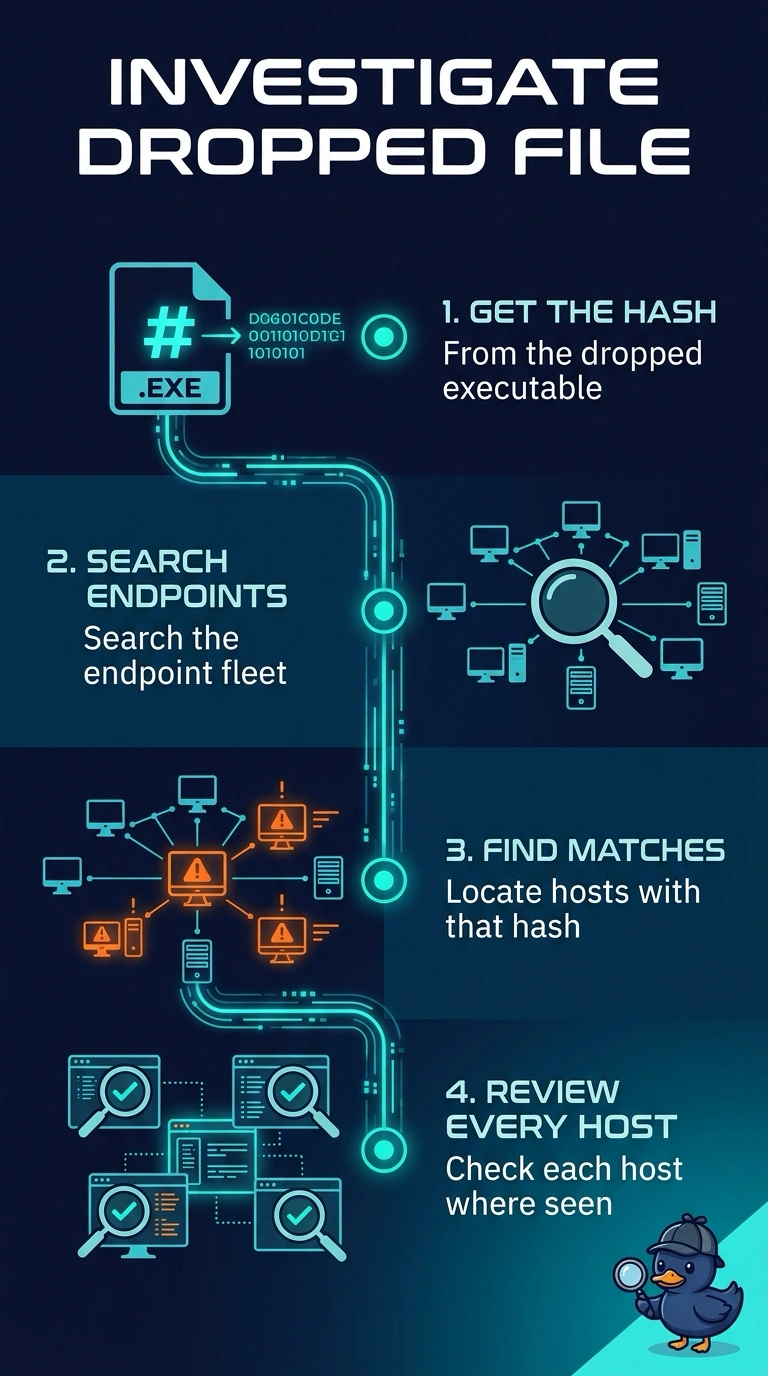
That hash is a wanted poster, not a verdict that every laptop is guilty. You search the fleet for it and review each host where the file showed up. Reimaging the company first, or throwing the report away, skips the trail the hash was meant to provide.
Full Explanation
A hash in the dropped-artifacts section is an indicator of a file the sample wrote in the sandbox. On the endpoints it is used to search the endpoint fleet for that hash and review every host where the dropped file was seen, which is the file-trajectory question. To reimage every endpoint in the company fleet before checking whether the hash is present anywhere destroys and rebuilds hosts with no evidence they hold the file. To delete the sandbox report so that hash cannot be reused outside the analysis lab throws away the indicator the team needs for the search. To treat the hash as benign solely due to its appearance inside the dropped-artifacts section reverses the meaning of that section; a dropped executable listed there is suspicious until reputation and host context say otherwise. Exam caveat: a fleet hit means the file was seen on that host, and you still confirm path and execution context before you wipe the machine. Operational check: run the fleet search, open file trajectory for the hash, and list the hosts and paths before any reimage decision.