
A branch-office playbook tells analysts to collect evidence but does not describe hashing, storage, or handoff. Which playbook element is missing?
Select an answer to reveal the explanation.
Short Explanation
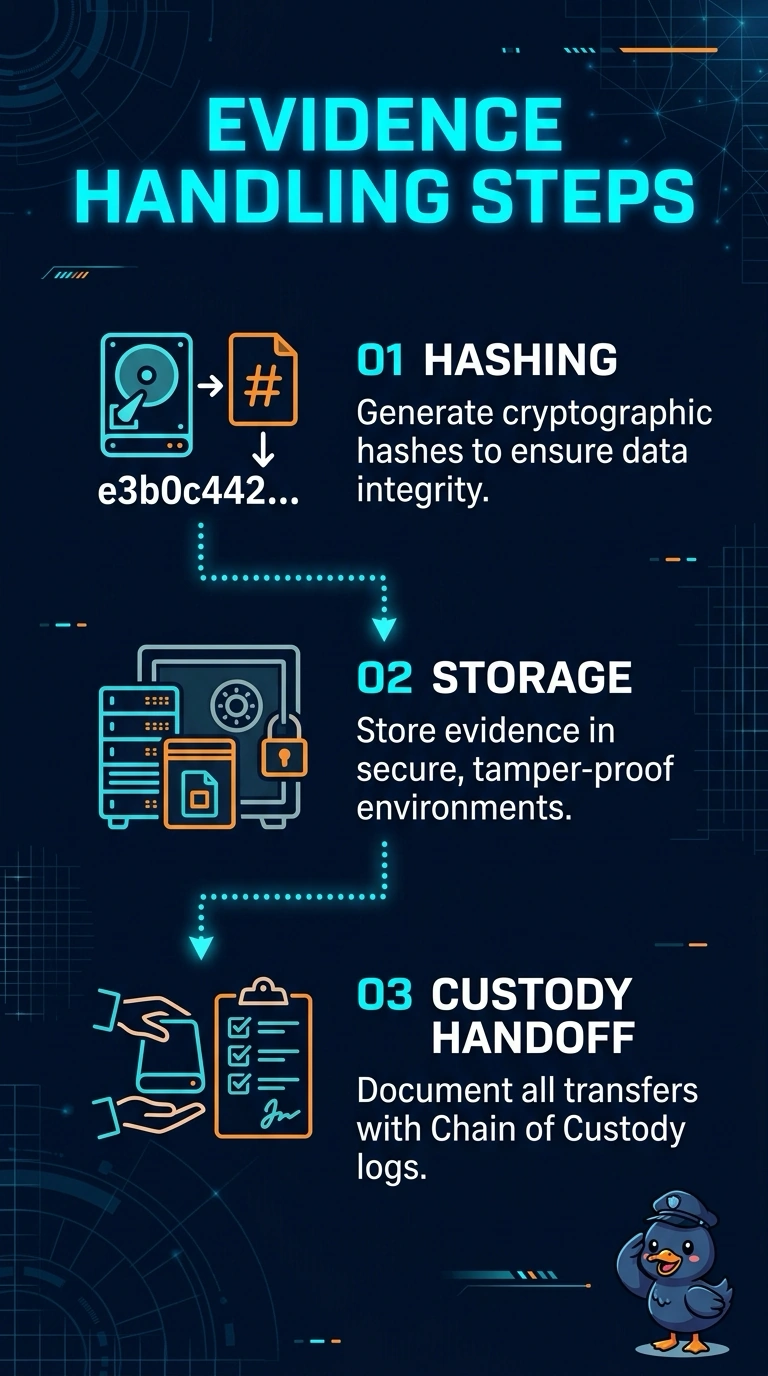
You’re right to focus on what happens to collected evidence after you gather it. Your playbook needs evidence-handling steps that explain hashing, storage, and custody handoff. The trigger, severity scale, and exit test serve different purposes and do not fill that gap.
Full Explanation
Evidence-handling steps explain how you hash collected material, where you store it, and how custody passes from one person to the next. The playbook says to collect evidence but gives none of those instructions, so you cannot show that a copy remained intact or who held it afterward. The trigger that names the alert or condition that starts the playbook addresses how the response begins, not how evidence is handled. The severity scale that matches analyst effort to business impact guides the response’s scope; it does not specify hashing, storage, or custody. The exit test that states when the incident may be closed tells you when to end the incident, not how to preserve evidence. Exam caveat: naming a tool is not enough; your playbook must specify the hash, storage location, and custody handoff. Practical check: trace one evidence item through the playbook and verify that its hash, storage path, and handoff signature are documented.