
A draft malware playbook begins with isolate the host and does not state which alert or condition is allowed to start those steps. Which playbook element is missing?
Select an answer to reveal the explanation.
Short Explanation
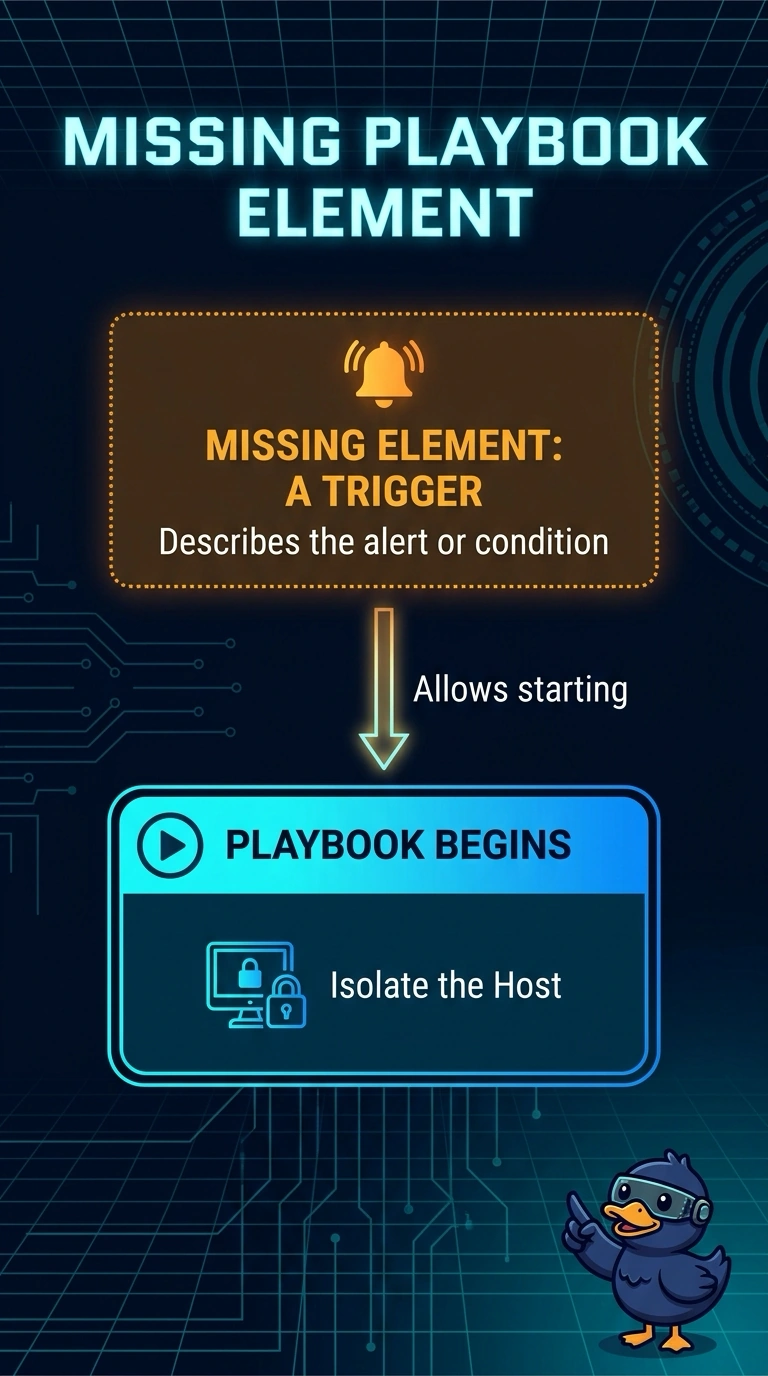
A fire drill that starts with grab the extinguisher, and never says which alarm means fire, will send people running at every beep. You need the trigger describing the alert or condition allowed to start this playbook. Product names and a public post do not replace that starting line.
Full Explanation
A playbook is a decision path, and the missing element is the trigger describing the alert or condition that is allowed to start this playbook. Without that line, isolate the host has no on switch and every analyst invents one. An extra catalog of product names with no statement of when isolation is supposed to begin adds tools and still omits the trigger. A public posting template that has staff publish the attacker address as the first action is an unsafe communications habit, not the missing start condition. Blanket permission for trainees to shut down production with no starting condition named widens authority and still does not define what starts the playbook. Write the trigger as a named alert, a threshold, or a reported condition, and do not leave the opening step standing alone as if everyone already knows when to isolate. Exam caveat: the trigger can be a specific alert, a threshold, or a human report, but it has to be written. Operational check: read the top of the playbook and confirm it names the alert or condition that authorizes the first isolation step.