
Retail antivirus misses every new build of a polymorphic loader that keeps the same actions. Which detection approach still has a chance when one static file hash does not?
Select an answer to reveal the explanation.
Short Explanation
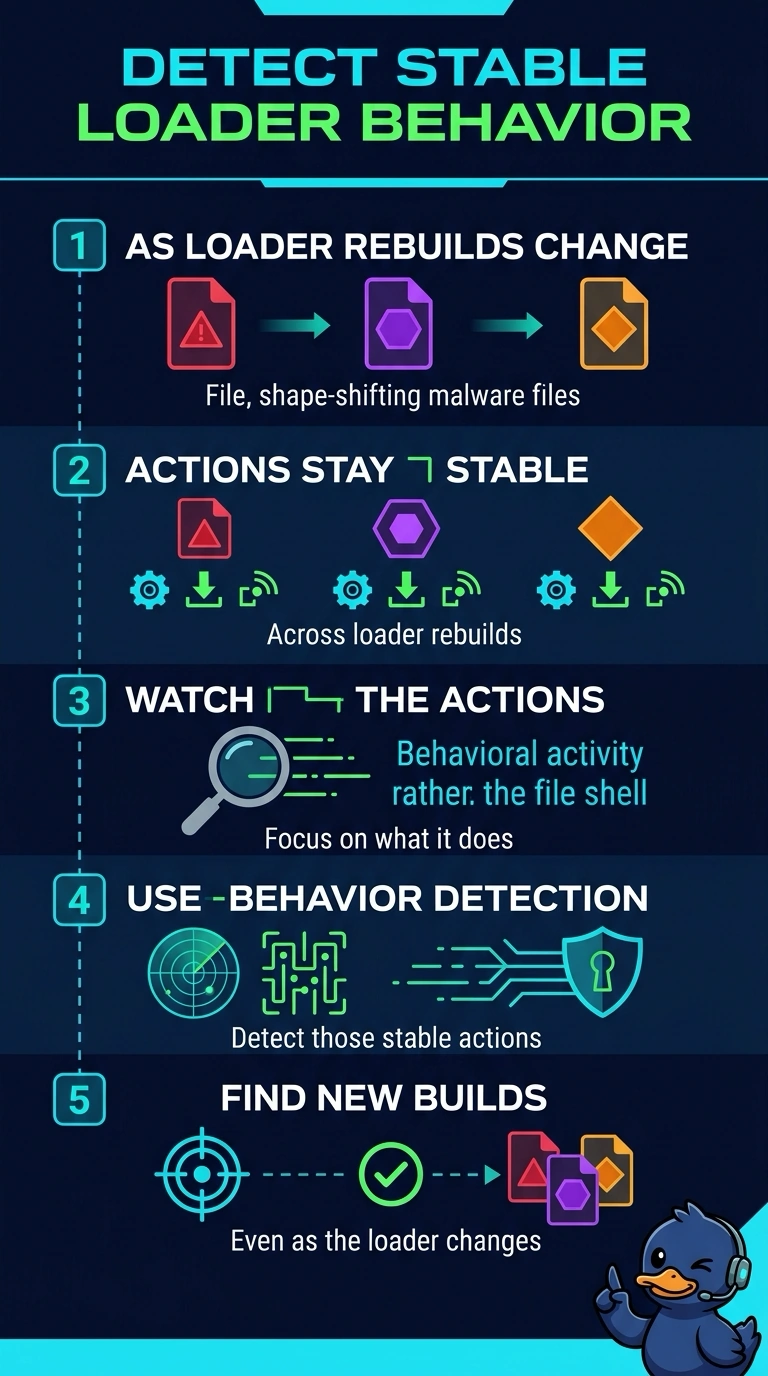
A polymorphic loader is a new coat on the same person each morning. You watch what it does, because those actions stay put while the file hash changes with the next rebuild. A single static hash is yesterday's coat, and name checks or disk encryption do not replace that watch.
Full Explanation
Polymorphic malware changes a wrapper or key and keeps the underlying behavior, so each rebuild is a new file hash even when the actions match. The approach that still has a chance is to use behavioral detection on the loader actions that stay stable across rebuilds, in a sandbox or on the endpoint, rather than trusting one digest. Adding one new static hash to antivirus so the latest loader build is caught helps only for that exact build; the next wrapper produces another hash and the static entry misses again. A filename block list, assuming each rebuild is exposed by its new name, fails because the loader is not required to advertise itself in the filename, and a renamed copy of a clean tool can share a suspicious name. Full disk encryption so the loader cannot produce a different file hash protects data at rest; it does not stop a process from writing a new binary, and encryption is not a detector. Exam caveat: a stable behavioral rule can still be evaded if the loader grows a genuinely new action, so behavior is a chance, not a permanent guarantee. Operational check: detonate two rebuilt samples and confirm the hash differs while the process actions you would alert on remain the same.