
An investigator is about to reload a branch router that still shows the suspect session. What should be captured first?
Select an answer to reveal the explanation.
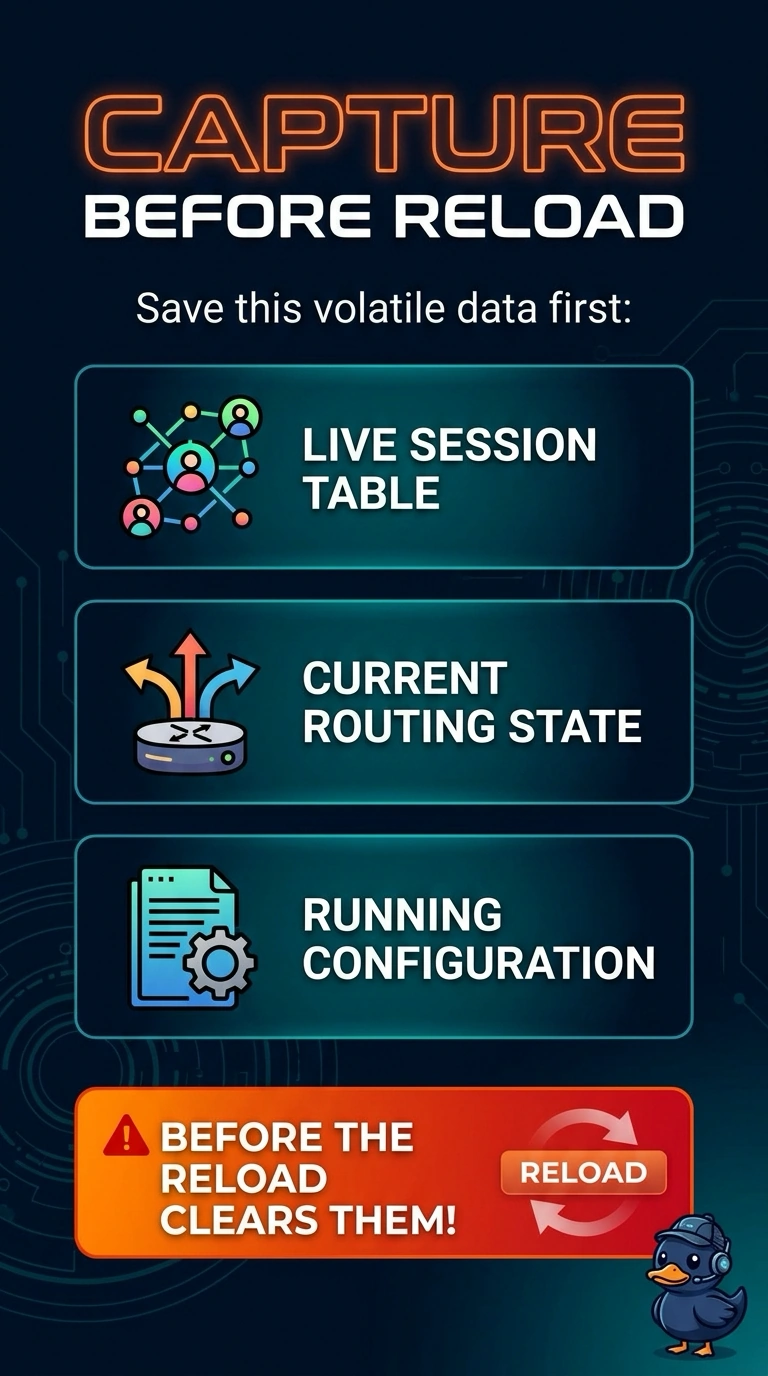
Short Explanation
Copy the passenger list before you turn the bus around, or those names are gone. You capture the live session table, the routing state, and the running configuration before the reload clears them. A photo of the lights afterward, or the gold image in the archive, is not the session that is active now.
Full Explanation
A reload drops volatile state and replaces the running configuration with whatever was saved as startup. The live session table, the current routing state, and the running configuration before the reload clears them are the records that disappear, so they are captured first and copied off the router. A photograph of the status lights, postponed until after the reload has returned the router to a quiet steady state, is taken too late and never contained the session. Only the startup configuration in nonvolatile storage, leaving the live session unrecorded on the device, keeps the saved config and loses the suspect session that a reload will flush. The archived gold image, used in place of any record of the session that is active on the router now, is a baseline, not the live evidence. Exam caveat: exact show commands differ by platform, but the principle is the same: session state and the running configuration are what a reload disturbs, and a device an attacker may have administered is not fully trusted. Operational check: record the session table, the routing table, and the running configuration, store those captures off the router, and only then reload.