
A retail breach report names a stolen VPN password as the root cause. That password succeeded on a VPN that required no second factor. Which statement is the cause rather than the access step?
Select an answer to reveal the explanation.
Short Explanation
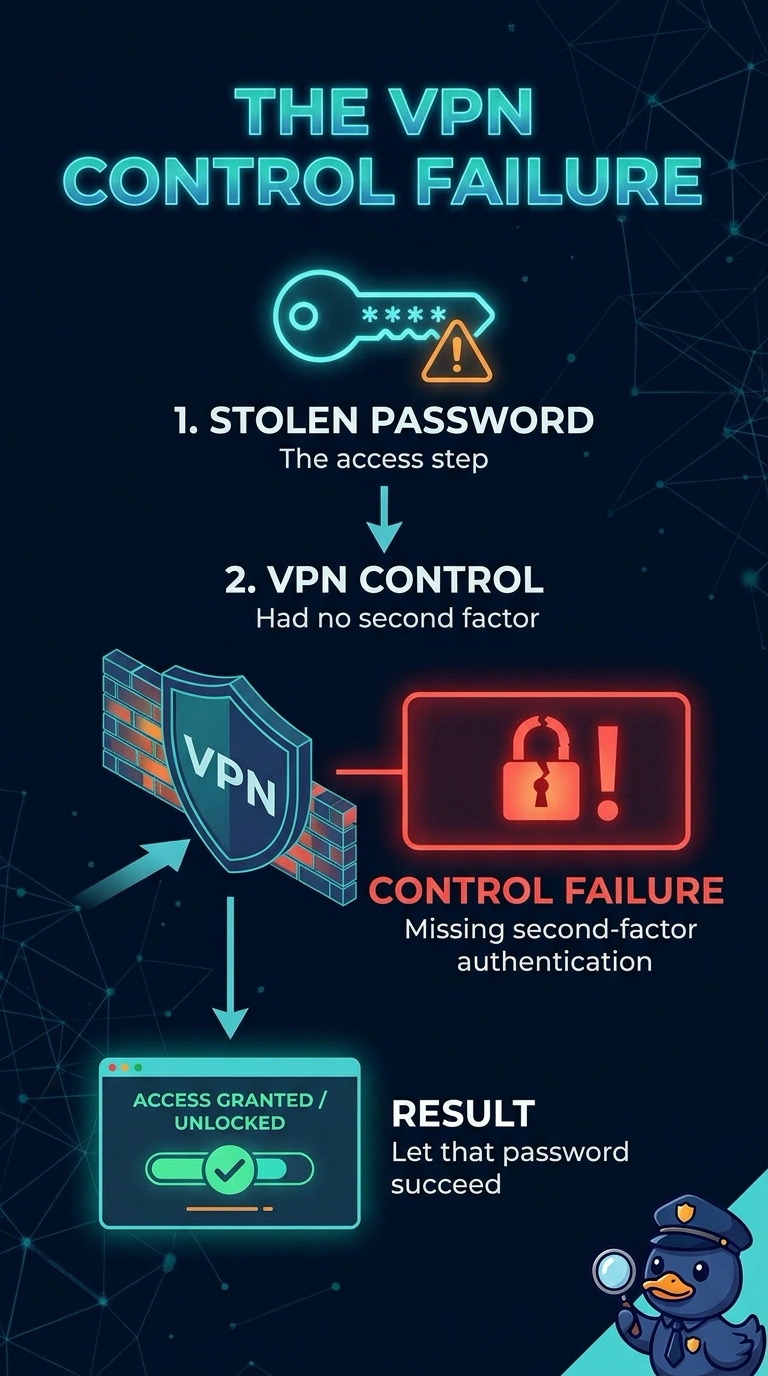
The stolen password is the key that turned, and the missing second factor is the deadbolt that was not installed. You should call the missing authentication the control failure, and call the password the access step that failure allowed. A phishing brand or a clock time is a different story from the one this report supports.
Full Explanation
The access step is use of the stolen password at the VPN. The cause is the control failure that let that password succeed: missing second-factor authentication, so one stolen secret was enough. That missing factor is what a fix has to change. Calling the stolen password itself the root cause treats the credential presented at the login prompt as the failure, but that presentation is how entry happened, not why the door had only one check. The branded phishing message is not established as the cause; the report does not tie that message to this login, so promoting the brand story invents a link. The clock time of the VPN login, and overnight staffing on the service desk, may explain slow detection, but the hour is not why the password was accepted. The clock did not grant the session. Exam caveat: the stolen password is still an exposed secret that must be retired, and that response does not make the password the root cause. Operational check: label the password use as the access step and the missing second factor as the control failure, then verify the VPN policy on that account.