
A hospital ransomware write-up lists a phishing message, a successful VPN login, and disabled endpoint protection, then stops. Which missing piece turns that timeline into a root-cause report?
Select an answer to reveal the explanation.
Short Explanation
A timeline is a trail of footprints, and a root-cause report is the broken lock that let someone through. You still need the control failure that made this chain succeed, plus evidence and a fix that traces to it. Clock times and a damage tally describe the walk, not the lock.
Full Explanation
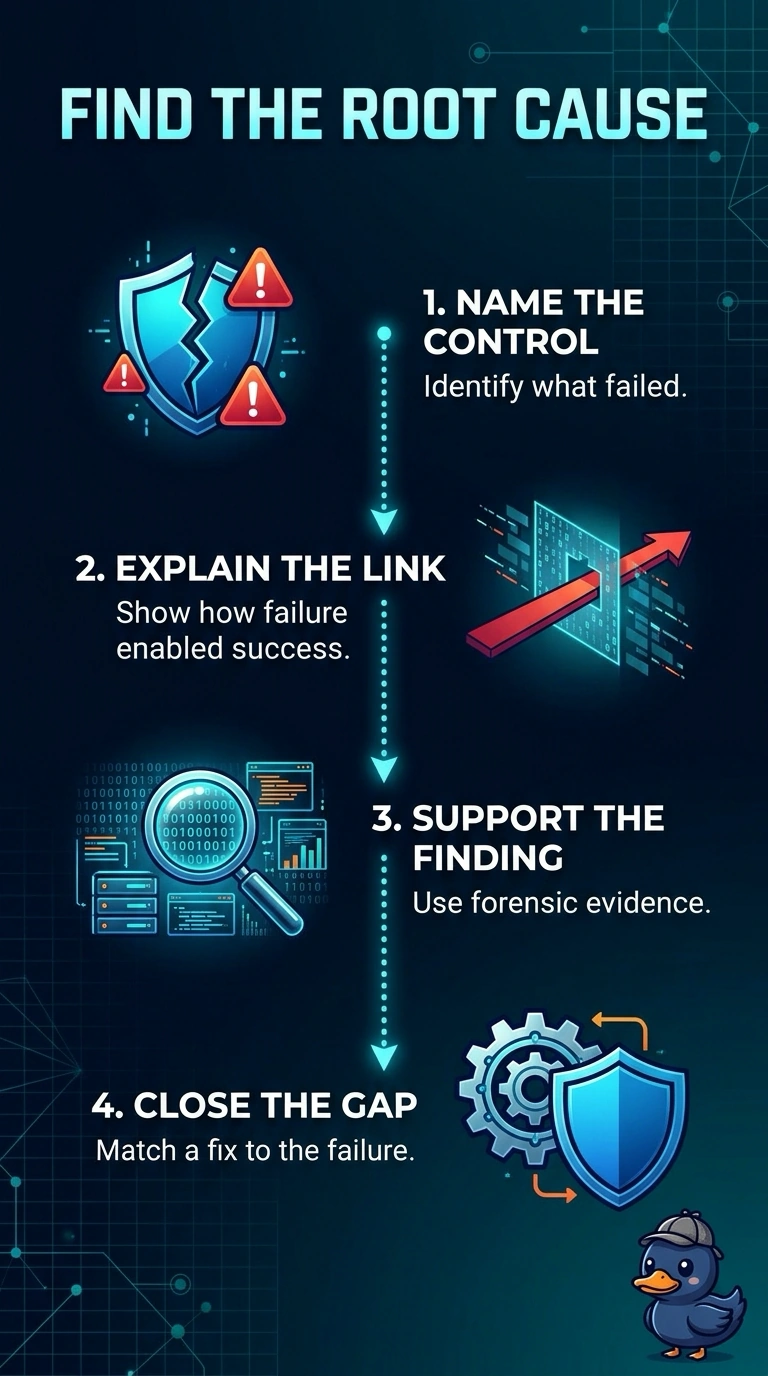
A root-cause report names the control failure that let the observed chain succeed, then ties that failure to supporting evidence and to a matching fix. A phishing message, a VPN login, and disabled endpoint protection are events in a sequence; they become a cause only when the write-up shows the broken control that made those events enough. A minute-level timeline that records clock times for the phishing mail and the login improves the sequence, but extra timestamps do not identify the failure or the corrective change. The count of encrypted patient records measures harm and can support scope, yet that count is not proof the incident is fully understood, and a tally of records does not say what must change. The vendor name of the disabled protection helps leaders see the product that failed, but a product label is not the failed condition and does not state the fix. Exam caveat: sequence and impact belong in the report, and they do not replace the condition that made the chain succeed. Operational check: in the findings, confirm a cited log or ticket for the failed control and a change that would have stopped this chain.