
During a factory incident, host logs and router logs put the same events in a different order because the clocks do not match. What should be checked before anyone builds the timeline?
Select an answer to reveal the explanation.
Short Explanation
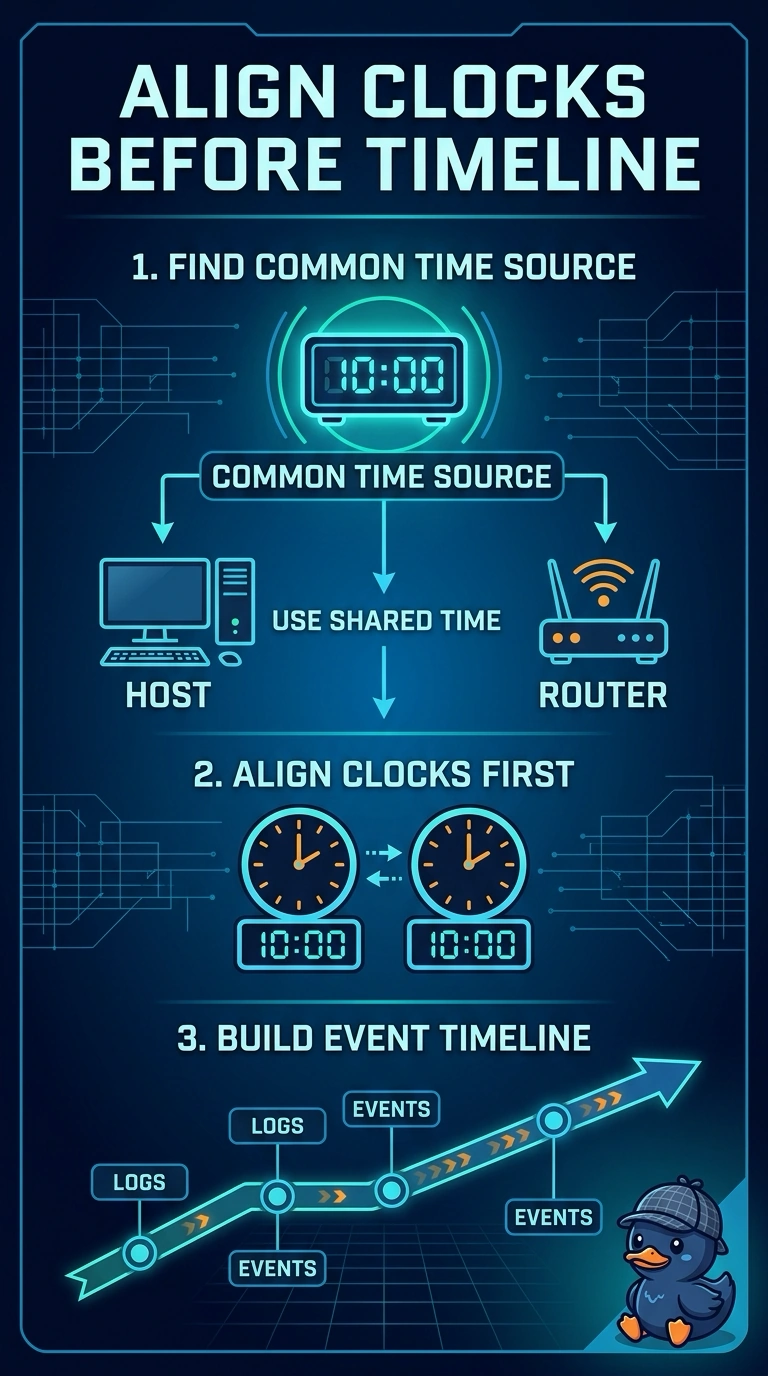
Two wall clocks in different rooms will tell two stories about the same knock on the door. You check for a common time source and align the host and the router before you order events. Bandwidth, file size, and someone's wristwatch do not set the timeline.
Full Explanation
A timeline is only as good as the clocks behind it. When host logs and router logs disagree, you confirm a common time source for the host and the router so the clocks can be aligned before ordering. Link bandwidth between the devices describes capacity, and ordering events by interface speed instead of clock time invents a sequence the packets did not have. File size of each log is about volume of messages, and treating the larger file as the earlier and more accurate clock confuses bulk with time. The name of the technician on shift is staffing context, and sliding every timestamp to that person's wristwatch replaces device time with an unverified watch. Ask which time source each device follows, write down both clock readings taken at the same moment, and leave the original timestamps untouched in the evidence notes. Exam caveat: record the offset you observe, and do not silently rewrite the original logs. Operational check: compare both device clocks with the same time source, note the difference, and only then sort the merged events.