
Three microservices at a software company log one shared request identifier for a checkout. Why is that identifier the right correlation key, rather than the user name alone?
Select an answer to reveal the explanation.
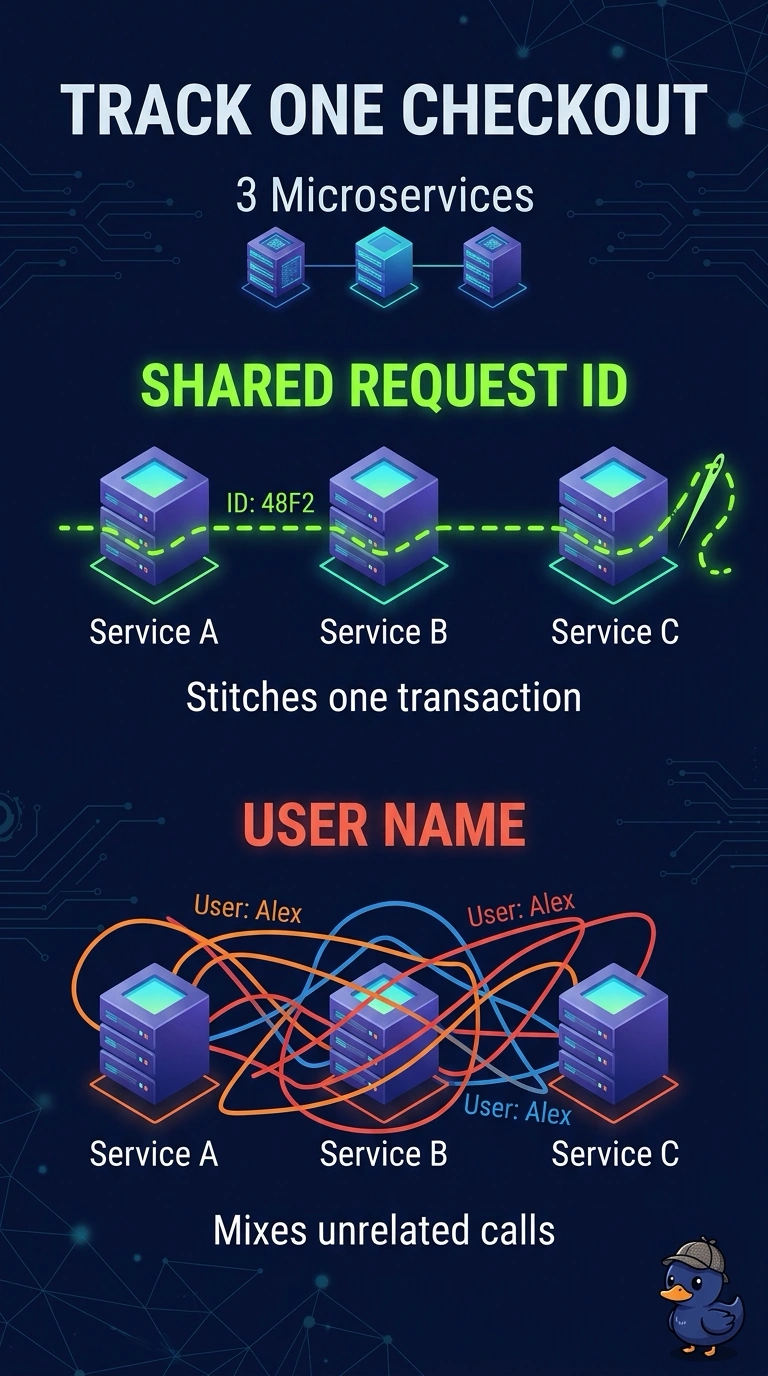
Short Explanation
A request identifier is the claim ticket on one checkout, clipped to every service that touched it. You search that identifier to stitch a single transaction across the three logs. A user name is the customer's whole wallet, so it mixes this checkout with the others they made.
Full Explanation
A shared request identifier is generated for one transaction and written by each microservice that handled it, so a search follows that single checkout from the edge through payment and inventory. The shared request identifier stitches one transaction, while a user name mixes unrelated calls the same person made before and after. User names are not unique per request, and they do not already separate one checkout from another; one user name covers many requests, so it blends them. Treating request identifiers as random noise that should be stripped before any cross-service review deletes the join key the services already share. Correlation that requires the three services to share one identical timestamp second fails when clocks differ by even a little and when two checkouts land in the same second; the identifier was built so you do not depend on that coincidence. Exam caveat: the identifier correlates the logged request path, and an access log still does not prove downstream payload execution. Operational check: pick one identifier from the front service and confirm the same value appears in the other two services for that checkout only.