
One office host opens connections to TCP 445 on dozens of internal addresses it has not contacted before. What activity do those flows describe?
Select an answer to reveal the explanation.
Short Explanation
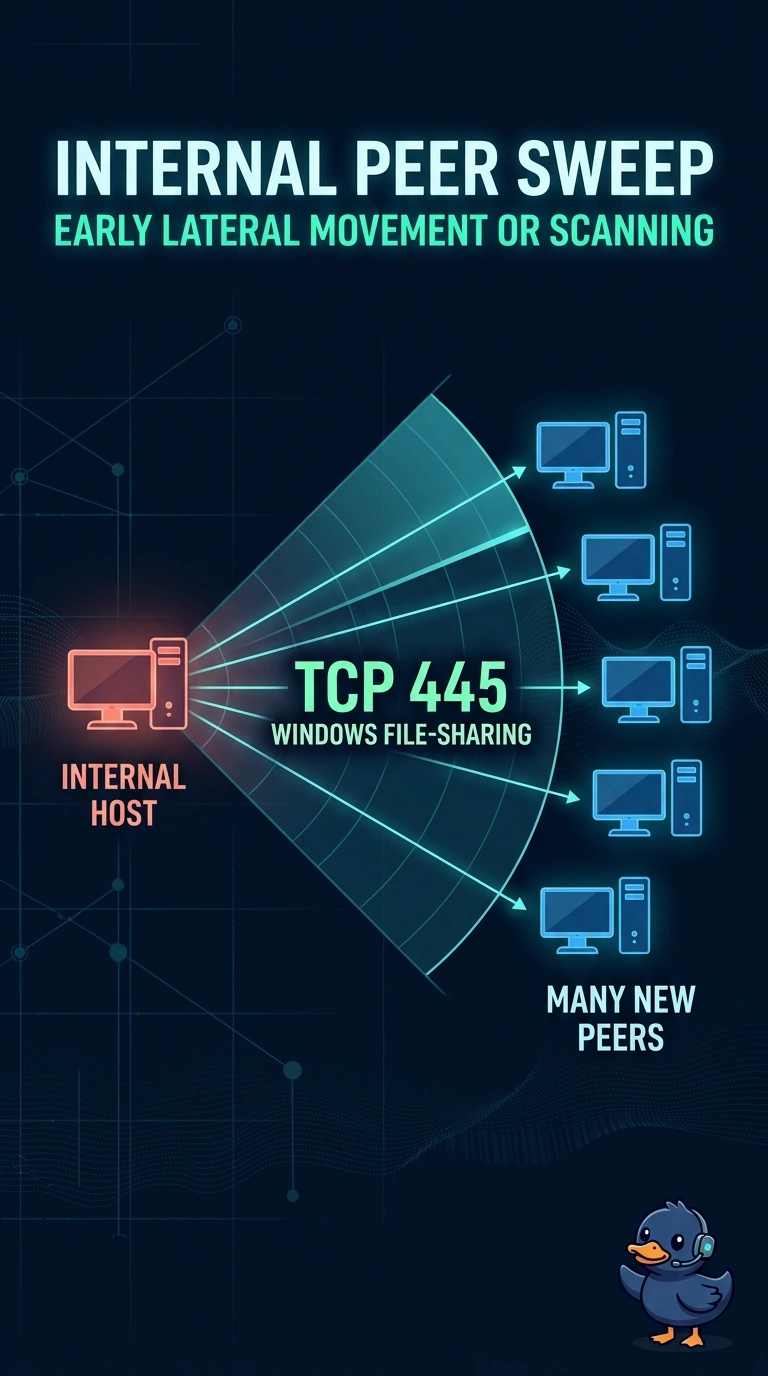
You can read one host contacting many new internal peers on TCP 445 as scanning or early lateral movement. A routine backup would go to its familiar file server, while DNS tunneling or beaconing would target an external destination. These flows instead fan out across new internal addresses.
Full Explanation
TCP 445 is the Windows file-sharing port. When one host opens connections on that port to dozens of internal addresses it has not contacted before, the flows describe an internal sweep of many new peers, fitting scanning or early lateral movement—the shape of a worm or an intruder mapping shares. A routine nightly backup from this host to the single file server it already uses would involve one familiar destination, not dozens of new internal addresses. DNS tunneling toward one external domain using long labels and unusual query types is a DNS query pattern to an outside domain, not internal connections on the file-sharing port. Beaconing from this host to one rare external address on a steady overnight interval is a repeated external callback, not a fan-out across new internal peers. Exam caveat: an administrator script can also touch many shares, so check whether the process and account are expected before calling the activity malware. Practical check: list the new internal destinations on TCP 445, confirm they were not prior peers, and tie the flows to the process that opened them.