
A software company stored a pile of suspected droppers and needs the same hash for every file on a Linux analysis host without starting a sample. Which method meets that need?
Select an answer to reveal the explanation.
Short Explanation
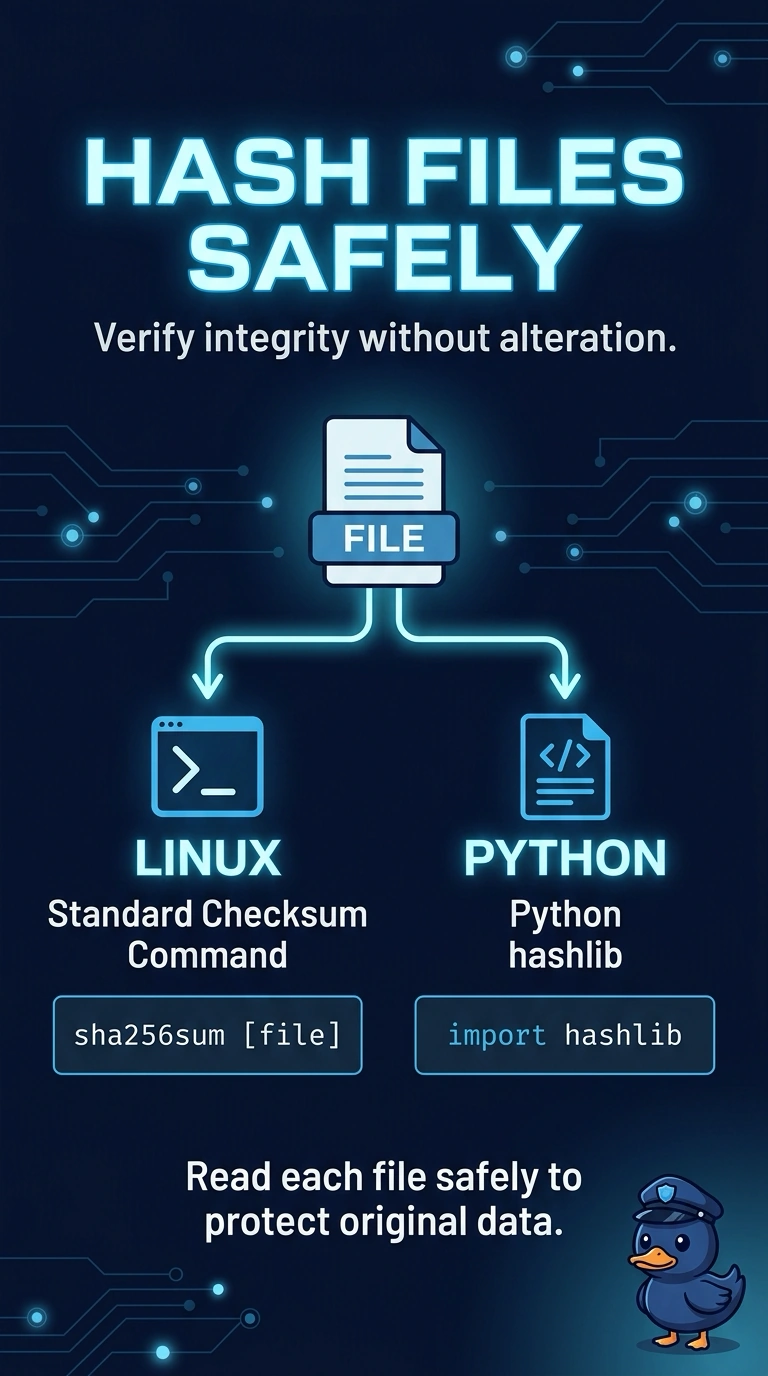
Picture a sealed evidence bag on a scale: you want the weight without tearing the bag open. Python hashlib and a standard checksum command read the file and print a digest, so the sample stays idle. Treating a sandbox launch or a debugger session as the measuring step starts the very thing you meant to weigh.
Full Explanation
Python hashlib and a standard checksum command take a path, read the bytes, and print a digest. The sample is not mapped as an executable process, so one script or one command can hash a large set the same way each time and leave the dropper inert. Choosing to execute each dropper inside a sandbox and copy the digest printed at launch starts the program and trusts output the sample printed, which is not a hash of the file. Choosing to attach a debugger, allow execution, and record the digest the sample writes has the same flaw: the code runs, and a debugger session can change the host you are trying to protect. Choosing to rename each sample to a text extension so the host hashes it when opened confuses a label with a tool; the workstation does not hash a file merely due to the extension change, and opening it can still invoke another program. Exam caveat: use one algorithm for the whole set so the digests compare, and remember a matching digest identifies bytes rather than intent. Operational check: hash a known test file twice with the same command, confirm both digests match, and confirm the process list shows the checksum tool rather than the sample name.