
A law-firm user received a file whose name ends in .pdf.exe and includes a right-to-left override that makes it look like a document. How should the file be treated?
Select an answer to reveal the explanation.
Short Explanation
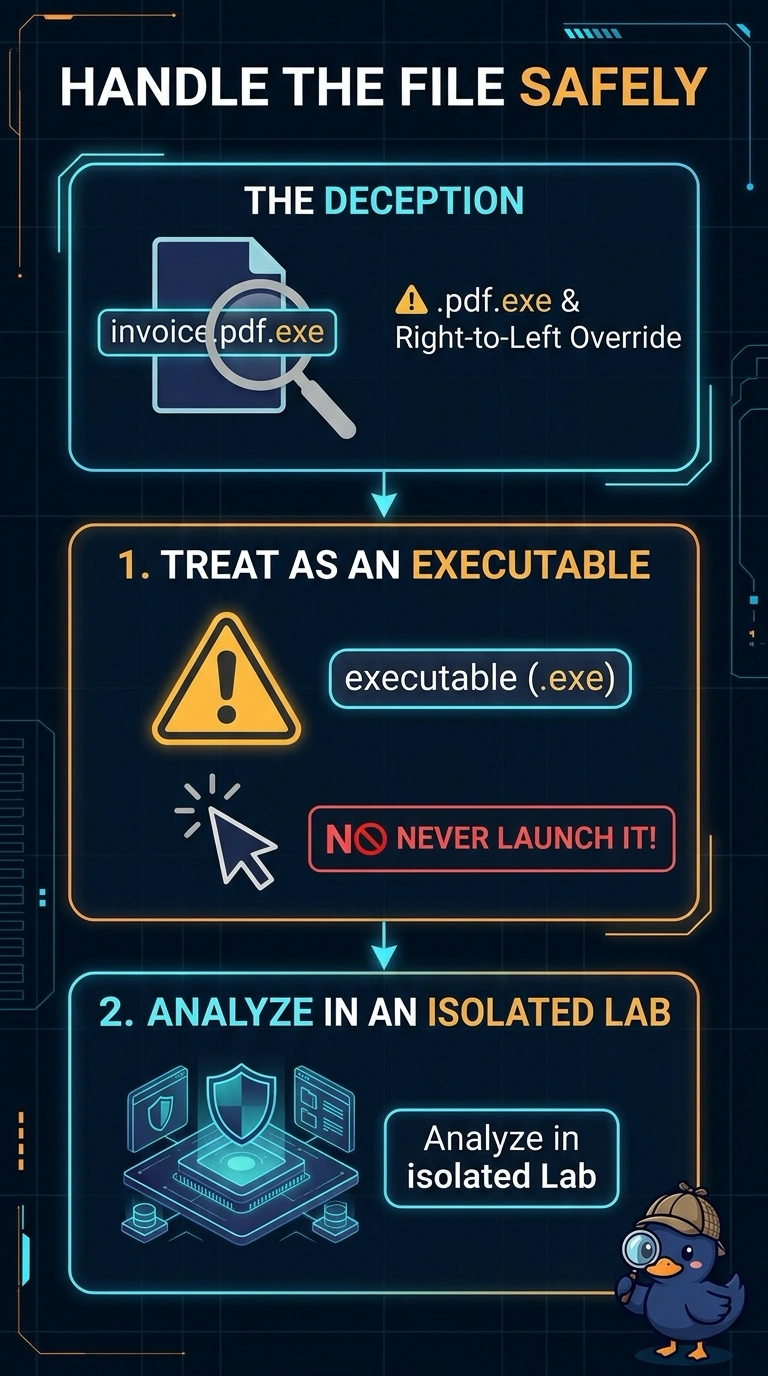
You see a costume label that tries to hide the real name tag. The .exe suffix and right-to-left override are masquerading indicators. Treat the sample as potentially executable and verify its headers/file type in an isolated lab before classifying it as PE.
Full Explanation
The .exe suffix and right-to-left override are masquerading indicators. Treat the sample as potentially executable and verify its headers/file type in an isolated lab before classifying it as PE. The right-to-left override only changes visual order, so the displayed document name cannot be trusted for type decisions and the file must be handled with executable caution in isolation without launching it. Trusting the displayed document name and opening the file with a PDF reader on the daily laptop follows the visual costume and risks execution on a daily-use system instead of containment. Stripping the override character only and delivering the file to the user inbox as a normal document removes one display trick but still forwards a suspicious sample to the user as if it were safe. Renaming a working copy to end in pdf and uploading that copy to the internal document portal for staff to read relabels the sample again and widens exposure by publishing unverified bytes to more readers. Exam caveat: the override does not alter file magic, so raw filename review plus header and file-type checks in the lab determine the true type. Operational check: view the raw filename, quarantine the sample, and verify headers/file type in isolation before any classification or user delivery.