
Static review of a mailed sample at a clinic shows one section with very high entropy. What should analysts do next, given that ransomware is not yet a justified label?
Select an answer to reveal the explanation.
Short Explanation
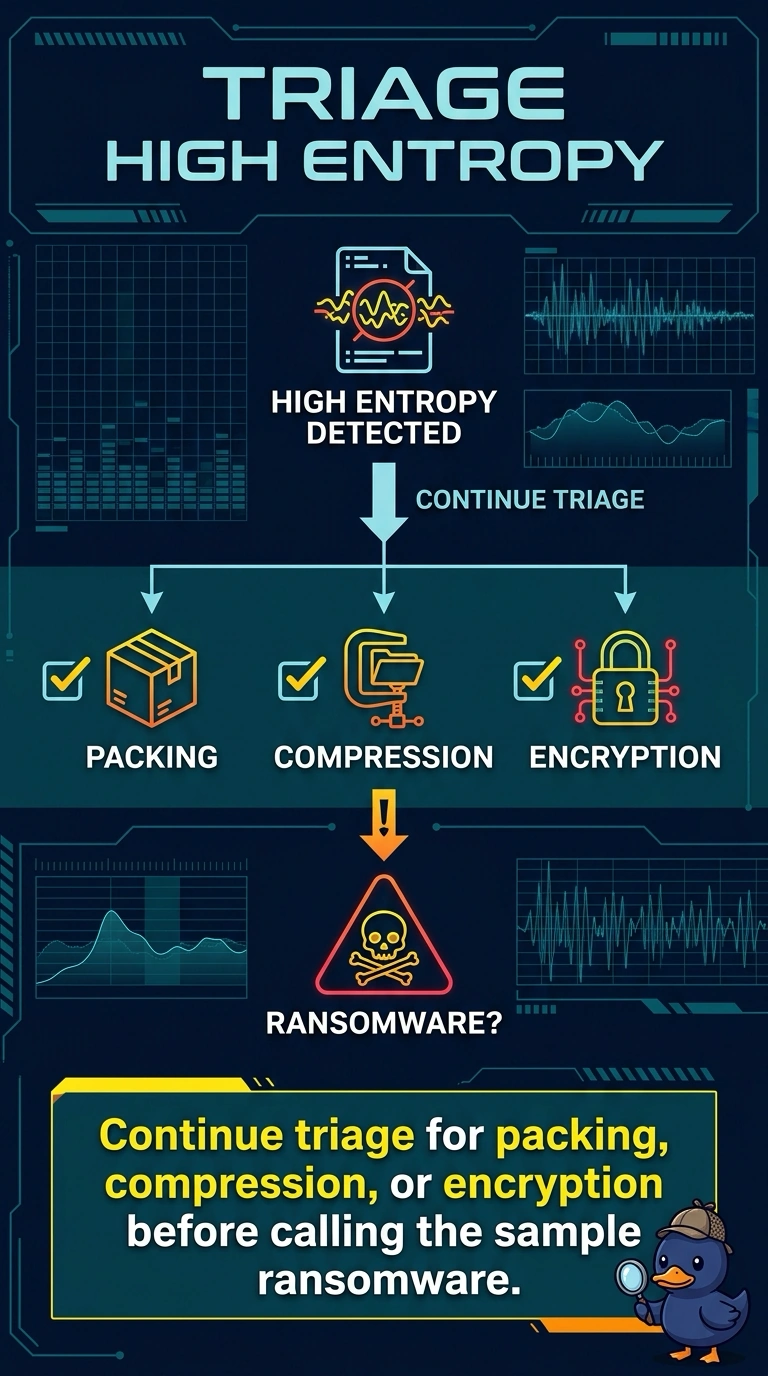
A heavy suitcase can hold books, tools, or something worse, and its weight alone cannot tell you which. High entropy can come from packing, compression, or encryption, so you continue triage before calling the sample ransomware; renaming the file or skipping the section does not explain the bytes.
Full Explanation
High entropy means the bytes look close to random, which can result from packing, compression, or encryption, and can also occur in some ordinary media. Continue triage for those causes before calling the sample ransomware: one dense section does not identify a malware family. Naming the sample ransomware from that single section and closing the review treats a suggestive observation as a conclusion and ends the work without enough evidence. Renaming the sample so the section is stored under a harmless document extension does not interpret the bytes; changing a filename extension does not reveal what the content is. Skipping the section because benign media stored in mail can have high entropy also fails: that may explain some attachments, but it does not establish what this unexpected sample contains. Examine section names, packer hints, and strings, and use controlled detonation only if the static picture remains unclear. Exam caveat: ransomware often has high-entropy regions, but packers and compressed archives can as well, so entropy is a prompt for investigation, not a family name. Practical check: record the entropy observation, then note whether the section appears packed, compressed, or encrypted before labeling the case ransomware.