
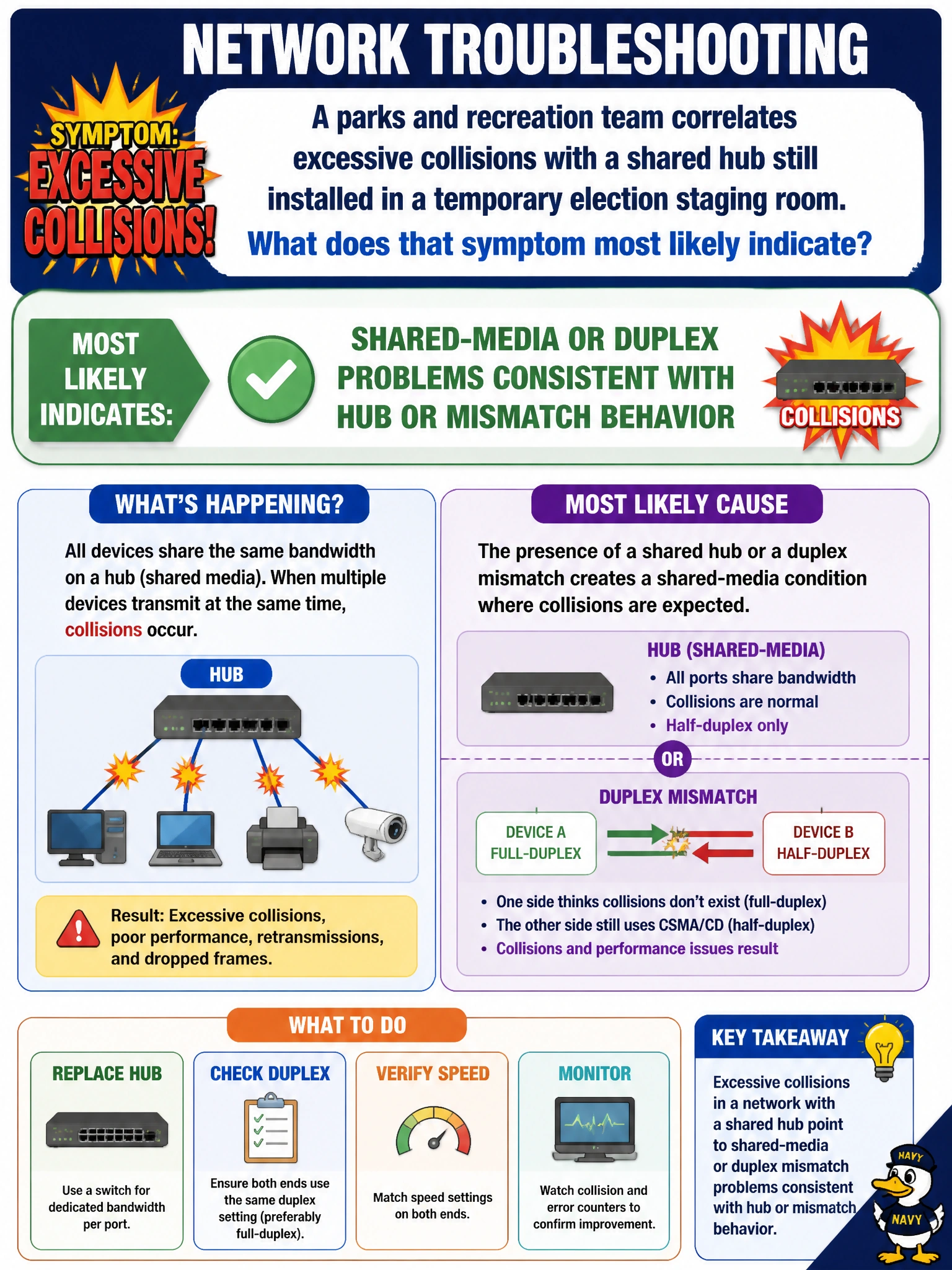
A parks and recreation team correlates excessive collisions with a shared hub still installed in a temporary election staging room. What does that symptom most likely indicate?
Select an answer to reveal the explanation.
Short Explanation
Hubs are one big shared party line—collisions are expected when everyone talks. Modern switched full-duplex links mostly retire that pain. The hub in the staging room is the smoking gun.
Full Explanation
Excessive collisions correlated with a shared hub in a temporary election staging room most likely indicate shared-media or duplex problems consistent with hub (or mismatch) behavior. A hub repeats bits to all ports and forms one collision domain; concurrent transmitters collide, so high collision counts are expected under load. That symptom pattern fits parks-and-recreation election staging far better than a healthy full-duplex switched link.
Full-duplex point-to-point Ethernet with no shared collision domain fails because that model largely eliminates collisions; seeing excessive collisions argues against it. A healthy fiber uplink operating well above line rate fails by concept—neither "healthy" nor "above line rate" explains collision storms on a hub segment. Successful QoS marking of all election video as EF by the hub fails because hubs are not QoS-marking policy engines for EF video classification.
Exam caveat: Hubs = shared collision domain = collisions under contention. Switches with full-duplex point-to-point links remove that classic collision behavior. Prefer replacing hubs with switches in any staging network that matters.
Operational check: Replace the hub with a switch, ensure endpoints negotiate full duplex, and confirm collision counters drop while election staging traffic proceeds. If collisions remain after removing the hub, check for duplex mismatch or bad NICs—but the hub itself is the primary conceptual culprit in this stem.