
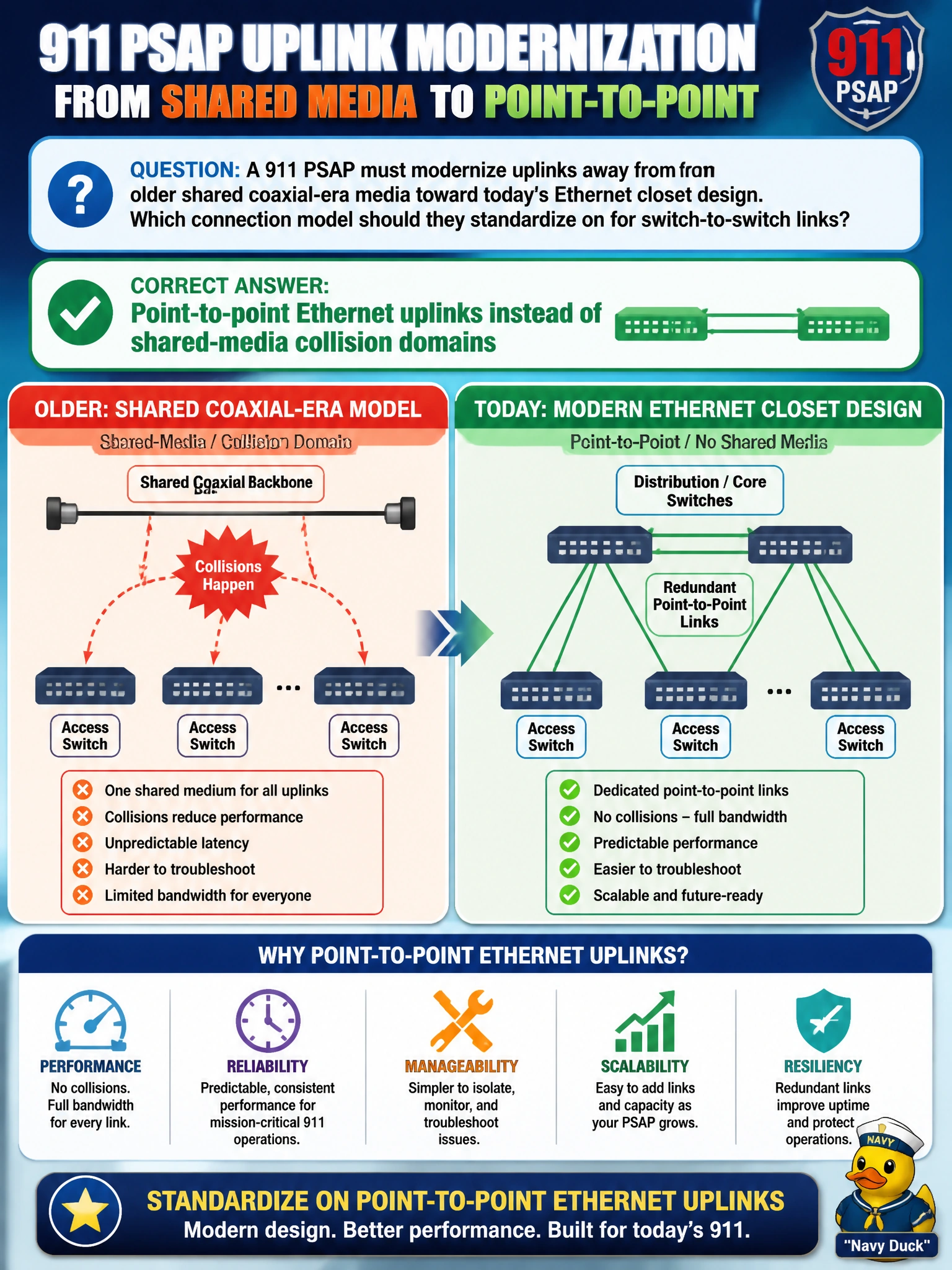
A 911 PSAP must modernize uplinks away from older shared coaxial-era media toward today's Ethernet closet design. Which connection model should they standardize on for switch-to-switch links?
Select an answer to reveal the explanation.
Short Explanation
Old shared coax was like one party line—everyone talks over each other. Modern Ethernet uplinks are dedicated point-to-point conversations between switches. Hubs and rings aren't the PSAP upgrade path.
Full Explanation
A 911 PSAP modernizing away from older shared coaxial-era media should standardize switch-to-switch links on point-to-point Ethernet uplinks. Modern Ethernet between switches is dedicated point-to-point (typically full duplex), eliminating the shared-media collision domains of classic coaxial bus designs. That is the correct connection model for contemporary closet uplinks in a public-safety answering point.
A single shared coaxial bus where every station contends for the wire fails because that is the legacy shared-media model being retired. Half-duplex hub repeating to all ports as the preferred core design fails by concept—hubs recreate one collision domain and are not preferred for modern switch-to-switch cores. Token-passing ring as the only supported interswitch technology fails because token ring is not the Ethernet uplink standard for current campus closets.
Exam caveat: Shared media and hubs imply collisions and contention; switched point-to-point Ethernet uplinks do not. When a stem says "modernize away from shared coax," the answer is point-to-point switched Ethernet—not nostalgia technologies.
Operational check: Replace shared/hub segments with switch ports and dedicated uplinks, confirm links negotiate (or are set) to appropriate speed and full duplex, and verify collision/error counters are not characteristic of shared-media behavior. If a hub or coax bus remains in the uplink path, the PSAP has not completed the modernization the question describes.