
At a university, an analyst needs the DNS name that was queried and the answer code that came back, not the packets surrounding the lookup. Which data type supplies those two fields?
Select an answer to reveal the explanation.
Short Explanation
A checkout slip names the book and the due status, and it is not a chart of how busy the library was. You want the transaction record of the DNS name and the answer code. The trap is daily averages, a switch address table, or a severity label with no query.
Full Explanation
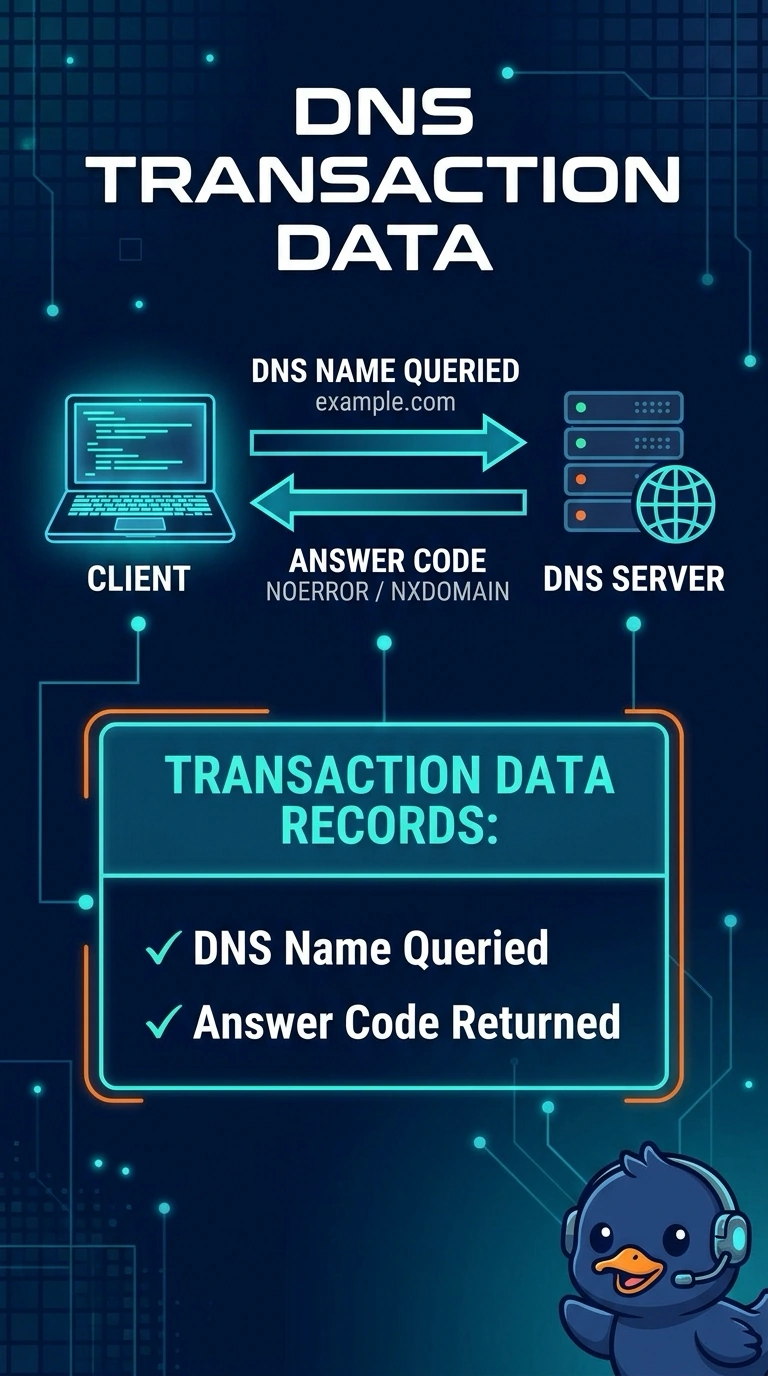
Transaction data records an application request and the result that came back, without requiring the surrounding packets. A DNS transaction holds the name that was queried and the answer code. Daily totals, a layer-2 address table, and a severity label do not carry those two fields. "Transaction data that records the DNS name queried and the answer code returned for it". It is the record of the queried name and the answer code, which is the request. "Statistical averages of DNS query volume across the campus resolvers for the whole day". Averages describe how much query volume the resolvers saw. They do not name one query or its answer code. "A switch CAM table that maps MAC addresses to ports on the campus access switches". A CAM table maps MAC addresses to switch ports. It is a forwarding table, not a DNS question and answer. "An alert severity label for the lookup that omits both the queried name and the answer code". A severity label rates an event. When the name and the answer code are omitted, the label is not the transaction. Exam caveat: an alert can be raised from a DNS transaction, and the severity by itself is still not the query or the answer code. Operational check: open the DNS transaction record and confirm both the queried name and the answer code are present.