
At a retailer, cashiers receive the register role and nothing beyond it, and moving someone to supervisor replaces that role instead of editing dozens of separate permissions. Which access model is this?
Select an answer to reveal the explanation.
Short Explanation
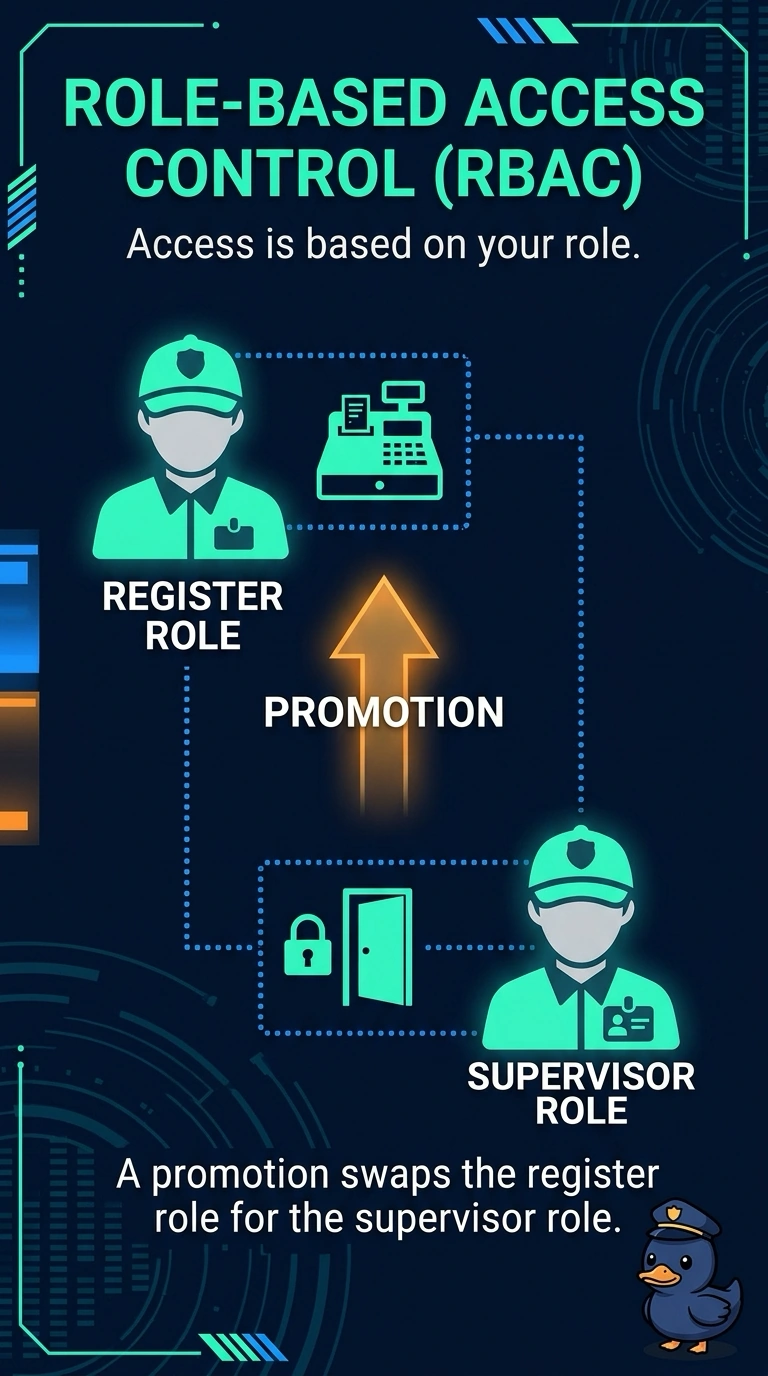
A named hat that comes with a whole ring of keys is easier to swap than rekeying every door. You give cashiers one register role, and a promotion replaces that role instead of editing dozens of rights. The trap is answering with location and device checks, per-file grants, or a clock alone.
Full Explanation
Role-based access control bundles permissions into a role and assigns the role to the person. Cashiers receive the register role and nothing else, and a move to supervisor replaces the role rather than editing each right, which is that model. Role-based access control, where a promotion swaps the register role for the supervisor role, matches the retailer practice. Attribute checks on store location and device posture for every action a cashier attempts would be attribute-based decisions, and the scenario does not add location or device checks. Separate owner grants on each register file, edited one permission at a time for the promotion, would be discretionary grants on individual files, which is the editing burden the role swap avoids. A time lock alone, so the clock decides register access and the cashier job role is ignored, would ignore the role, and the scenario turns on replacing one role with another. On the exam, the role is the bundle you assign and replace; it is not the same control as testing location and device on every action. In operations, list the permissions on the register role and the supervisor role and confirm a promotion changes role membership rather than a pile of individual grants.