
At a bank, a wire file arrives with a hash that no longer matches the hash the sender published, and the transfer service is still accepting files. Which CIA pillar failed?
Select an answer to reveal the explanation.
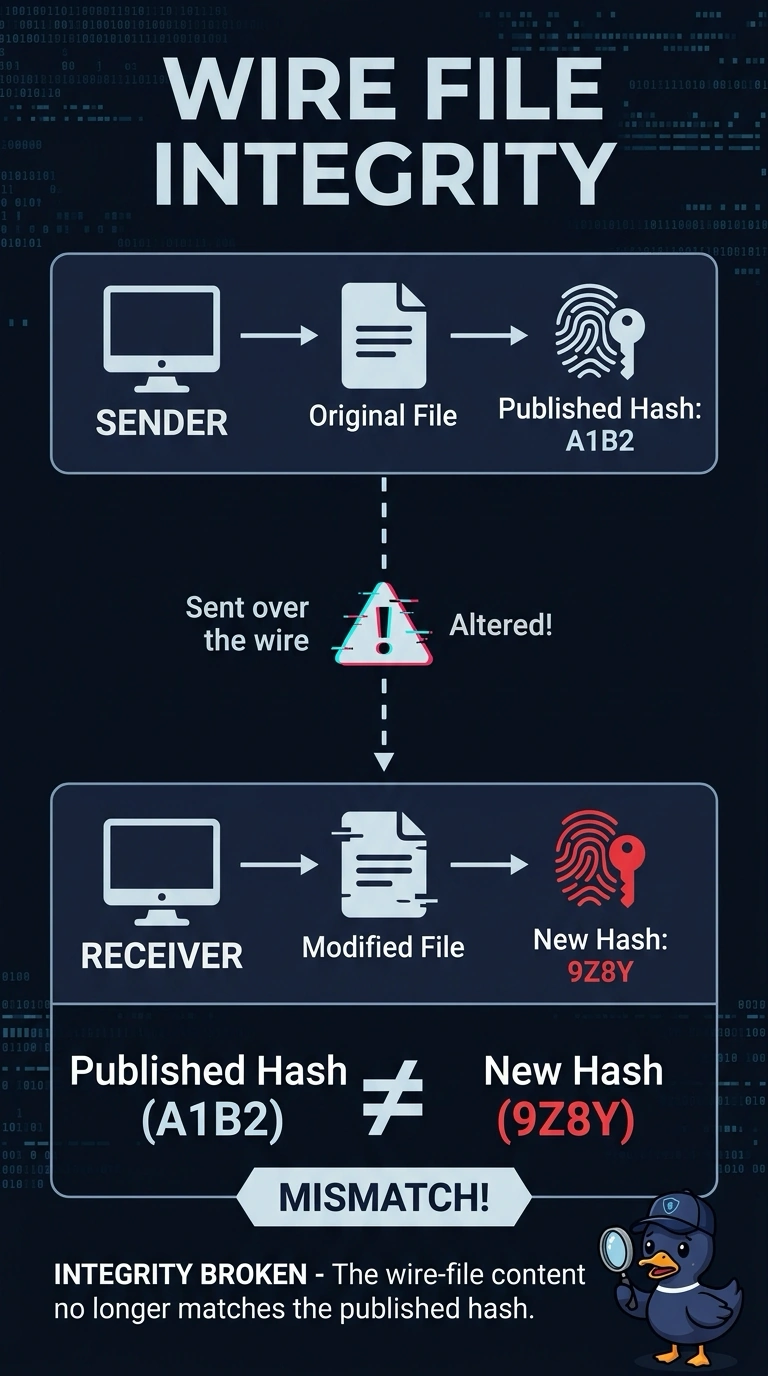
Short Explanation
A seal that does not match the sender's stamp means the contents are no longer the contents you were promised. Your wire file fails the published hash, so integrity failed. The trap is calling this a leak, a downed transfer service, or an expired password.
Full Explanation
Integrity, the wire-file content no longer matches the hash the sender published is the pillar that failed. Integrity means the content you received is the content the sender produced. The bank recomputes or compares a hash and the received file does not match the hash the sender published, so the bytes are not the bytes that were vouched for. The transfer service is still accepting files, which shows the file did arrive. Confidentiality, an unauthorized party read the wire file while the transfer was in progress would fit if the evidence were that an unauthorized party read the file. A hash mismatch does not show who read it. Disclosure may or may not have happened, but it is not what the mismatch proves. Availability, the bank wire-transfer service is down and no files can move would fit if the wire service were down and the file could not move. The file arrived and the service is still accepting files, so use of the service was not lost. Authentication, the sender password expired before the bank would accept the wire file would fit if the sender could not prove identity because a password had expired. Nothing in the scenario says a password failed. The sender's published hash is a content check, not a login. Exam caveat: a hash mismatch shows that the content differs from the published value. It does not, by itself, name the person who changed the file. Operational check: hash the received file again and compare that result with the sender's published value obtained through a separate channel.