
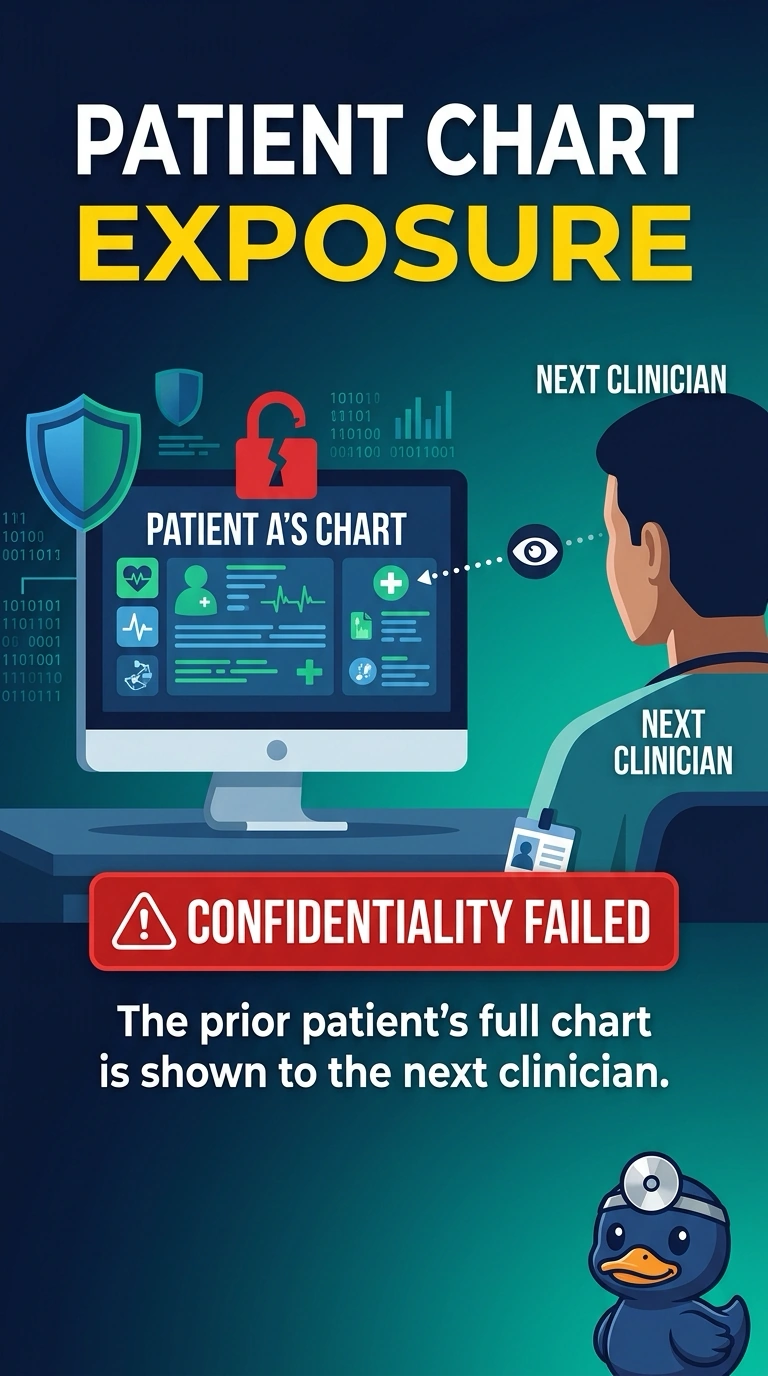
At a hospital, a shared clinic PC still shows the previous patient's full chart when the next clinician sits down. Nothing in the chart was rewritten, and the chart system answers normally. Which CIA pillar failed?
Select an answer to reveal the explanation.
Short Explanation
A chart left open on a shared desk is like handing the last folder to the next person in line. You still have a working system and unchanged values, but the prior patient's record was disclosed. The trap is calling this an outage or a missing log line.
Full Explanation
Confidentiality failed when the prior patient's full chart was shown to the next clinician is the pillar that failed. Confidentiality is the promise that a record stays with the people who are allowed to see it. The next clinician was shown the previous patient's full chart on a shared hospital PC. Integrity failed when chart values were rewritten between the two clinician sessions would be the right reading if the chart contents had been changed without authorization. The handoff left the values as they were, so unauthorized change is not the failure in front of you. Availability failed when the chart system became unreachable for the next clinician would be the right reading if the chart system refused to answer or could not be opened. The system answers normally, and the problem is that it answers with someone else's chart. Accounting failed when that chart view was never written into the clinic workstation security log describes a missing audit entry for the view. A logging gap matters for later review, but the pillar that already failed is the disclosure itself; a log would not have put the chart back in the right hands. Exam caveat: accountability is often taught beside the triad, yet the question that asks which CIA pillar failed is answered by unauthorized disclosure, which is confidentiality. Operational check: rehearse a clinician changeover on a test profile and confirm the prior chart is cleared or locked before the next person uses that same PC.