
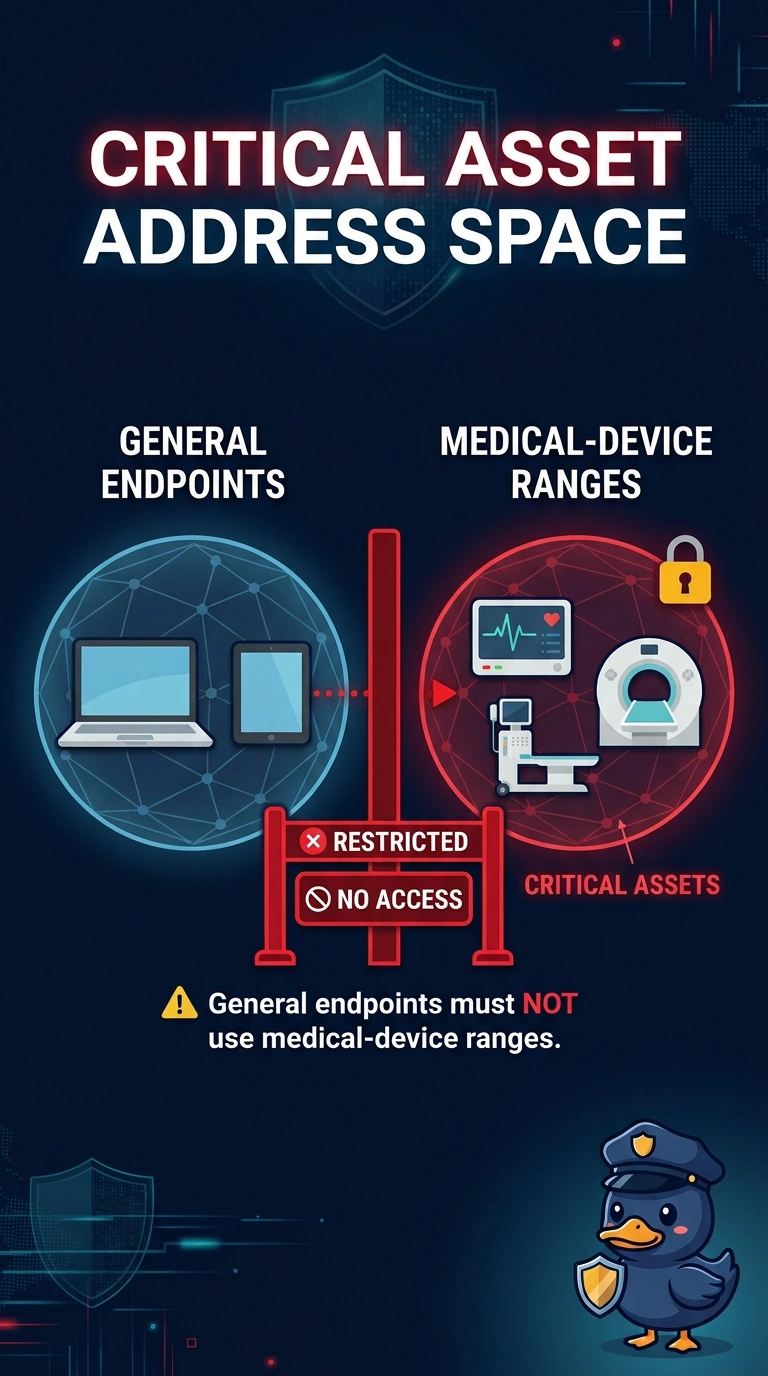
At a hospital, the network profile lists address ranges reserved for medical devices and says those ranges must not be used by general user endpoints, yet a laptop is using one of those addresses. Which profile element makes this matter?
Select an answer to reveal the explanation.
Short Explanation
Visitor parking in the ambulance row matters because those spaces were reserved. You have a laptop on an address the hospital profile reserved for medical devices. The trap is answering with how long a session lasted, an email subject, or a PKCS file.
Full Explanation
Critical asset address space in a network profile is the address ranges reserved for assets that must be recognized when something else uses them. The hospital lists medical-device ranges that must not appear as general user endpoints, and a laptop is using one of those addresses, so this element is what makes the observation matter. Critical asset address space, the medical-device ranges a general laptop is not supposed to use, is that element. Session duration for the laptop, the expected length of a connection rather than who holds the address, describes how long a flow lasts and does not say the address was reserved for a medical device. An email subject line from a help-desk note about the laptop and the medical-device address range is message text, not the profile field that reserves the ranges. A PKCS file stored on the laptop, packaging keys or certificates rather than a reserved address range, is cryptographic material and does not define which addresses are reserved for medical devices. On the exam, an address inside the reserved range does not prove the laptop is a medical device; it shows a general endpoint occupying space the profile reserved. In operations, match the laptop address against the reserved ranges and identify which listed medical device is supposed to hold it.