
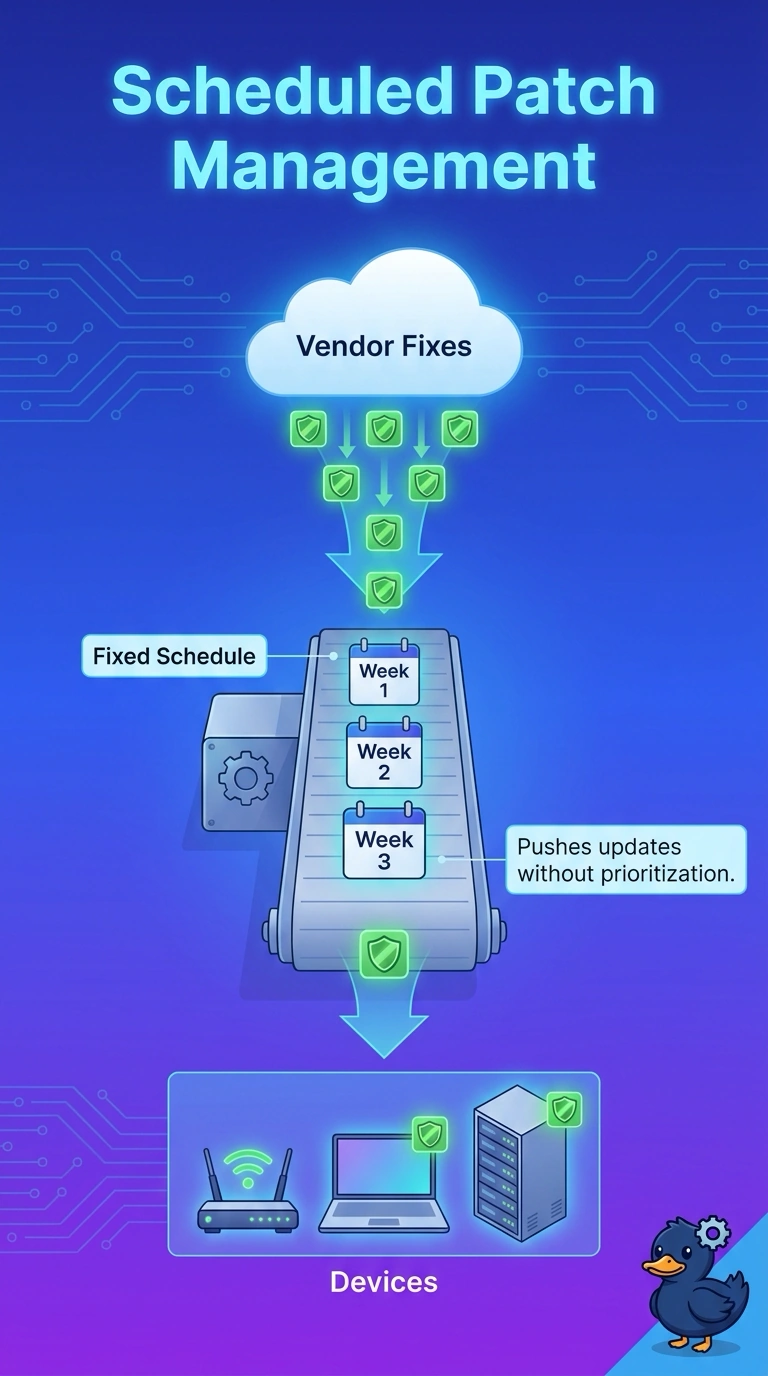
A manufacturer pushes vendor fixes to plant systems on a fixed schedule and does not rank configuration flaws or other weaknesses. Which practice is that schedule performing?
Select an answer to reveal the explanation.
Short Explanation
Oil changes on a calendar are upkeep, not a full inspection of the building. If the manufacturer only pushes vendor fixes and does not rank other flaws, you are looking at patch management. The wider vulnerability program, threat hunting, and mail filtering answer different jobs.
Full Explanation
Patch management is the disciplined deployment of vendor fixes, often on a calendar or a maintenance window. The plant does that and stops. It does not score configuration weaknesses or keep exceptions for flaws it has chosen not to fix. The practice in front of you is: Patch management that pushes vendor fixes on a schedule and does not rank any other flaw. The broader program is what people reach for when they hear the word vulnerability. Vulnerability management covering missing fixes, weak configurations, and tracked exceptions includes ranking and exception handling the plant is not doing, so the schedule alone is not that whole program. Searching for an intruder is a different job. Threat hunting that searches plant hosts for attacker behavior without waiting for an alert looks for adversary activity, not for missing vendor packages. Message inspection is unrelated to the update calendar. Mail filtering that inspects inbound plant messages before operators are allowed to open them protects the inbox and says nothing about which hosts received a vendor fix. Exam caveat: patching is one input to vulnerability management, not a synonym for it. A stem that stops at scheduled vendor fixes is patch management even when the wider program would have been a better design. Operational check: read the plant procedure and confirm the only output is deployed vendor updates, with no ranked list of configuration findings or accepted exceptions.