
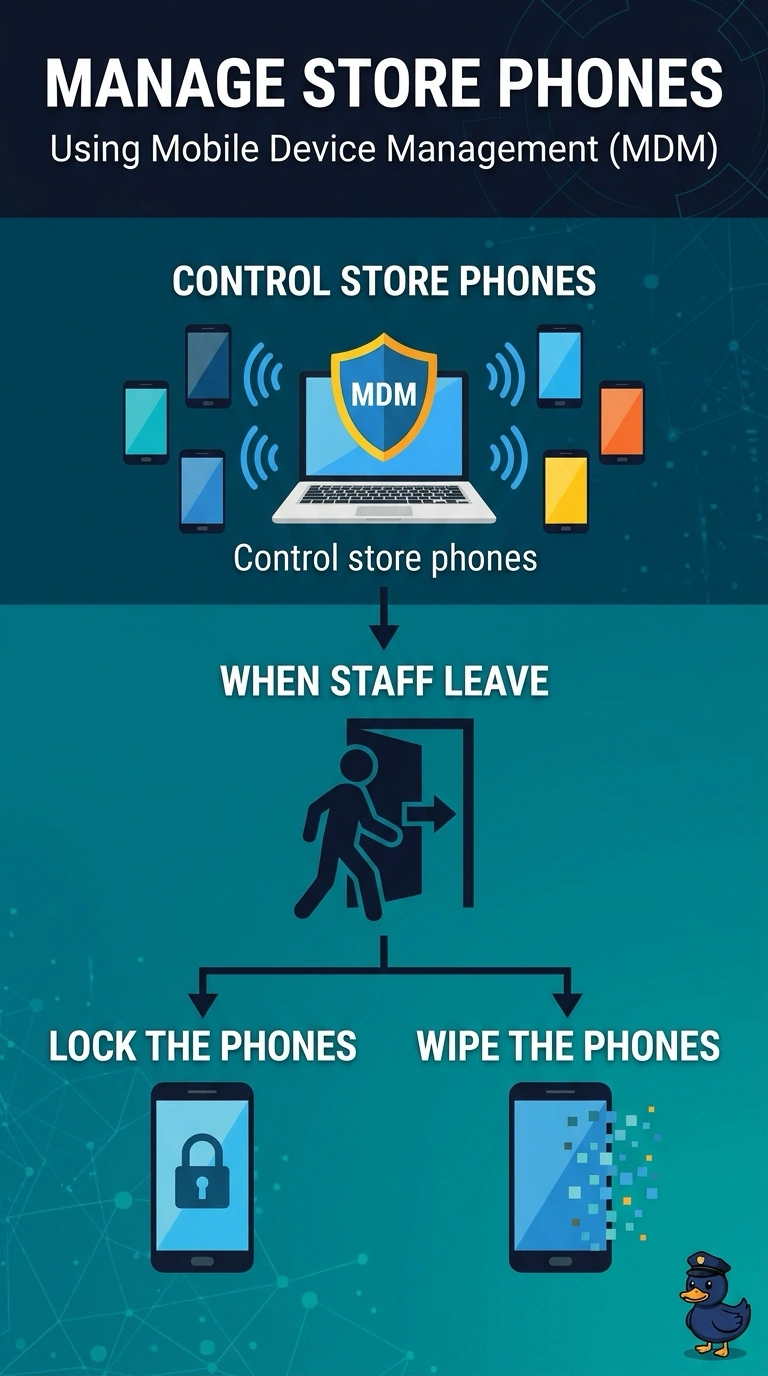
At a retailer, store phones can be locked and wiped when people leave the company, and personal laptops cannot be controlled that way. Which practice covers the phones?
Select an answer to reveal the explanation.
Short Explanation
The store can recall the radios it issued, not the personal handset in someone's pocket. You can lock and wipe company phones when people leave, and personal laptops are outside that control, so this is mobile device management. The trap is a server patch cycle, a flow sampler, or a sandbox.
Full Explanation
Mobile device management that can lock and wipe the store phones when staff leave is the practice that covers the phones. Mobile device management enrolls the devices the company controls and can lock or wipe them when people leave. The store phones have that capability. The personal laptops cannot be locked or wiped the same way, which fits a control that applies only to enrolled devices and not to machines that were never enrolled. A server patch cycle that installs vendor updates on store servers on a set schedule installs vendor updates on store servers on a schedule. A server patch cycle does not lock a phone and does not explain why phones and personal laptops are treated differently. A NetFlow sampler that exports conversation summaries from the store network gear exports conversation summaries from network gear. It does not lock or wipe a handset, and it does not care whether a laptop is personal. A sandbox that detonates a suspicious file and reports hashes, URLs, and process events detonates a suspicious file and reports hashes, URLs, and process events. It is not the control that reaches a phone after someone leaves the company. Exam caveat: mobile device management covers enrolled devices. A personal laptop that was never enrolled stays outside that practice, which is why the same departure does not wipe it. Operational check: confirm the store phones are enrolled and that a remote lock or wipe is available for one of them, and confirm a personal laptop is not in that enrollment.