
A logistics hub alert shows a URI containing a scripted database predicate. The addresses on the alert are the warehouse web server and a clerk PC. Which artifact carries the injection?
Select an answer to reveal the explanation.
Short Explanation
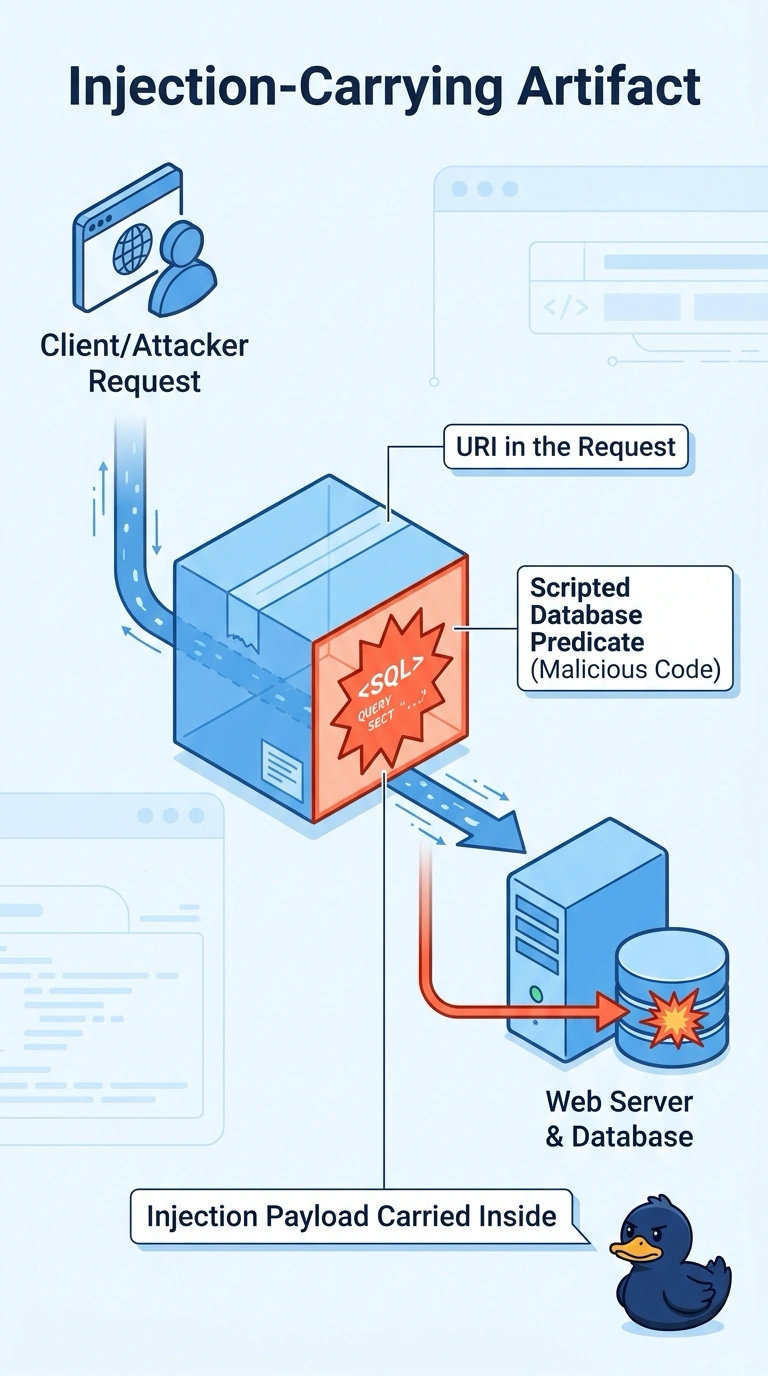
The harmful note is in the message, not in the door number or the seal on the envelope. You find the injection in the URI, where the scripted database predicate sits. The trap is the server port alone, the web server binary hash, or the frame check sequence.
Full Explanation
The alert places a scripted database predicate inside the URI. That request line is the artifact that carries the injection between the clerk PC and the warehouse web server. The port only names the service, the server binary hash does not change with the request, and the frame trailer checks integrity. "The URI in the request, where the scripted database predicate is carried" is the artifact. "The server port number alone, without any of the content from the request line" can identify the web service and still omits the predicate. "The hash of the web server binary, a fingerprint this request does not change" identifies the server program, not the request content. "The Ethernet frame check sequence computed at the end of the captured frame" is the trailer used to detect a damaged frame, not the injection string. Exam caveat: the endpoints tell you who talked, and the injection text in this alert is in the URI. Operational check: open the request, highlight the predicate inside the URI, and record the clerk PC and warehouse server only as the endpoints.