
A retailer capture of a client session shows destination port 443 and a high ephemeral source port on the same packets. Which value identifies the service the client contacted?
Select an answer to reveal the explanation.
Short Explanation
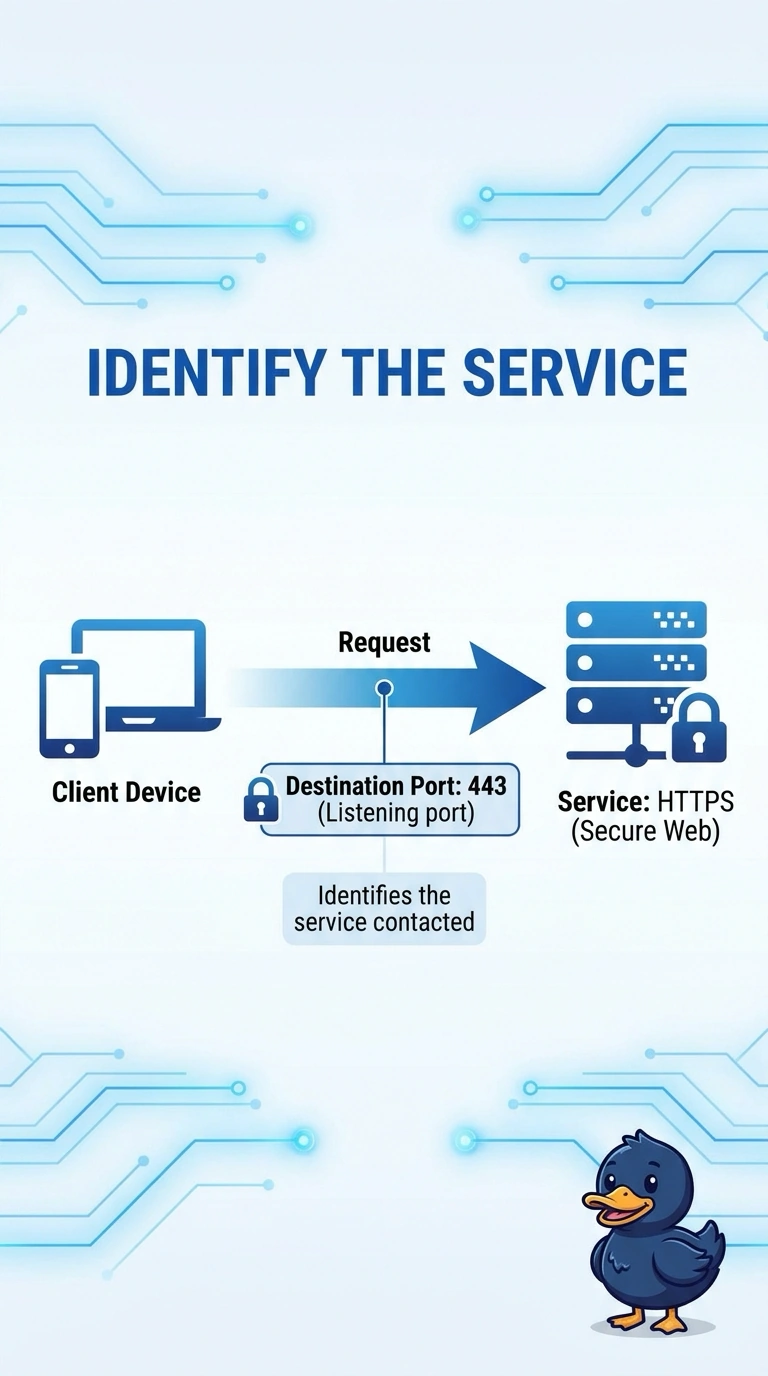
The building number tells you the shop you reached, and the parking stub does not. You use destination port 443 to identify the service. The trap is answering with the ephemeral source port, the fragment identifier, or the hop counter.
Full Explanation
The right selection is "Destination port 443, the listening port that identifies the service the client contacted". The client chose a high source port for its socket, and it aimed the connection at 443, the port the service is listening on. The statement "The high ephemeral source port the client picked for this one socket on the retailer network" identifies the client end of the socket for this connection, not the service that was contacted. The statement "The IPv4 identification field, a fragment label that does not name the contacted service" helps reassemble fragments of an IP packet and is not a port. The statement "The IPv4 time-to-live, a remaining-hop counter that does not name the contacted service" counts down as the packet is forwarded and is not a port either. Exam caveat: a service can listen on a port other than a well-known number, so you use the destination port this client actually used, which in this capture is 443. Operational check: on the client-to-server packets, read the destination port and match it to the listening service rather than to the high source port.