
An agency analyst is sorting a signature drop, a URL block that names a user and an address, and a byte count for a conversation. Which of those records came from the proxy?
Select an answer to reveal the explanation.
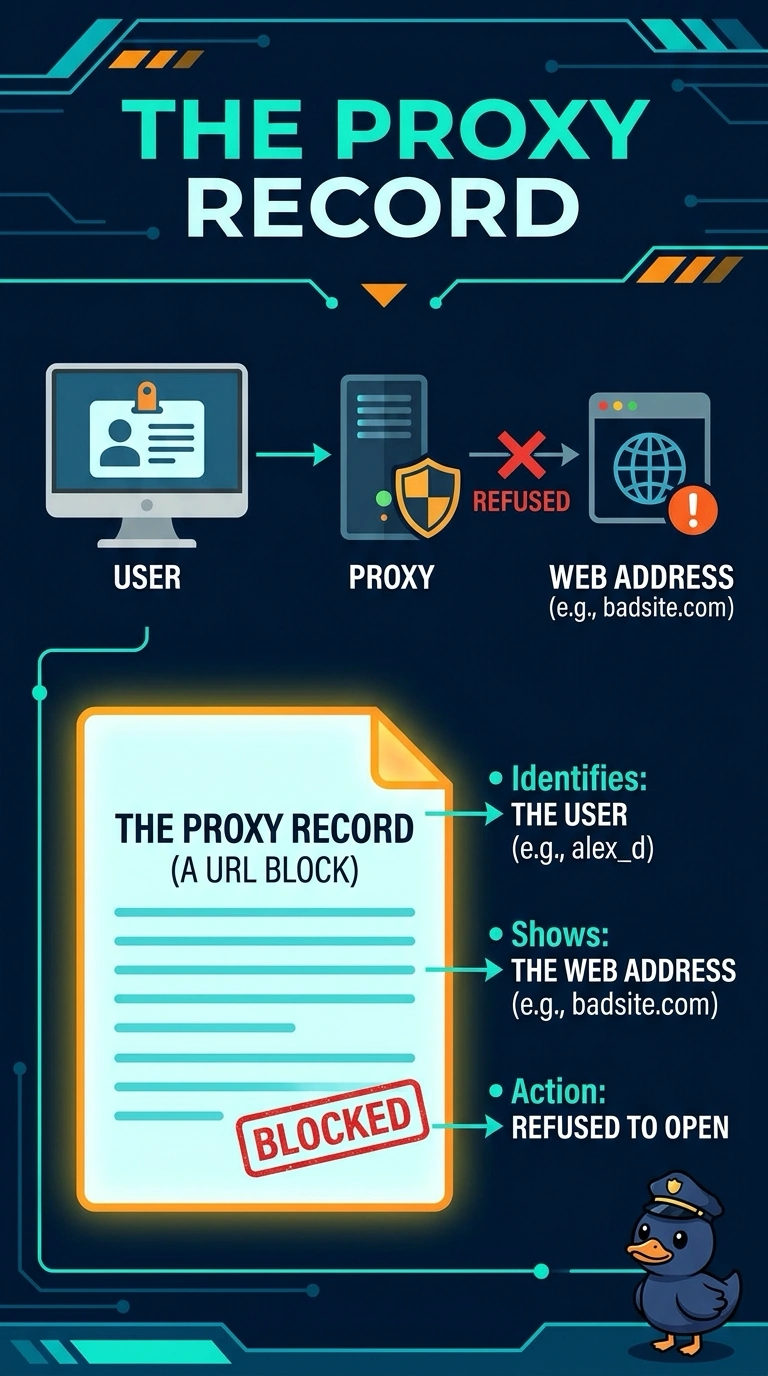
Short Explanation
Three slips on your desk can describe three different machines. The proxy is the slip that refused a URL and wrote down the user and the address. A signature drop comes from an intrusion sensor, a byte count is a flow summary, and a badge swipe never left the lobby.
Full Explanation
A forward proxy sits on the web path, sees the requested address, often knows the authenticated user, and can refuse the fetch. The record that carries a URL, a user, and a block is the proxy record in this pile. The URL block that names the user and the web address the proxy refused to open for that user. A signature action belongs to an intrusion sensor. The signature drop recorded when an intrusion sensor matched a known attack pattern on the flow is an IPS or IDS disposition, not a web-proxy decision, even when both can interrupt traffic. Volume without a request is flow data. The byte and packet count for a conversation that carries no URL, no user, and no block decision cannot tell you that a page was refused or who asked for it. Physical entry is not a network sensor at all. A door-badge swipe that records one person entering a controlled room inside the agency shows a person at a door and has no URL to block. Exam caveat: tie the fields to the sensor. User plus URL plus an allow or block is the proxy shape on this exam. A signature name points at intrusion detection, and counters alone point at flow export. Operational check: open the proxy log, match the username and the refused address to this block, and confirm the signature drop and the byte count live in the intrusion and flow systems instead.