
During a quiet night at a university, no security alert fires, and a later review of the same window finds no intrusion. How should that outcome be classified?
Select an answer to reveal the explanation.
Short Explanation
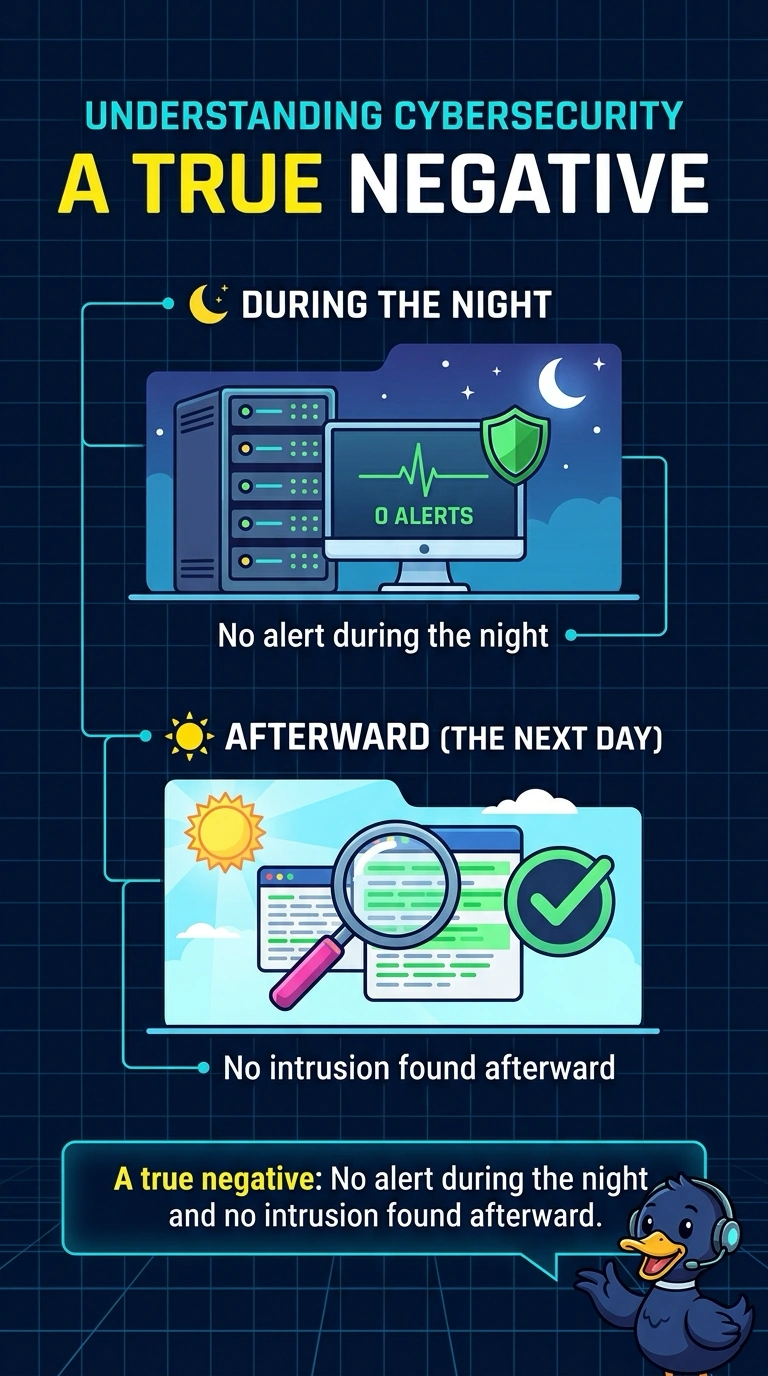
An empty trap with no animal in the garden is a quiet and correct night. You had no alert and no intrusion afterward, so the label is a true negative. Silence during a real attack would be a different outcome.
Full Explanation
A true negative is the quiet, correct case: nothing alerted, and the later review finds no attack. A true negative: no alert during the night and no intrusion found afterward, matches this university window. A false negative: an intrusion on the campus network while every sensor stayed silent, would require an intrusion that the review did not find. A true positive: an alert that correctly identified an attack during the quiet night, requires both an alert and an attack, and neither occurred. A false positive: an alert on activity that the later review shows was not an attack, requires an alert, and the night produced none. The later review is part of the classification: without it, silence could still hide an intrusion the sensors missed. Pairing no alert with a finding of no intrusion is what makes the night a true negative. Exam caveat: the true-negative label is only as strong as the review that looked for an intrusion; sensor silence by itself is not the whole classification. Operational check: record the sources and the time window that were reviewed before the night is closed as clean.