
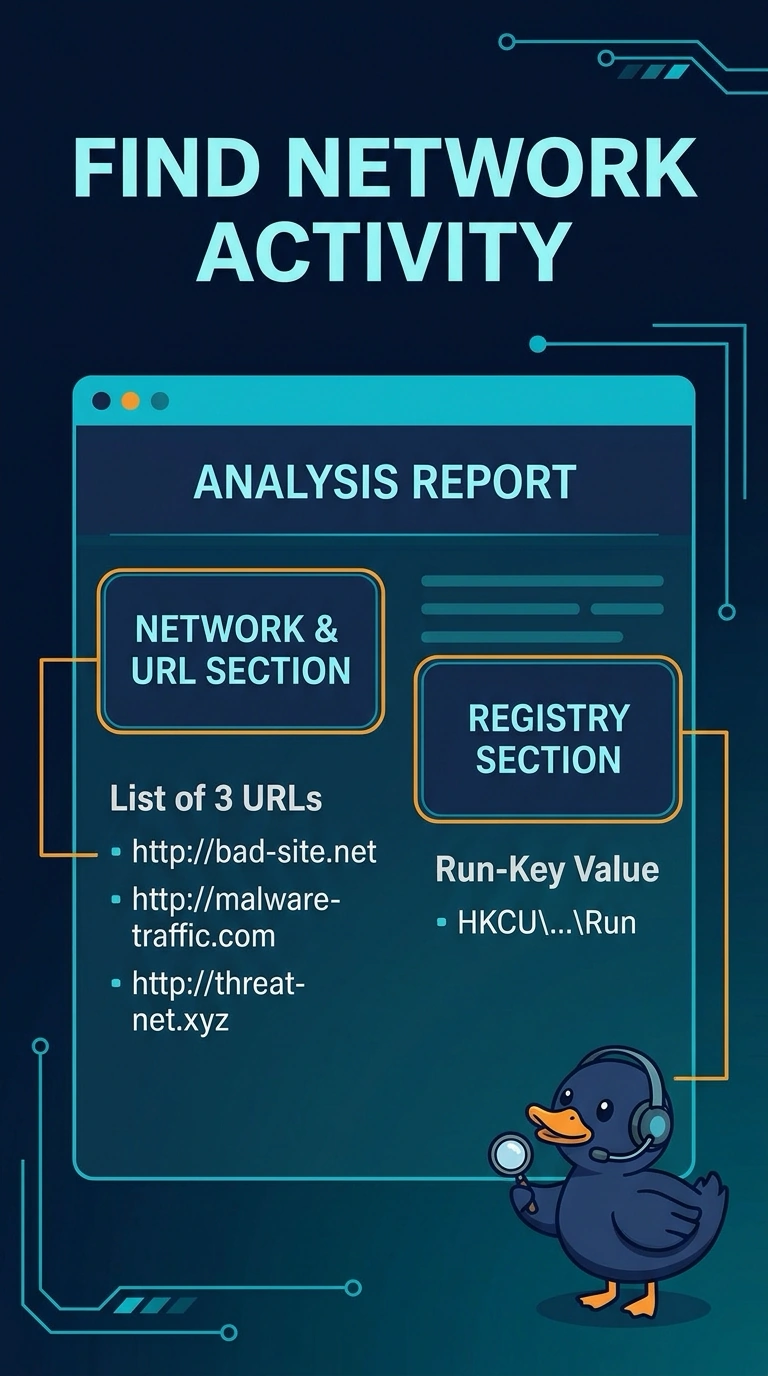
At a hospital, a detonation report shows that a sample connected to three URLs and also created a run-key value. Which part of the report shows that network activity?
Select an answer to reveal the explanation.
Short Explanation
You’re looking for the part of the report that lists the sample’s URLs and connections: the URL or networking section. The hash line identifies the sample file, while the file-size field and analyst name do not show its network activity. The run-key value is not a record of the URLs or connections.
Full Explanation
A detonation report separates sample identity, behavior, and network activity. Because the report shows three URLs connected to the sample, the relevant part is the URL or networking section, which lists the URLs and connections the sample made. The hash line is a digest that identifies the sample file; it does not list the sample’s connections or show where it connected. The file-size field measures the sample, not its destinations, so it cannot show network activity. The analyst name identifies the person who submitted the sample, not the sample’s traffic or connections. These distinctions matter: a digest, a size, and a submitter name answer identity or handling questions, whereas the URLs are network facts. Exam caveat: the run-key value in the report is a host persistence artifact, not the part that shows the three URLs. Practical check: copy the URLs from the networking section and compare them with the clinical PC’s DNS or proxy log.