
At a bank, a sandbox report lists a SHA-256 for the sample and no other section is filled in yet. What is that hash useful for at this point?
Select an answer to reveal the explanation.
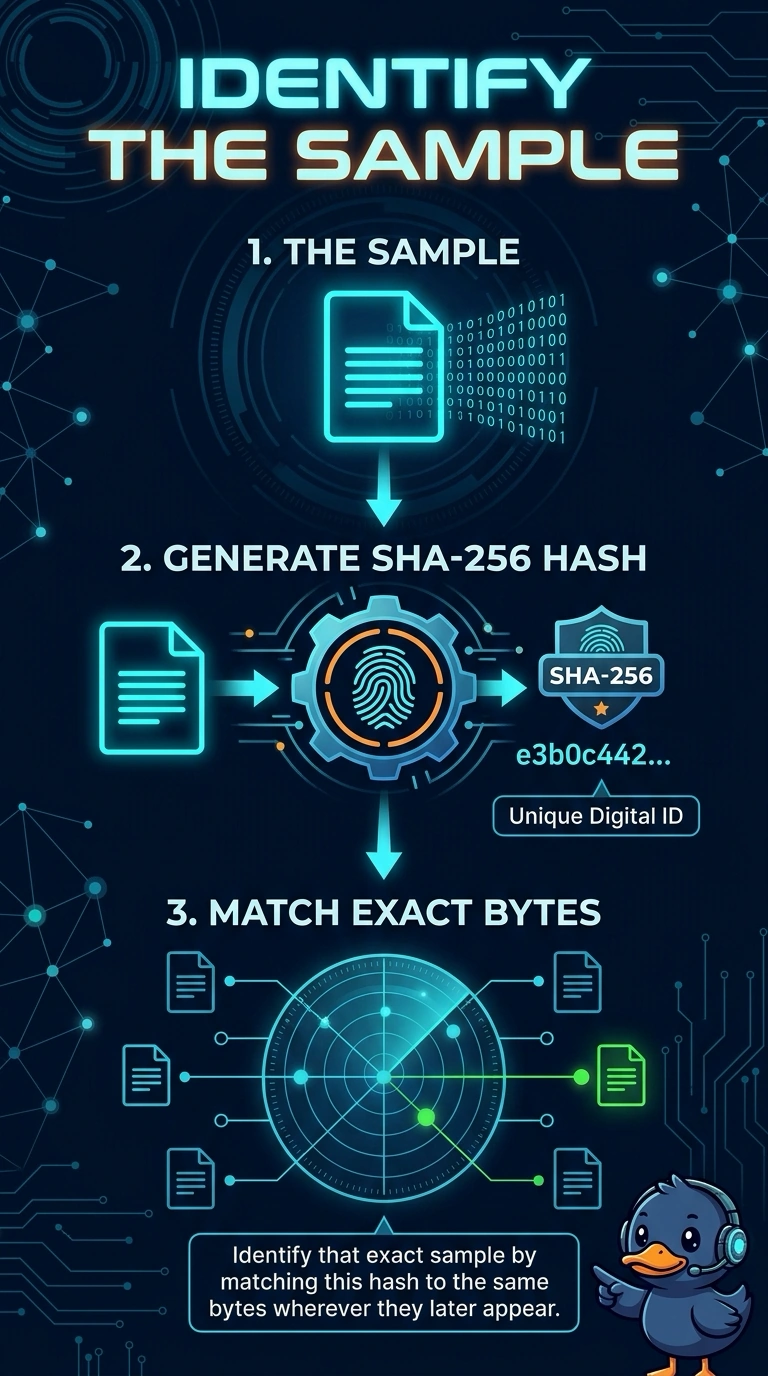
Short Explanation
A fingerprint names the print it came from, and it does not tell you who shook that person's hand. You have only a SHA-256 so far, and that hash identifies this exact sample. The trap is treating it as proof of who opened it, as a private key, or as a stand-in for behavior.
Full Explanation
A cryptographic hash of a file identifies those bytes. With nothing else filled in, the SHA-256 is good for Identifying that exact sample by matching this hash to the same bytes wherever they later appear. Proving the bank user who opened the sample, a fact the hash line alone does not record, would take a host or mail record that names the person, and the hash line has no user. Showing a private key that protected the file, a secret that a file hash does not contain, confuses a digest of the file with a key, and the digest is not a secret that decrypts anything. Replacing the behavior section, the report part that would list processes and connections, is the wrong job for a hash; processes and connections are a different section that is still empty. Until that section is filled in, do not turn the digest into a story about what the sample did on a host. Exam caveat: a hash match identifies content, not intent, and an empty behavior section means the report is incomplete rather than a proof that the file did nothing. Operational check: search the bank's file inventory for this SHA-256 before you decide where the sample landed.