
An agency sandbox shows two samples that share a behavior description and have different hashes. What does that combination mean?
Select an answer to reveal the explanation.
Short Explanation
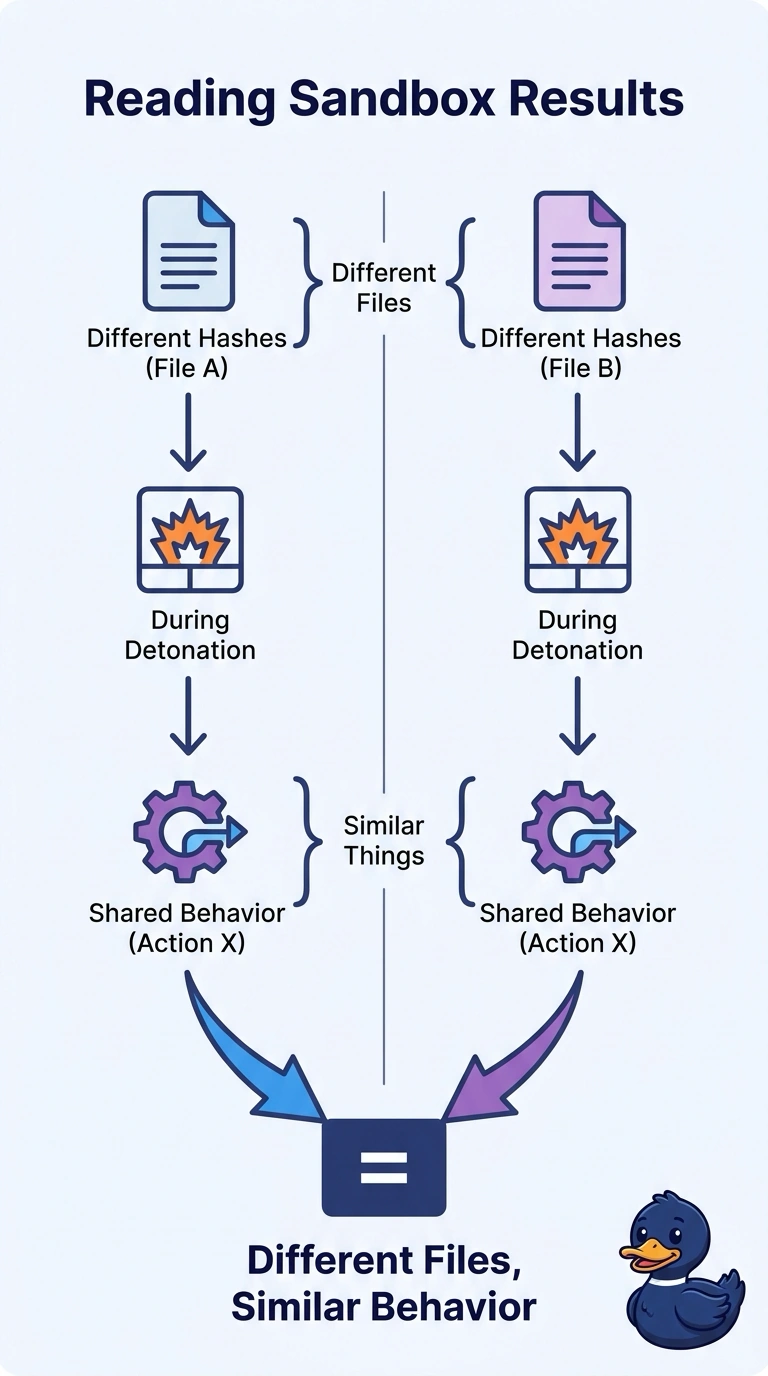
Two people can tell the same story and still be different people. You have two samples with one behavior description and two hashes, so they are different files that did similar things. The trap is treating them as one file, calling the hash decoration, or reading the URLs as the hashes.
Full Explanation
A cryptographic hash identifies file content. Two different hashes mean two different files. A shared behavior description means the detonations did similar things. Together, the agency pair is two files with similar activity, not one file shown twice. The meaning is "They are different files that did similar things during the two detonations". Equal files would share a hash, so a hash mismatch is not a display problem and "They are the same file, and the differing hash values are a display glitch" fails. The hash is the identifier in the report. It is not decoration, so "The hash is random decoration and does not identify the contents of either file" fails. URLs show where a sample called. They are not the file hashes, so "The URLs listed in the report are the hashes, so both samples are one file" fails. Exam caveat: similar behavior text can mark a family resemblance, and it still does not collapse two hash values into one sample. Operational check: record both hashes as separate file indicators and note the shared behavior only as a similarity clue.