
When owners choose Mitigate, the team wants consistent follow-up tasks. Which configuration helps?
Select an answer to reveal the explanation.
Short Explanation
Mitigate without tasks is a New Year’s resolution with no calendar invites. Configure response task templates so choosing Mitigate spins up the usual work with owners and due dates.
Full Explanation
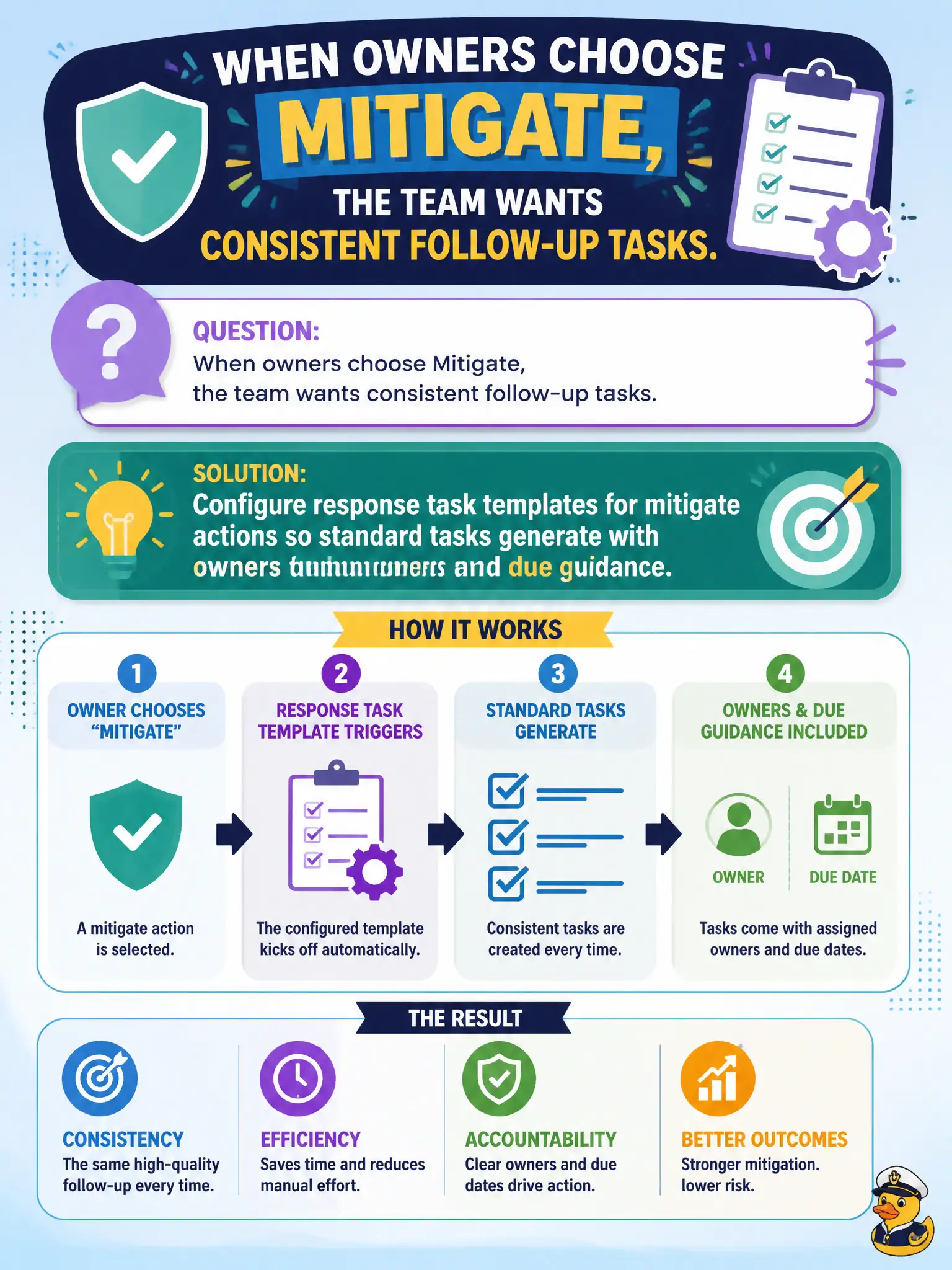
When owners choose Mitigate, consistent follow-up is produced by configuring response task templates so standard tasks generate with owners and due guidance. Templates turn a response strategy into operational work for municipal teams instead of a label with no backlog. Mitigate then means scheduled action, not aspirational status.
Relying on free-text risk comments as the only mitigation tracker loses assignment, due dates, and reporting. Creating a new entity class named Mitigate for each response misuses entity framework as a response-status hack. Closing the risk immediately when Mitigate is selected, with no tasks, pretends treatment is complete at decision time.
Exam caveat: response strategy selection should spawn work, not close residual by optimism. CIS-RC configuration favors response tasking patterns.
Operational check: select Mitigate on a pilot risk; confirm template tasks open with owners and dates; verify the risk remains open until tasks complete or residual is reassessed; ban comment-only mitigation SOPs.
Response task templates should encode standard municipal mitigate work—owner assignment, due guidance, and evidence expectations—so Mitigate means the same operational follow-through across departments. Report open mitigate tasks aging past due as a KRI on response discipline, and do not allow risk closure while required mitigate tasks remain incomplete unless a formal acceptance path overrides with approval. That closes the gap between strategy selection and real treatment work.