
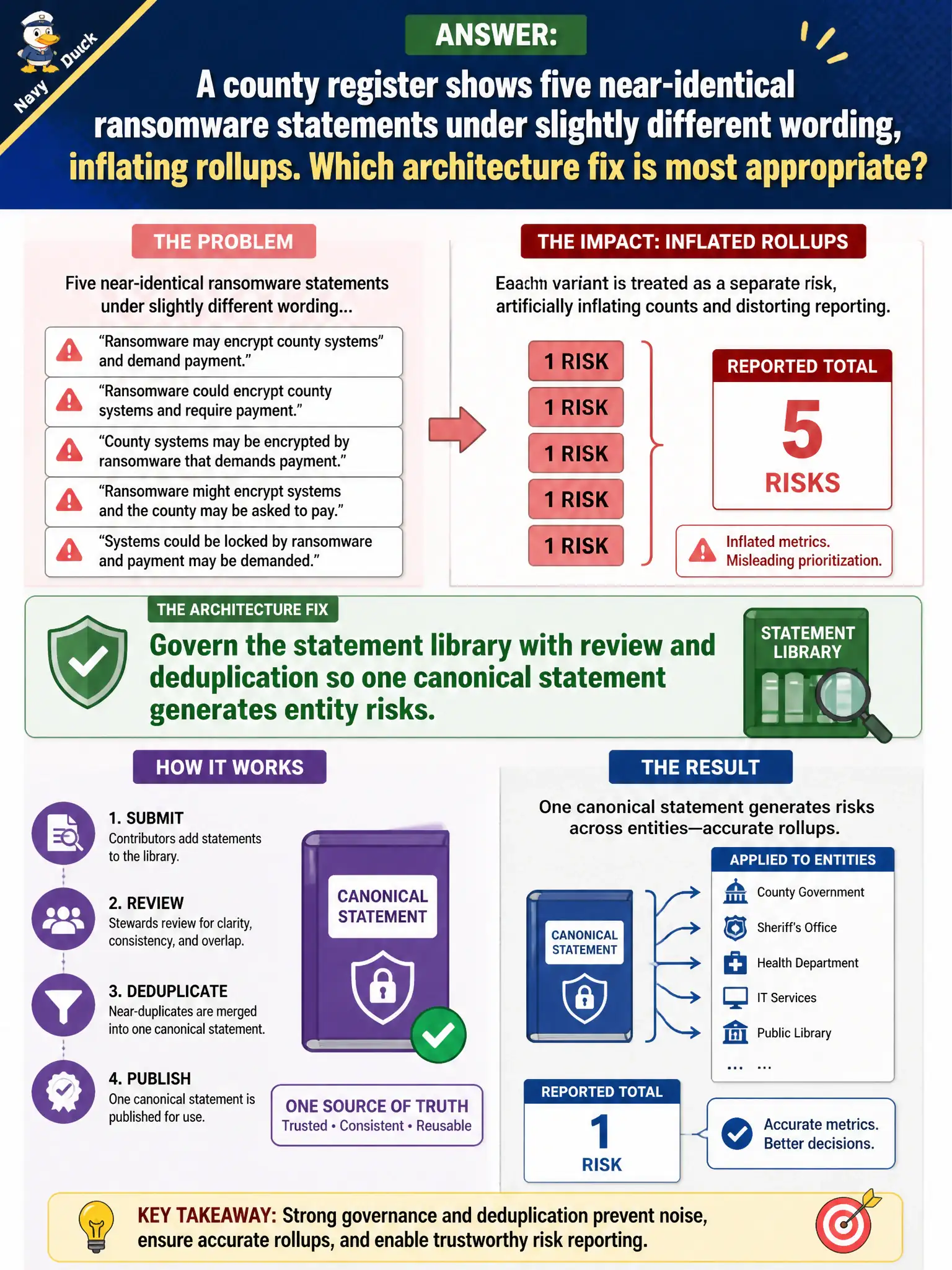
A county register shows five near-identical ransomware statements under slightly different wording, inflating rollups. Which architecture fix is most appropriate?
Select an answer to reveal the explanation.
Short Explanation
Five wordings for the same risk are five street names for one alley—rollups get lost. Govern the statement library, dedupe to a canonical statement, and generate entity risks from that one source.
Full Explanation
Near-identical ransomware statements under slightly different wording inflate rollups because synonymous library items double-count the same threat across the county register. The appropriate architecture fix is statement-library governance with review and deduplication so one canonical statement generates entity risks. Governance restores comparable aggregation, appetite views, and treatment language while still allowing entity-level residual variation.
Encouraging each team to keep preferred wording for cultural fit maximizes synonym sprawl and breaks portfolio math. Deleting all statements and scoring only at the entity class level with no library removes reusable threat language and forces inconsistent free-text risk creation. Hiding duplicates with report filters while leaving underlying statements active is cosmetic reporting hygiene that leaves the data model wrong.
Exam caveat: report filters are not data governance. CIS-RC expects canonical statements and generation, not duplicate suppression only in dashboards.
Operational check: search the statement library for ransomware synonyms; merge or retire duplicates to one canonical item; regenerate or re-link entity risks; recalculate a rollup and confirm counts drop to one logical threat per entity set.