
Two county departments merge and the legacy risk owner for floodplain drainage leaves. What should the IRM administrator do on active risk records?
Select an answer to reveal the explanation.
Short Explanation
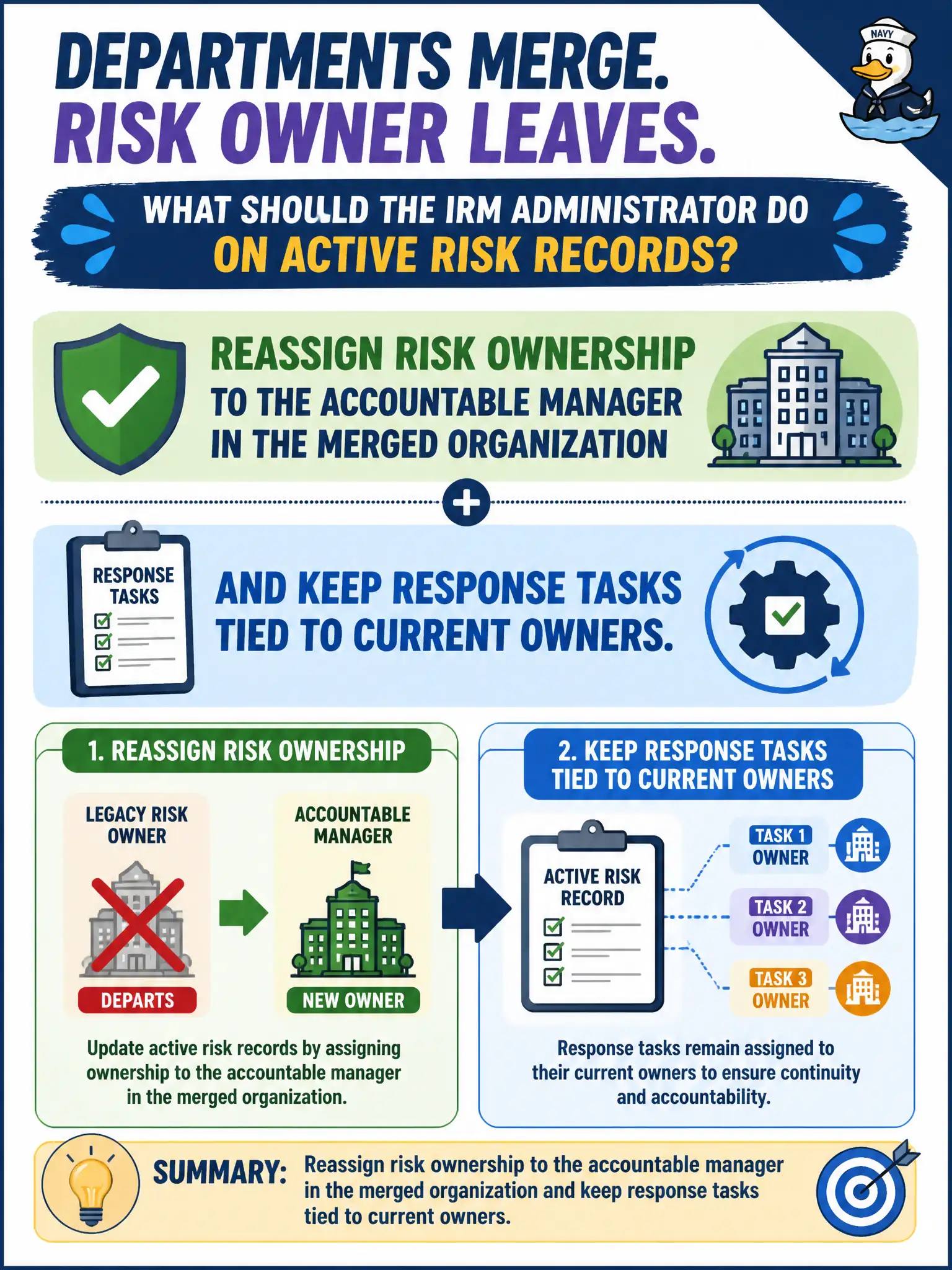
Risks need a named human, not a ghost mailbox. After a merger, reassign the owner on the risk records to whoever is accountable now—and keep the response tasks pointed at living owners. Blank ownership is how things fall through the cracks.
Full Explanation
When two county departments merge and the legacy floodplain drainage risk owner leaves, the IRM administrator should reassign risk ownership to the accountable manager in the merged organization and keep response tasks tied to current owners. Clear ownership sustains civic drainage risk treatment through reorganization. Leaving ownership blank until the next fiscal year fails by concept because mid-year blank ownership orphans active risks and tasks. Cloning every risk into a new framework category and abandoning originals fails by concept because clone-and-abandon duplicates work and breaks history. Converting all open risks to Accepted so ownership fields stop mattering fails by concept because acceptance cannot be used to dodge ownership hygiene. Exam caveat: CIS-RC requires current accountable owners on active risks through org changes. Operational check: identify active floodplain risks with the departed owner, reassign to the merged-org accountable manager, update response task assignment, and verify dashboards show the new owner with no blank-owner actives. In civic IRM programs, retain configuration and decision evidence so examiners can reconstruct why this design supports public services. In civic IRM programs, retain configuration and decision evidence so examiners can reconstruct why this design supports public services.