
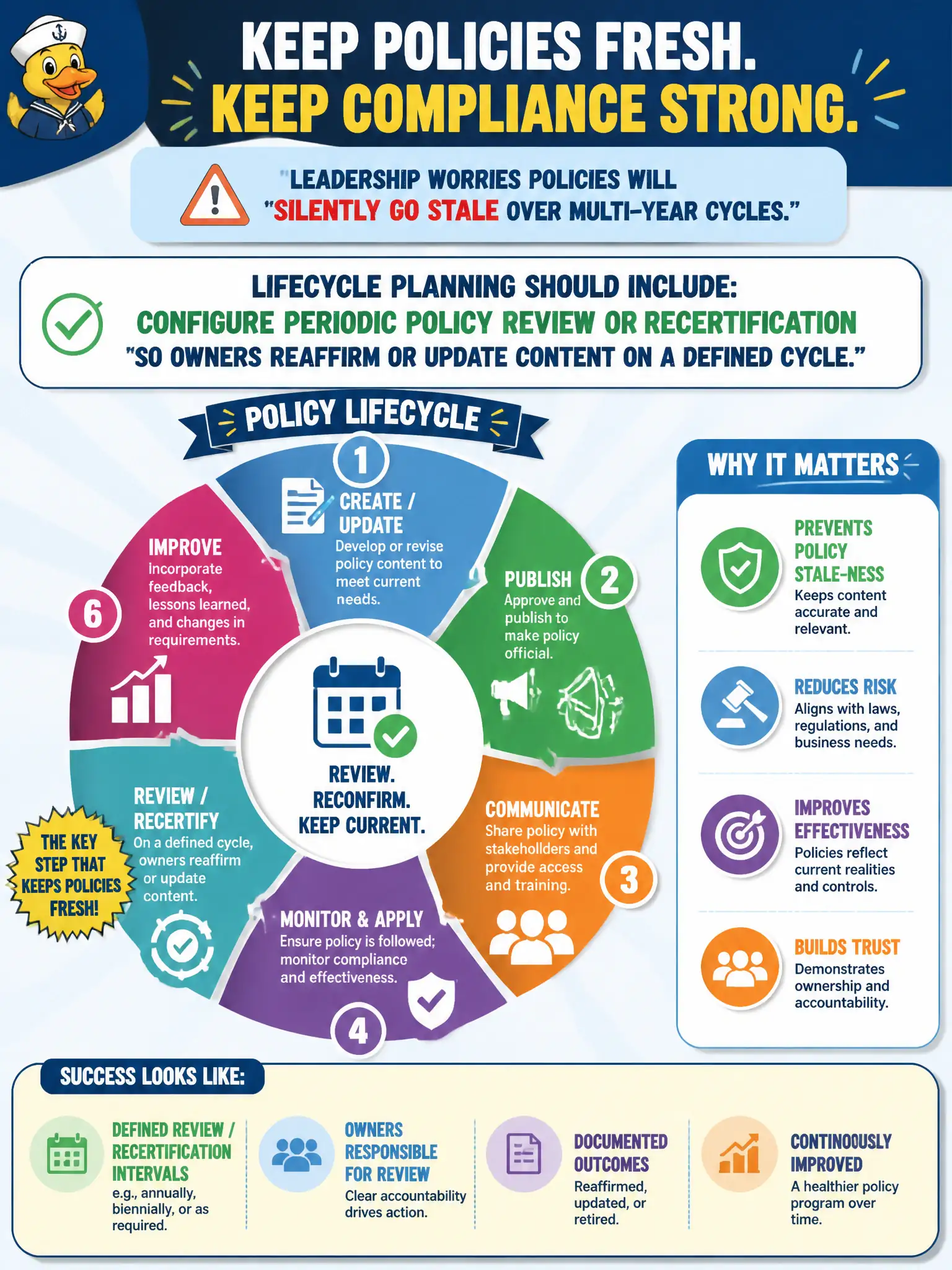
Leadership worries policies will silently go stale over multi-year cycles. What lifecycle planning should the compliance team include?
Select an answer to reveal the explanation.
Short Explanation
Policies age like milk if nobody checks the date. Put a review or recertification cycle on the calendar so owners reaffirm or refresh them. Silent forever-active policies are how obsolete rules keep a false green light.
Full Explanation
Policy lifecycle planning includes periodic review and recertification so published policies do not remain active indefinitely without validation. Leadership worries about silent staleness over multi-year cycles are addressed by configuring periodic policy review or recertification so owners reaffirm or update content on a defined cycle. Never reviewing published policies once they are active is how civic policies quietly diverge from law, technology, and operating reality. Deleting all policies annually and rebuilding from memory without review records destroys continuity and evidence examiners need. Moving every policy to retired status each month regardless of content validity creates churn without thoughtful reassessment and confuses the organization. Exam caveat: review cadence should match risk and regulatory change rates—annual may suit some policies, faster cycles for rapidly changing security or privacy domains. Operational check: enable review workflows with owners and due dates, report overdue policy reviews to compliance leadership, complete a pilot recertification with tracked changes, and record outcomes on the policy activity stream. Include review SLAs in the city's policy governance calendar, escalate overdue items before external audits, and verify acknowledgments are relaunched when material policy changes result from recertification.