
When is a generated control typically ready for attestation and monitoring in the lifecycle?
Select an answer to reveal the explanation.
Short Explanation
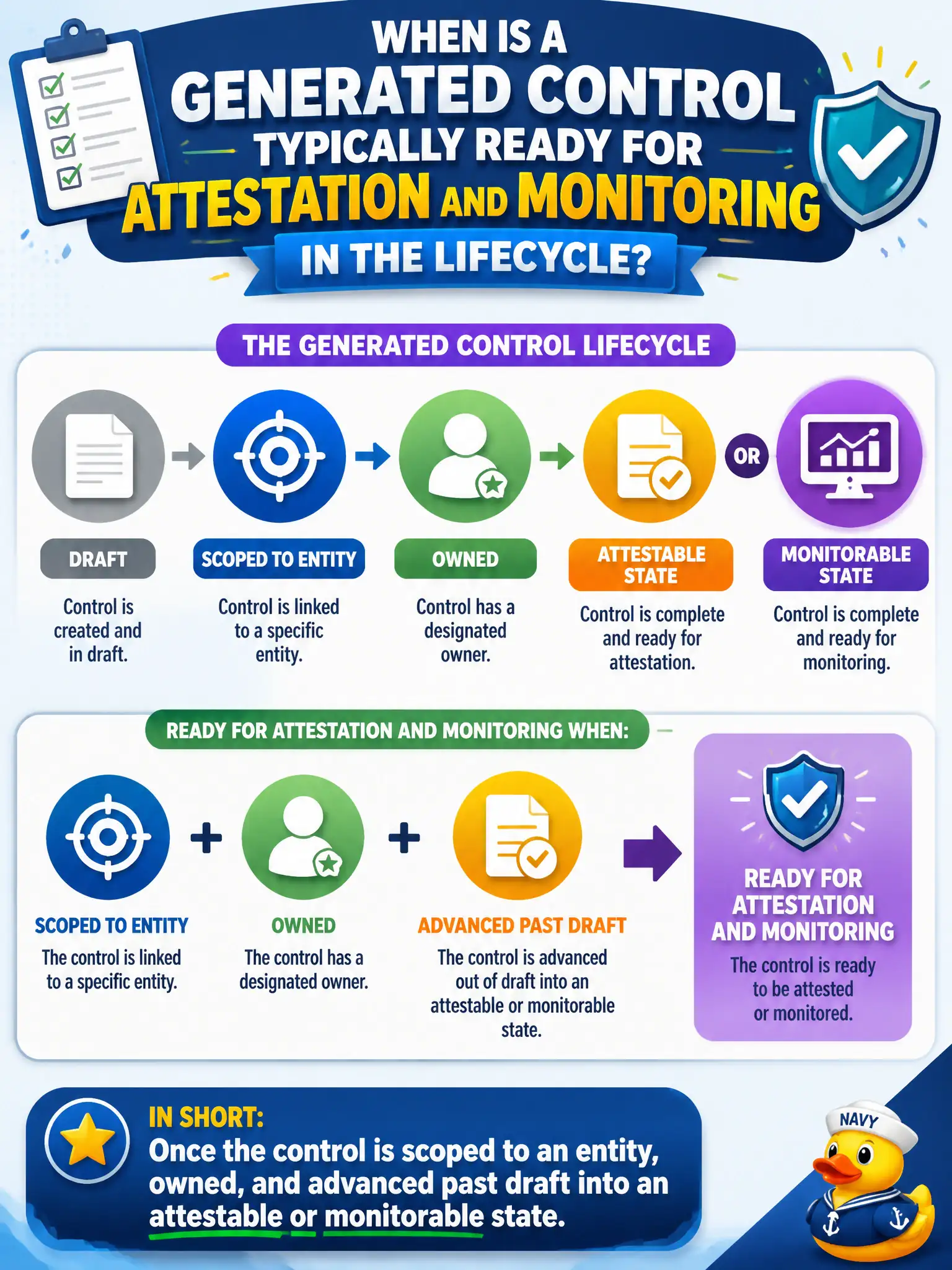
A control ready for attestation isn’t a blank template—it’s scoped, owned, and out of draft. Then people can attest and monitors can watch it. Empty objectives and retired shells don’t belong in the attestation queue.
Full Explanation
Control lifecycle readiness for testing and attestation generally requires entity scoping, ownership, and progression from draft into an operable attestable or monitorable state. A generated control is typically ready once it is scoped to an entity, owned, and advanced past draft. It is not ready as soon as an empty control objective exists with no entity and no owner, because definitions are not yet owned work. It is not ready while the parent policy is still rejected and unpublished, because obligatory production work should follow approved policy gates. It is not reserved only for after the control has been permanently retired, which removes it from active testing by design. Empty objectives without instances give municipal owners nothing to execute. Exam caveat: attestable state names vary by configuration and UI, but the concept is operable, owned, scoped work—not a library definition alone. Operational check: inspect a municipal control's state, entity, and owner fields before including it in a quarterly campaign; fix gaps; then launch attestation or monitoring. Spot-check campaign membership reports for controls that slipped in without owners or while still draft, remediate before bureau deadlines, and record readiness criteria in the city's compliance campaign checklist used by control owners.