
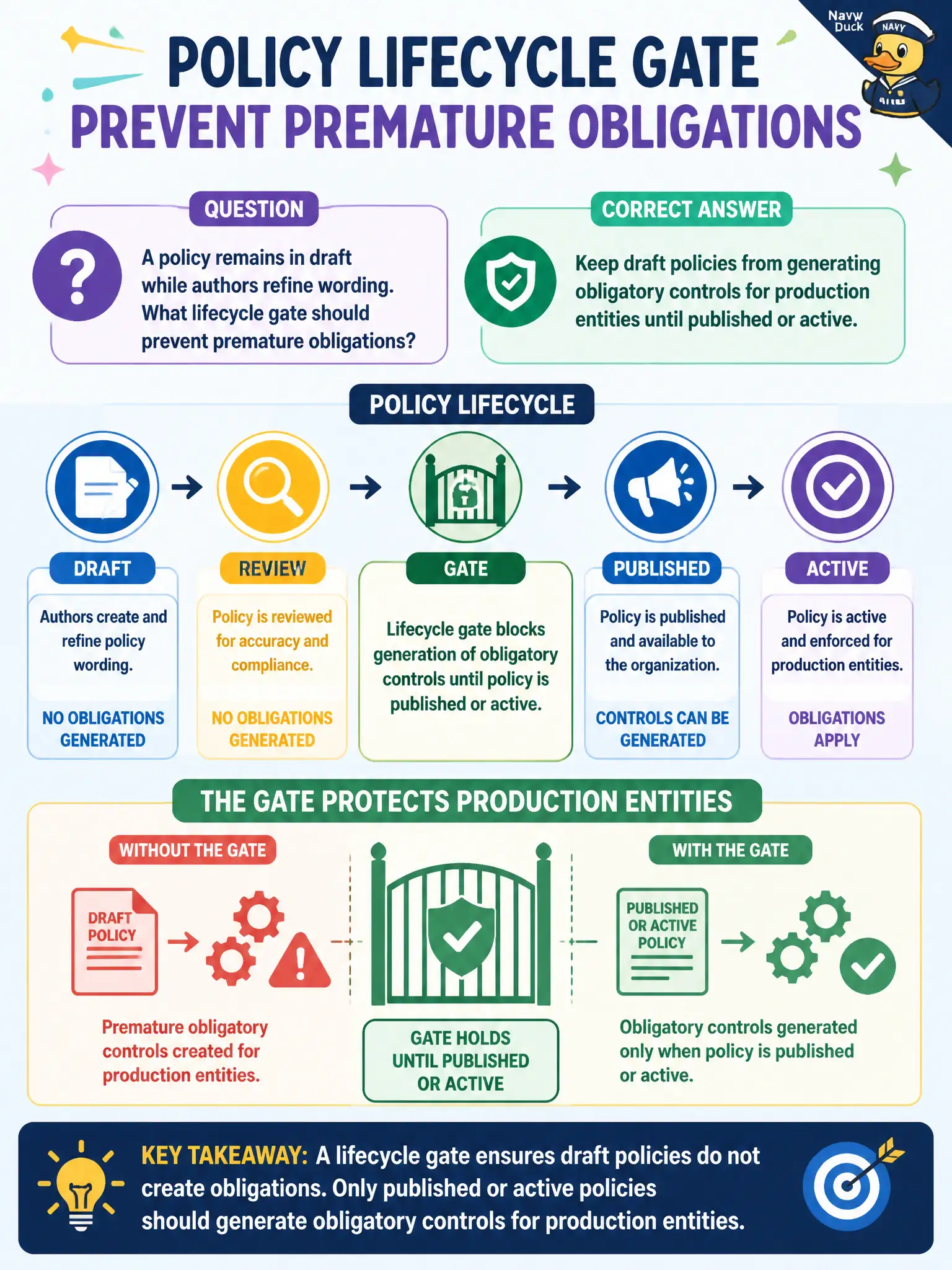
A policy remains in draft while authors refine wording. What lifecycle gate should prevent premature obligations?
Select an answer to reveal the explanation.
Short Explanation
Draft means still cooking. Don’t spawn obligatory production controls from a policy that hasn’t cleared approval. Publish first, then generate—otherwise the city enforces yesterday’s unfinished paragraph.
Full Explanation
Lifecycle gating distinguishes draft from published or active policy states. While a policy remains in draft and authors refine wording, the gate that prevents premature obligations is keeping draft policies from generating obligatory controls for production entities until published or active. Allowing draft policies to generate obligatory production controls for all entities immediately exposes the city to unapproved requirements and noisy owner work. Forcing every draft policy to auto-publish overnight without approval removes human governance. Treating draft and published policies as identical for entity scoping and attestation collapses the lifecycle and invites examiners to question control legitimacy. Exam caveat: draft collaboration is healthy—blocking obligatory generation does not mean authors cannot preview content in non-production or design reviews. Operational check: attempt generation from a draft policy in subprod and confirm production entities do not receive obligatory controls; publish through approval; regenerate or associate as designed; and document the gate in the municipal policy SOP. Include the draft-versus-active rule in content author training and UAT scripts so future administrators do not bypass it with scripts.