
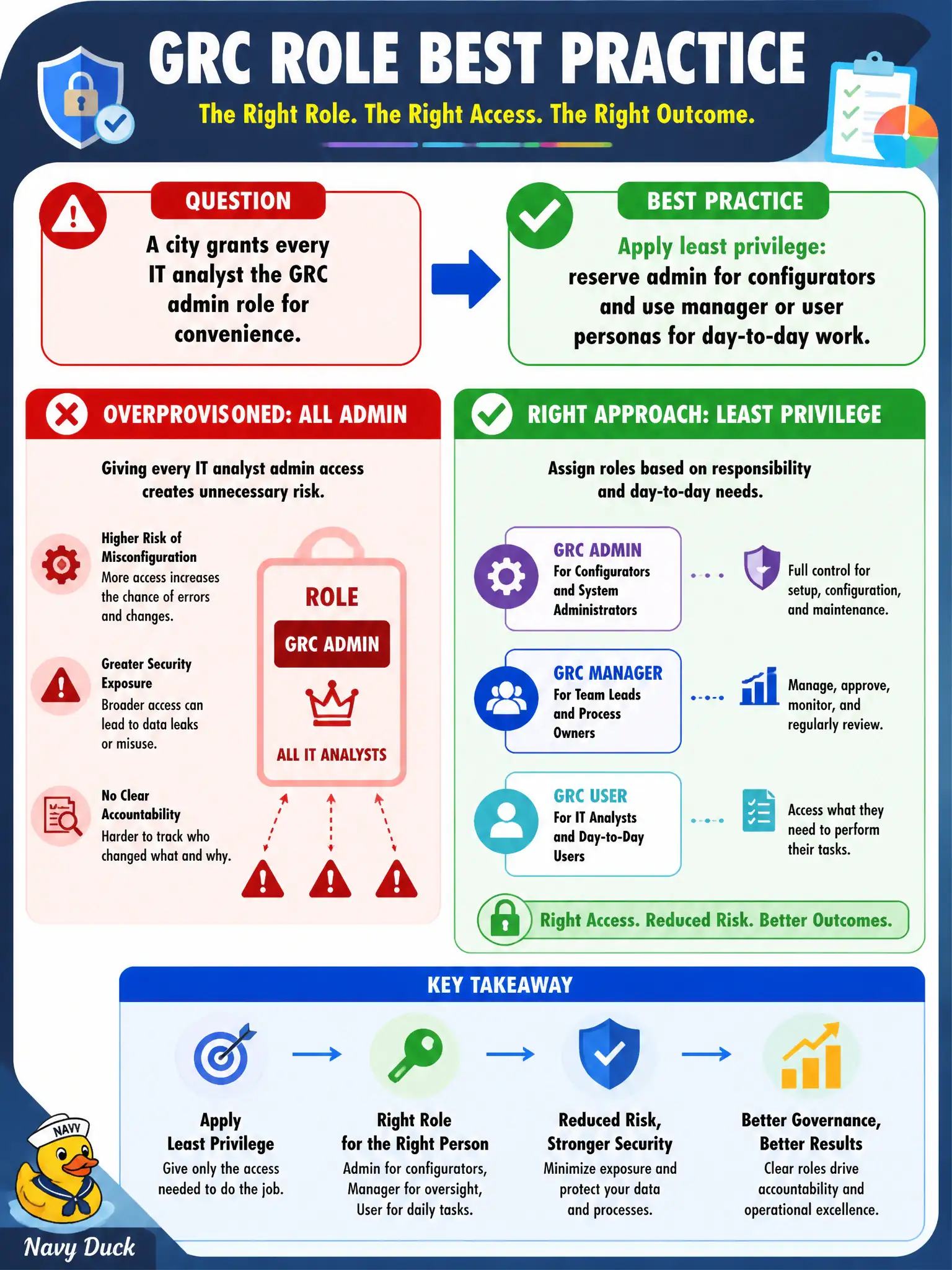
A city grants every IT analyst the GRC admin role for convenience. What role practice should the implementer enforce instead?
Select an answer to reveal the explanation.
Short Explanation
Handing everyone the master key because it is convenient is how configurations get quietly rewritten. Day-to-day owners need manager or user personas; admin stays with the people who configure. Least privilege is a planning decision, not a nicety.
Full Explanation
Least privilege for IRM means reserving GRC admin for configurators while day-to-day analysts and business owners use manager or user personas. A city that grants every IT analyst GRC admin for convenience hands out master keys that quietly rewrite entity types, content, and roles. Planning must separate configuration power from routine attestation, assessment, and issue work. Convenience is not a control objective. Keeping GRC admin on all analysts so nobody waits for access tickets institutionalizes over-privilege and audit findings. Removing all GRC roles and managing compliance only through email abandons platform access design entirely. Granting only external vendor accounts the GRC admin role for “independence” misassigns powerful configuration rights and still fails least privilege for staff. Exam caveat: persona and role planning on CIS-RC expects least privilege, not universal admin. Operational check for the implementer: inventory who currently holds GRC admin, reduce to named configurators, map remaining users to appropriate GRC roles and groups, and retest that control owners can attest without admin rights. In civic IRM programs, document the decision, name owners, and verify the platform records match the intended operating model before expanding scope. Re-check after organizational or CMDB changes so evidence remains defensible.