
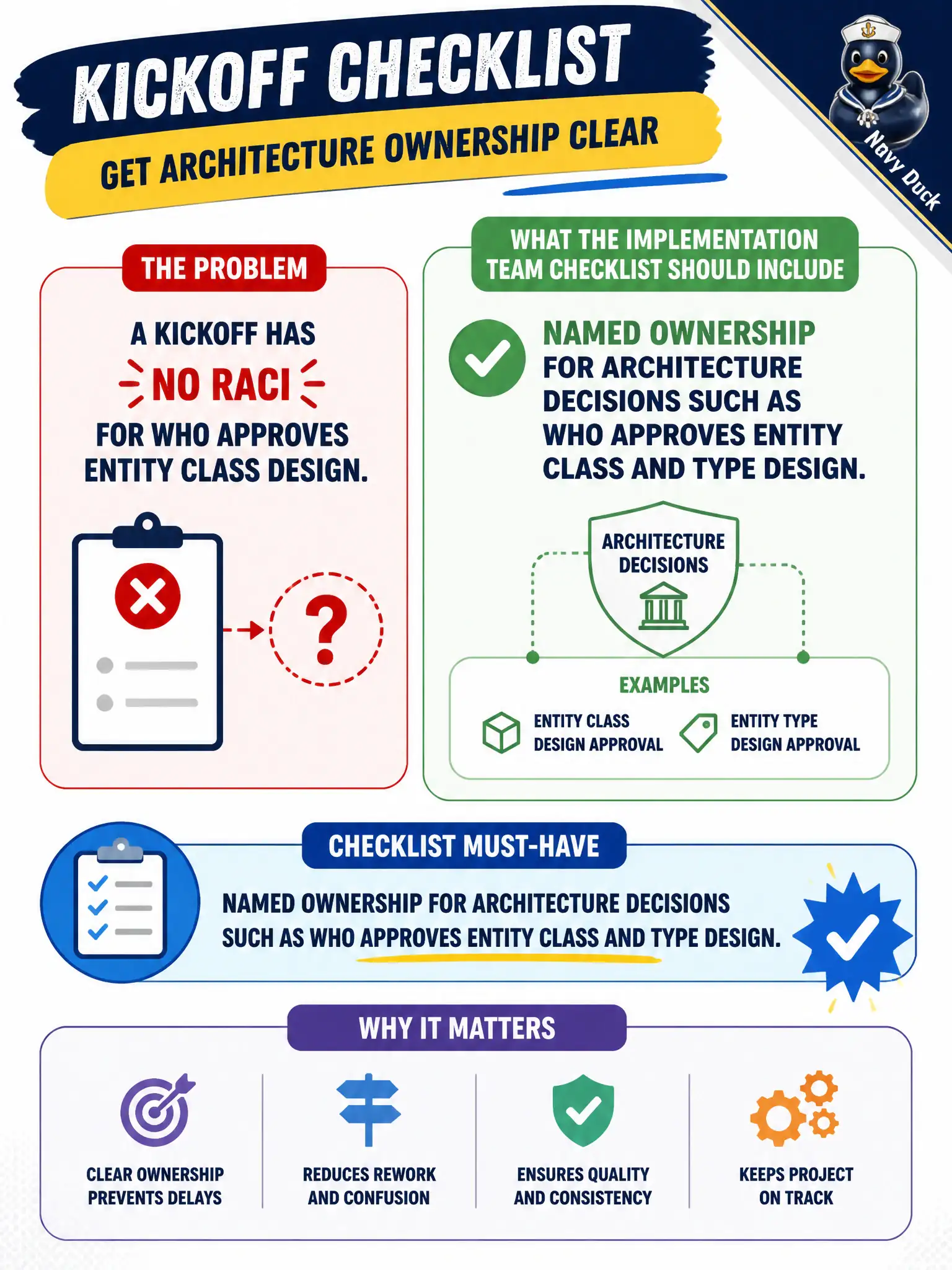
A kickoff has no RACI for who approves entity class design. What should the implementation team checklist include?
Select an answer to reveal the explanation.
Short Explanation
Entity class design is load-bearing architecture—not a hallway vote after go-live. Put a clear RACI on who proposes and who approves those model decisions. Without that name on the checklist, every team will invent a different shape of “entity.”
Full Explanation
The implementation team checklist should include named ownership for architecture decisions such as who approves entity class and type design. Entity class design is load-bearing architecture for a city IRM program—not a hallway vote after dashboards are polished. A RACI prevents conflicting models, late rework, and every department inventing a different shape of “entity” that breaks reporting. Without an approver, production generation jobs will encode accidental design as if it were policy. Allowing any developer to change entity classes in production without review guarantees drift and scoping outages. Transferring all entity design authority to the network firewall team mismatches expertise and accountability for organizational scoping. Deferring entity decisions until after go-live dashboards are polished builds reporting on sand and forces painful rebuilds. Exam caveat: decision rights for Entity Framework design belong on the planning checklist. Operational check for kickoff: publish a RACI naming the proposer and approver for entity types, require architecture review before production generation jobs are scheduled, and store the decision log with the implementation runbook.