
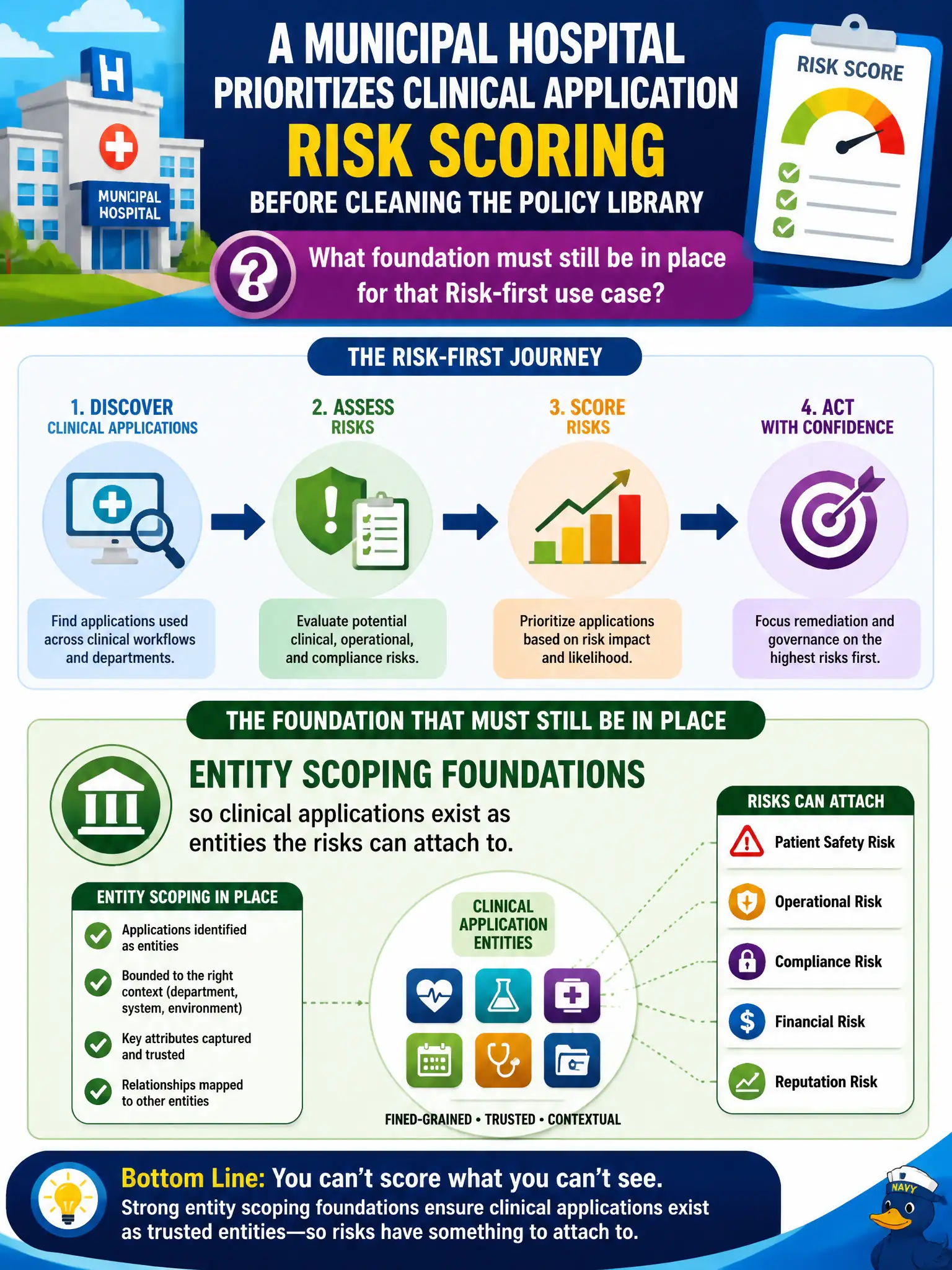
A municipal hospital prioritizes clinical application risk scoring before cleaning the policy library. What foundation must still be in place for that Risk-first use case?
Select an answer to reveal the explanation.
Short Explanation
You can lead with risk scoring, but risks still need something solid to hang on—entities for those clinical apps. Skipping entity scoping is like rating the weather for houses that are not on the map yet. Risk-first does not mean foundation-free.
Full Explanation
Even when a municipal hospital prioritizes clinical application risk scoring first, entity scoping foundations must still exist so those applications are entities risks can attach to. Risk-first sequencing is valid planning; foundation-free scoring is not, because ratings without entities lack durable ownership and reuse. Compliance and audit later need the same objects; starting without them creates rework and conflicting inventories. Picture rating weather for houses that are not on the map yet—the numbers cannot guide treatment or assurance. Requiring a complete multi-year policy rewrite before any risk record may be created over-blocks a legitimate Risk-first wave. Mandating full CIS-TPRM vendor tiering for every medical device supplier first may be a later extension, not the prerequisite for scoring clinical apps already in inventory. Publishing mandatory SIR playbooks for every clinical application before risk scoring again substitutes incident response for risk foundations. Exam caveat: Risk-first still requires Entity Framework foundations on CIS-RC planning items. Operational check for the hospital: approve an entity type or population for clinical applications, generate entities for the first scoring wave, assign owners, then run risk assessment against those entities before expanding policy library cleanup.