
A release manager asks whether IRM configuration is basically just update sets of UI policies. How should the implementer frame technical IRM implementation?
Select an answer to reveal the explanation.
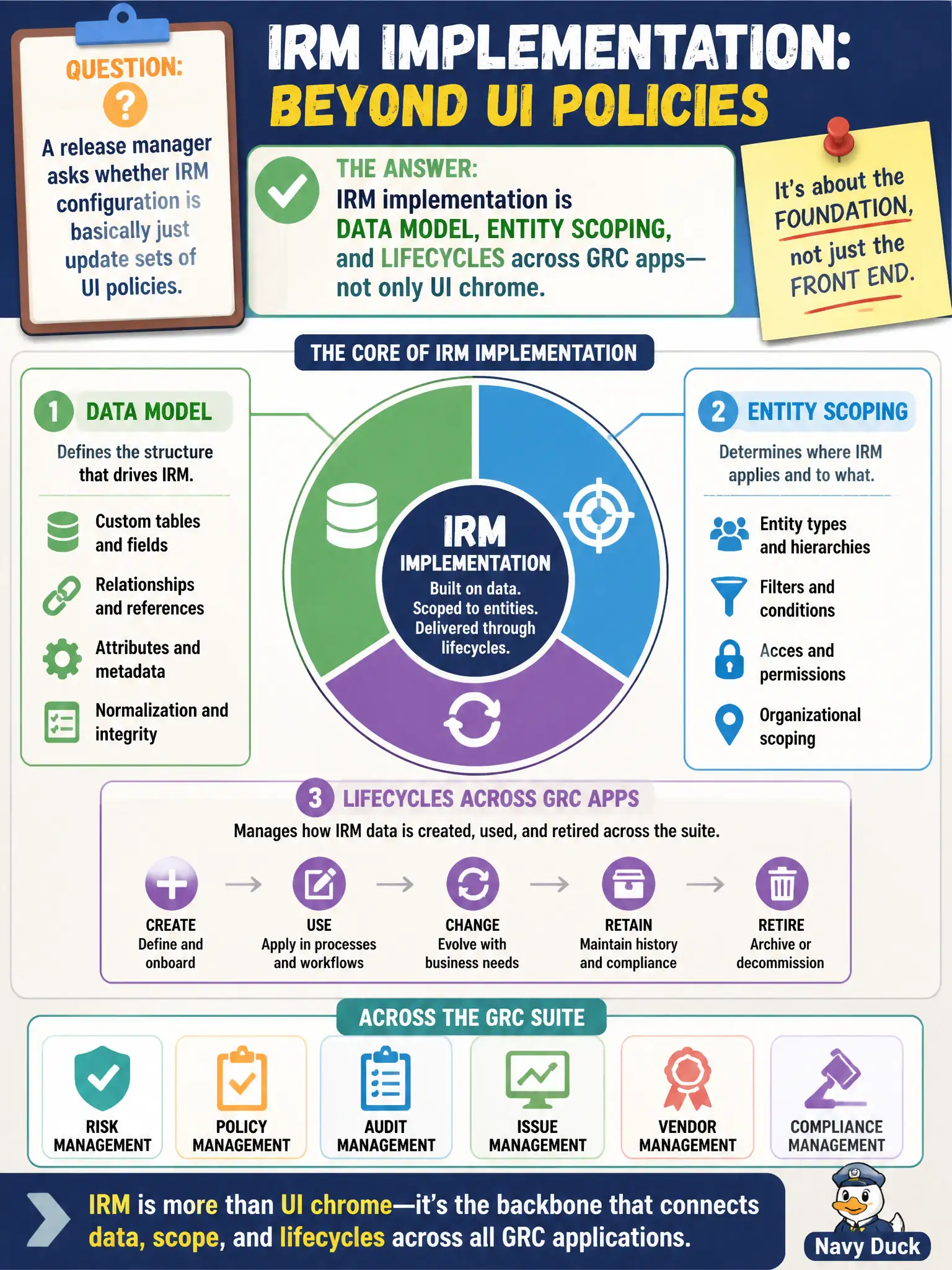
Short Explanation
UI polish is the paint; IRM is the frame, wiring, and traffic rules underneath. You are shaping entities, content, and lifecycles across policy, risk, and audit—not just dropping update sets of form tweaks. Get that mental model right before the release train leaves.
Full Explanation
IRM implementation is data model, entity scoping, and lifecycles across GRC apps—not only UI chrome or update sets of form tweaks. A release manager who thinks configuration is basically UI policies underestimates the frame, wiring, and traffic rules underneath Policy and Compliance, Risk, Audit, and common elements. Durable civic deployments shape entities, content associations, attestations, assessments, issue handling, and reporting consumers. Form layout matters for usability, but it is not the substance of a Risk and Compliance go-live. Saying IRM is only cosmetic UI policies and form layouts with no data model concerns trivializes CIS-RC work. Claiming IRM ships as a single script include that replaces all GRC tables invents a fantasy architecture. Requiring the entity framework to be disabled so only UI chrome remains removes the scoping backbone the suite needs. Exam caveat: technical implementation answers emphasize model and lifecycle configuration over chrome-only update sets. Operational check for the release manager: include entity types, content associations, and persona role mapping in the release checklist beside form changes, and block go-live if only UI update sets are ready while scoping and lifecycles remain undefined.