
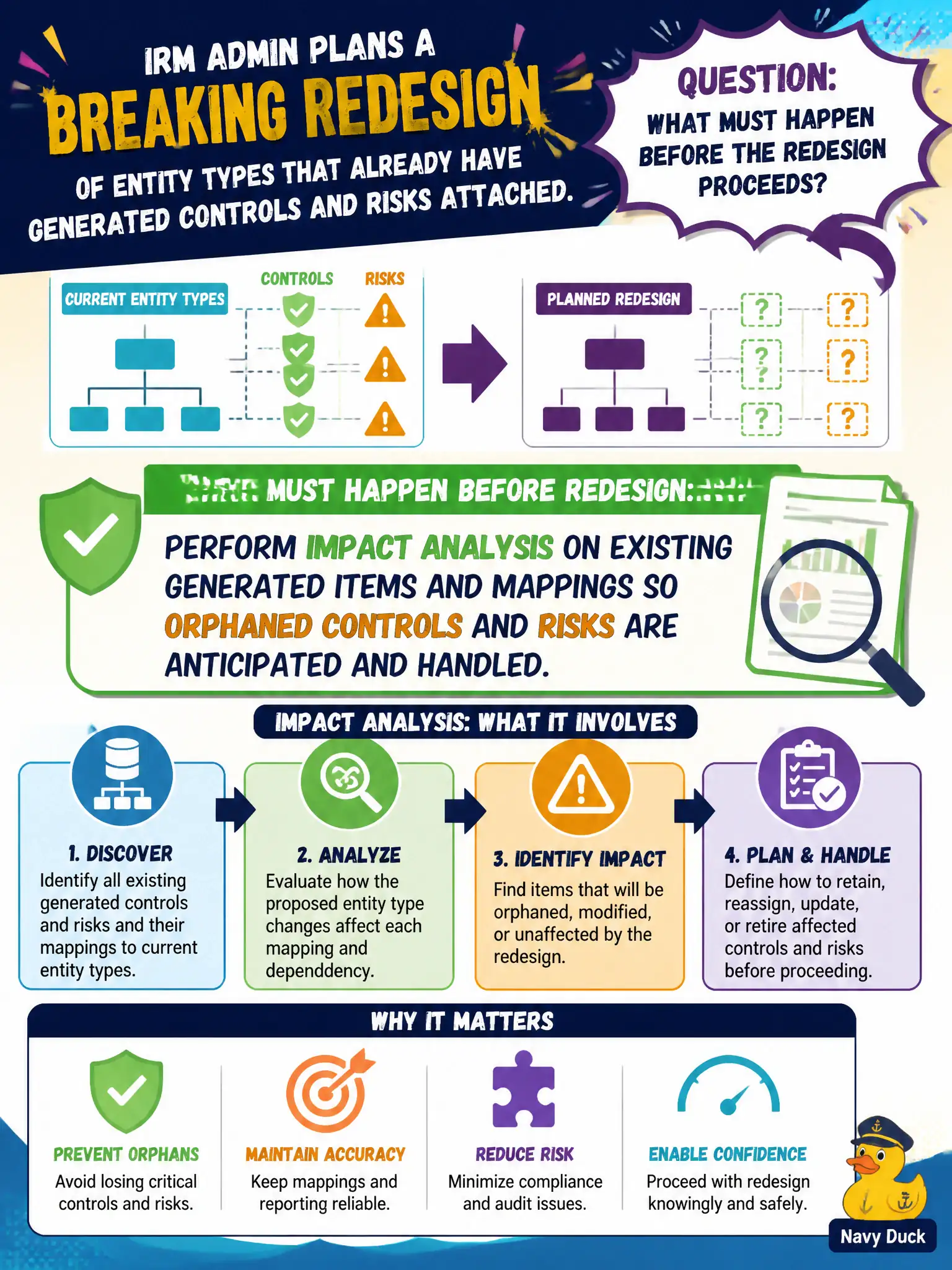
An IRM admin plans a breaking redesign of entity types that already have generated controls and risks attached. What must happen before the redesign proceeds?
Select an answer to reveal the explanation.
Short Explanation
Changing the shape of entity types after controls already hang off them is like remodeling a bridge while traffic is on it. Run impact analysis first so you know what orphans and remaps you are about to create. Surprises here show up as missing owners and silent coverage gaps.
Full Explanation
Entity types drive which source records become entities and how controls and risks are generated against them. Before an IRM admin proceeds with a breaking redesign of entity types that already have generated controls and risks attached, they must perform impact analysis on existing generated items and mappings so orphaned controls and risks are anticipated and handled. Deleting all controls first, redesigning types, then regenerating without reviewing downstream ownership destroys evidence trails and confuses municipal owners. Changing filters in production during business hours with no rollback plan risks mass mis-scoping. Renaming UI labels only and assuming generated items remount automatically without analysis ignores structural membership changes. Exam caveat: impact analysis should cover attestations in flight, open issues, historical test results, and reporting filters—not only the type form fields. Operational check: clone the redesign in subprod, compare entity populations before/after, list orphaned or duplicated generated items, prepare remediation and communication for bureau owners, obtain change approval, then execute with a rollback path. Retain analysis artifacts for auditors reviewing why civic controls moved during the redesign.